
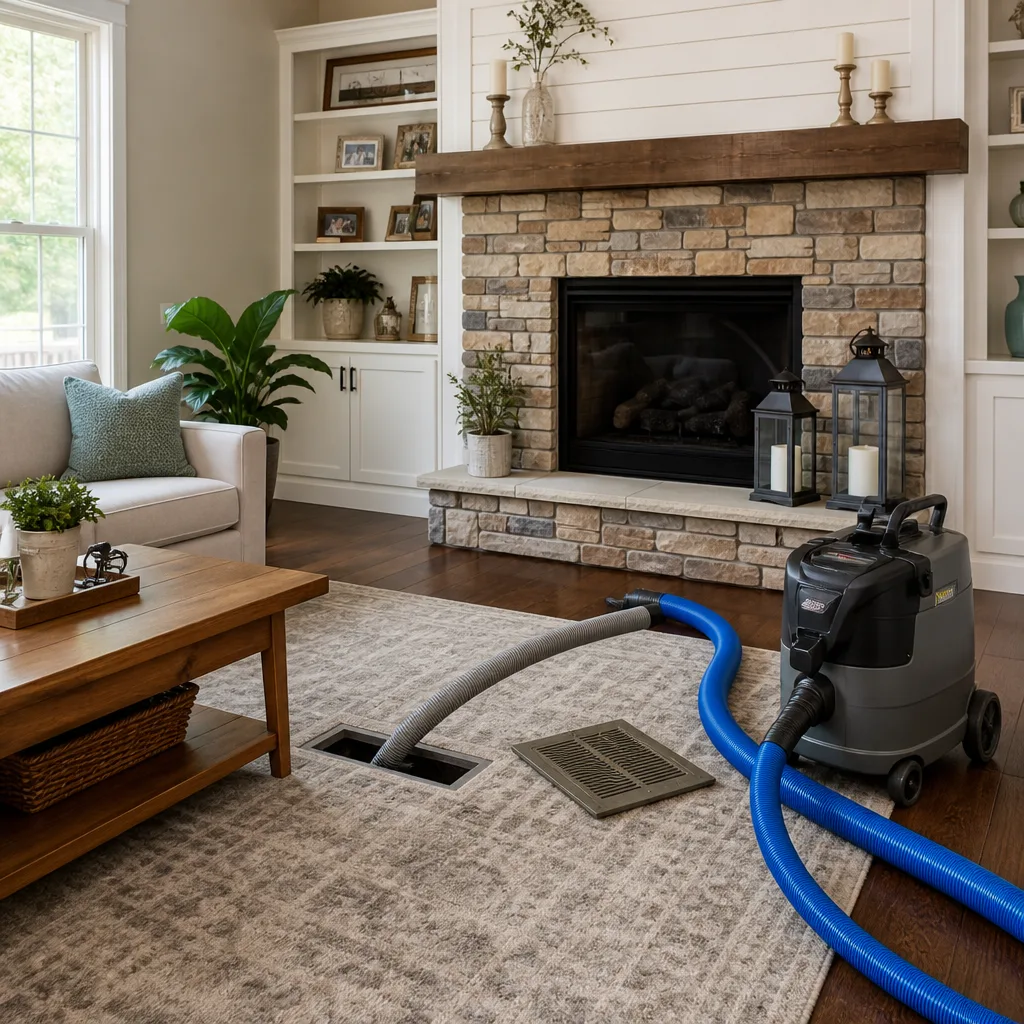
 Whole-home duct cleaning
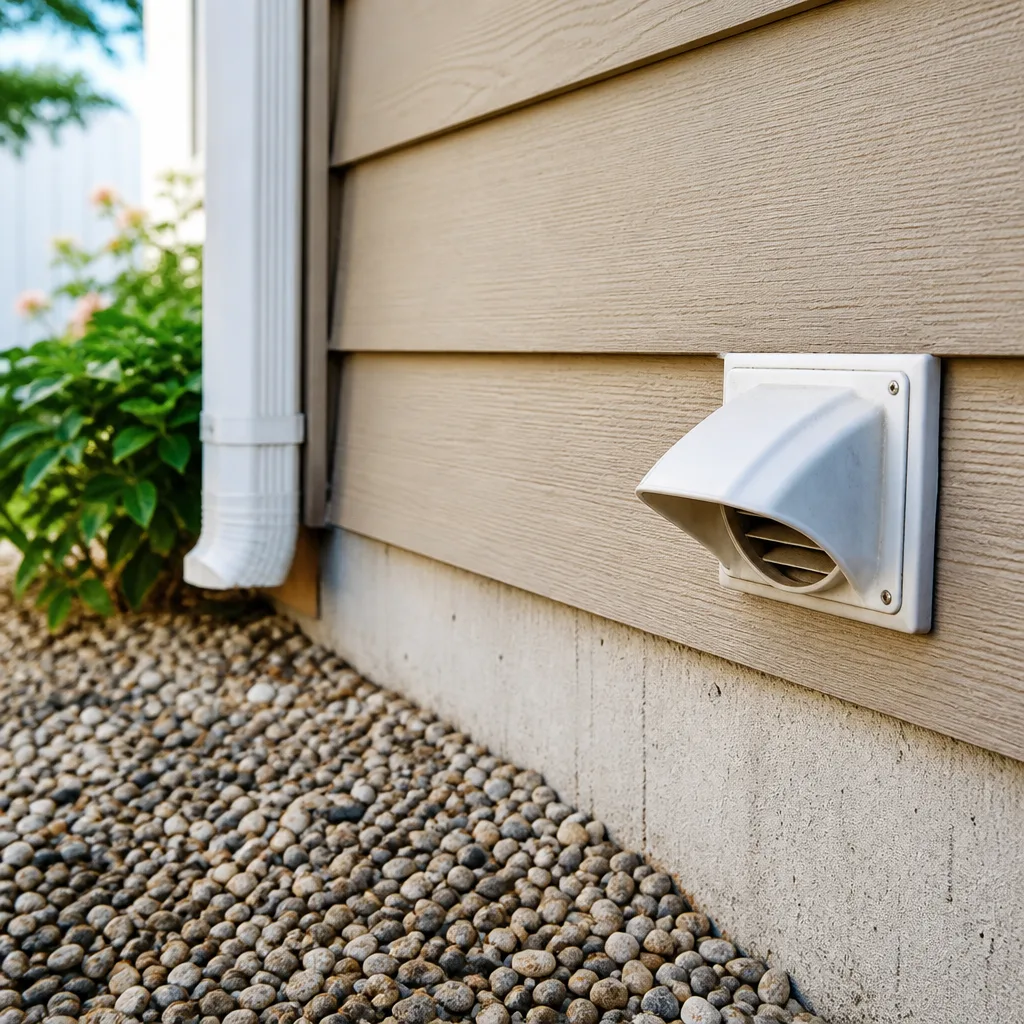 Dryer vent cleaning
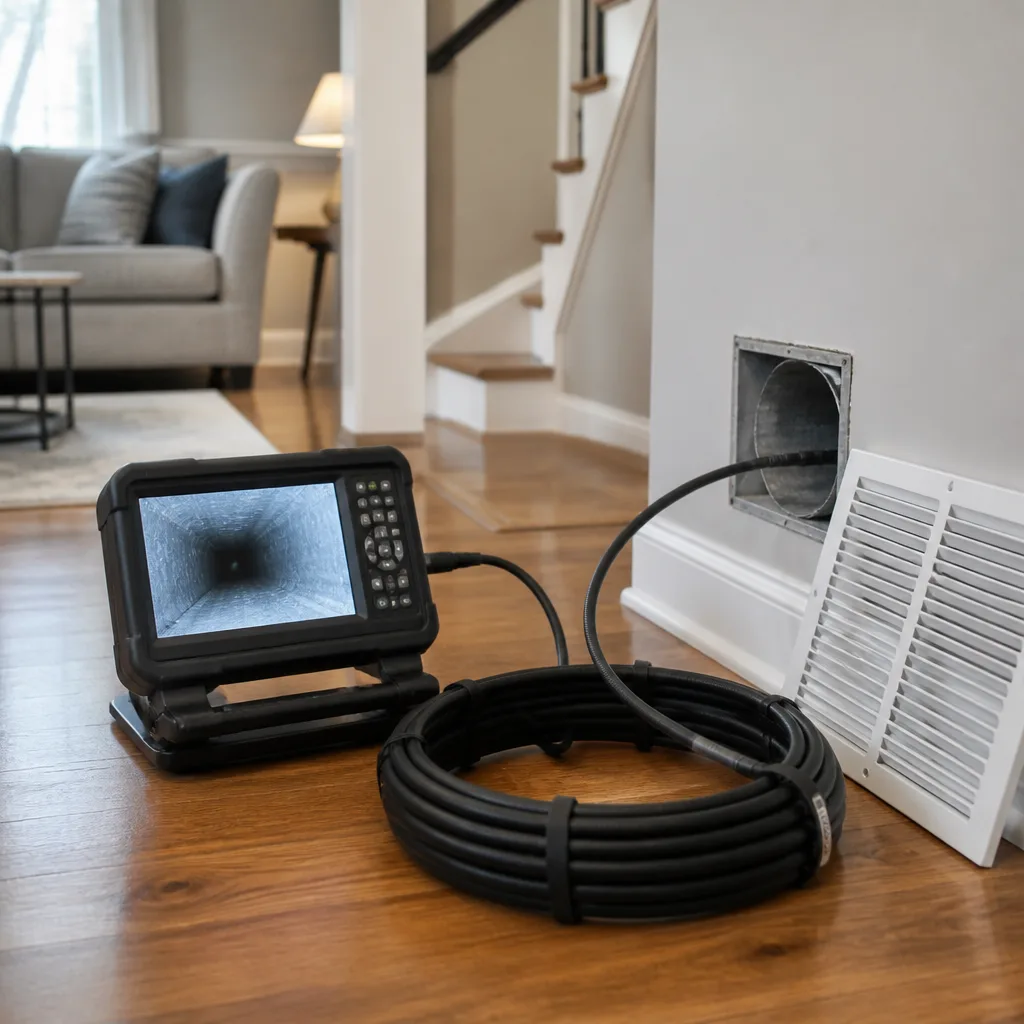 Camera inspection
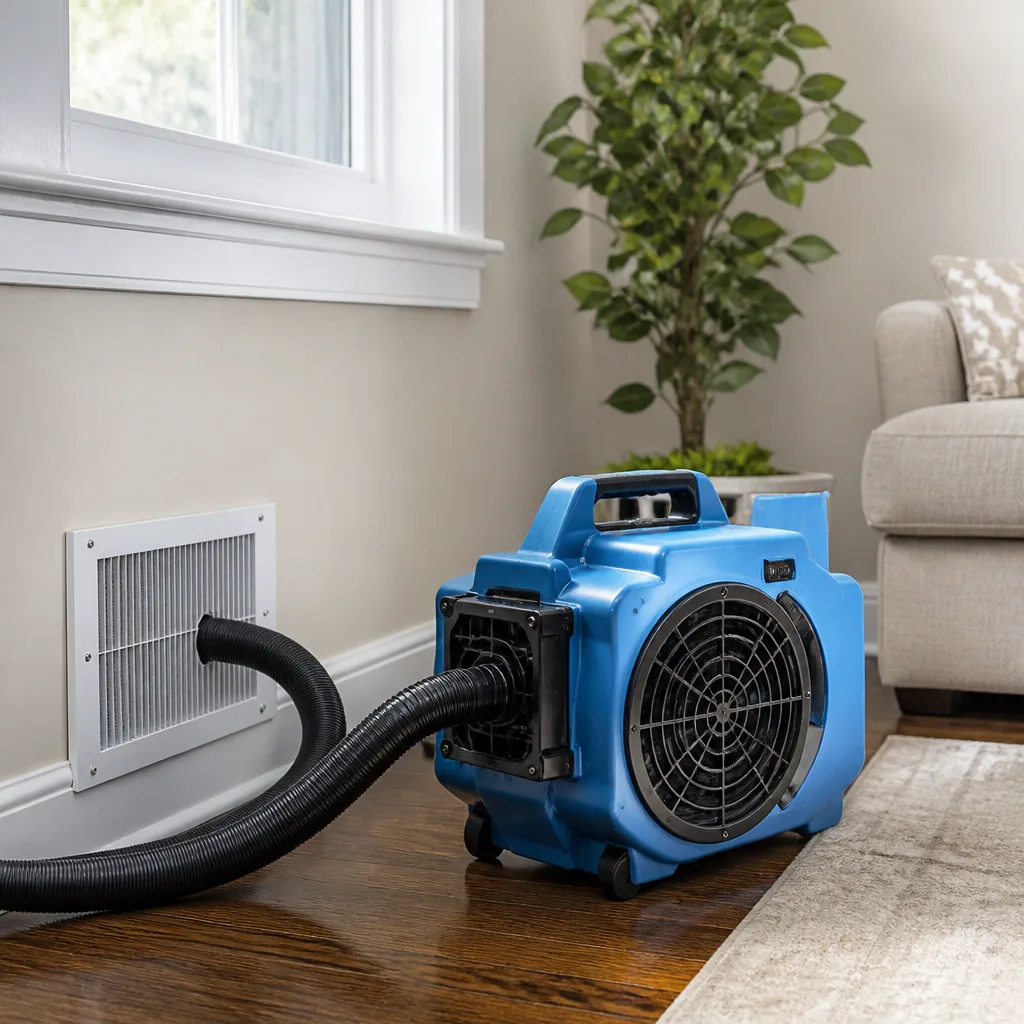 Sanitizing & deodorizing
Whole-system duct and dryer vent check with before-and-after photos - you see exactly what came out of your vents
That "$99 whole-house special" is a bait ad - the real number appears once they are in your hallway, or the "clean" is a shop-vac at the register. We photograph the inside of your ducts before and after instead.
Rotobrush Vent Sanitizing: The Los Angeles Owner’s Guide
Rotobrush vent sanitizing replacement in Los Angeles typically runs $165 to $390 installed, depending on your machine’s model year and whether we’re replacing the sanitizing cartridge, the delivery line, or the full atomizer assembly. We stock Rotobrush-compatible sanitizing parts for most Beater-Brush and Air-Sweep series machines on our trucks, so in most LA neighborhoods we can complete the swap in a single visit. Most owners discover the sanitizing function has failed the same way: the unit runs, the brush spins, but the mist that used to settle into the duct walls just isn’t there anymore, or it sputters out in uneven bursts instead of a fine fog.
The fix is usually straightforward once the right part is matched to the machine. Below we cover what fits what, what it costs, and what’s safe to check yourself before you call us at (213) 733-0665.
Which Rotobrush Models This Applies To
The vent sanitizing system on Rotobrush machines is a delivery assembly bolted near the brush head, not a universal drop-in part. We work on the Rotobrush aiR+ series, the Beater-Brush series (the older workhorses still running in a lot of LA vans), and the Air-Sweep 3000 and 4000 lines. Each uses a slightly different atomizer fitting and reservoir connection, so a Beater-Brush sanitizing kit will not seat correctly on an aiR+ unit without an adapter we’d rather not jury-rig. If you’re not sure what you have, open the side access panel and look for the silver data plate: the model number is stamped right there, usually starting with “RB” or “AS” followed by four digits.
On parts, there’s a real decision between genuine Rotobrush components and quality aftermarket equivalents. For the sanitizing cartridge and atomizer, we stock both. The genuine Rotobrush cartridge meters the sanitizing agent more evenly and tends to last 20 to 25 percent longer in our experience. A good aftermarket cartridge is cheaper up front and perfectly adequate for a machine used on, say, eight to ten jobs a month. If you’re running daily routes across Los Angeles, we’d steer you to the genuine part. We’re an independent service provider, by the way – not affiliated with Rotobrush – so we can sell you either without pushing. The honest answer is: match the part to your job volume, not the logo on the box. One compatibility gotcha worth knowing: early Beater-Brush models (pre-2008) used a threaded brass fitting, while everything later switched to a quarter-turn locking collar. The serial number is the only reliable way to tell them apart, and it’s a mistake we see DIY buyers make regularly.
Styles & brands we work with
Signs Your Rotobrush Vent Sanitizing Is Failing
- No visible mist when the sanitizing function runs. This is the most common failure. The atomizer nozzle is clogged with dried sanitizing agent, or the internal pump seal has cracked. In LA’s dry climate, residue hardens faster than in humid regions, so this failure shows up more often here than it does in, say, Miami.
- Uneven spray pattern, sputtering, or drips instead of fog. The delivery line has a partial blockage or an air leak at a fitting. You’ll see liquid pooling on the brush head instead of dispersing. It’s not just messy – the sanitizing coverage becomes so inconsistent that some duct sections get treated and others don’t.
- Reservoir drains unusually fast but you don’t see mist. Sanitizing fluid is leaking past the cartridge seal and running back into the machine body instead of through the atomizer. Left unchecked, it corrodes internal wiring and turns a $40 seal replacement into a $300+ control board repair.
- Machine runs but the sanitizing pump won’t cycle. Electrical fault, typically a failed micro-switch or a broken solder joint on the pump control board. On Beater-Brush units that have spent years in hot van interiors during LA summers, we see heat-related solder failures more than anything else.
- Sanitizing agent has a weak chemical smell or the ducts still smell musty after treatment. The agent itself may have gone stale in the reservoir – yes, sanitizing concentrate does expire, usually 12 to 18 months after opening – or the cartridge is metering far below spec. Either way, you’re paying for treatment without getting treatment.
See the difference
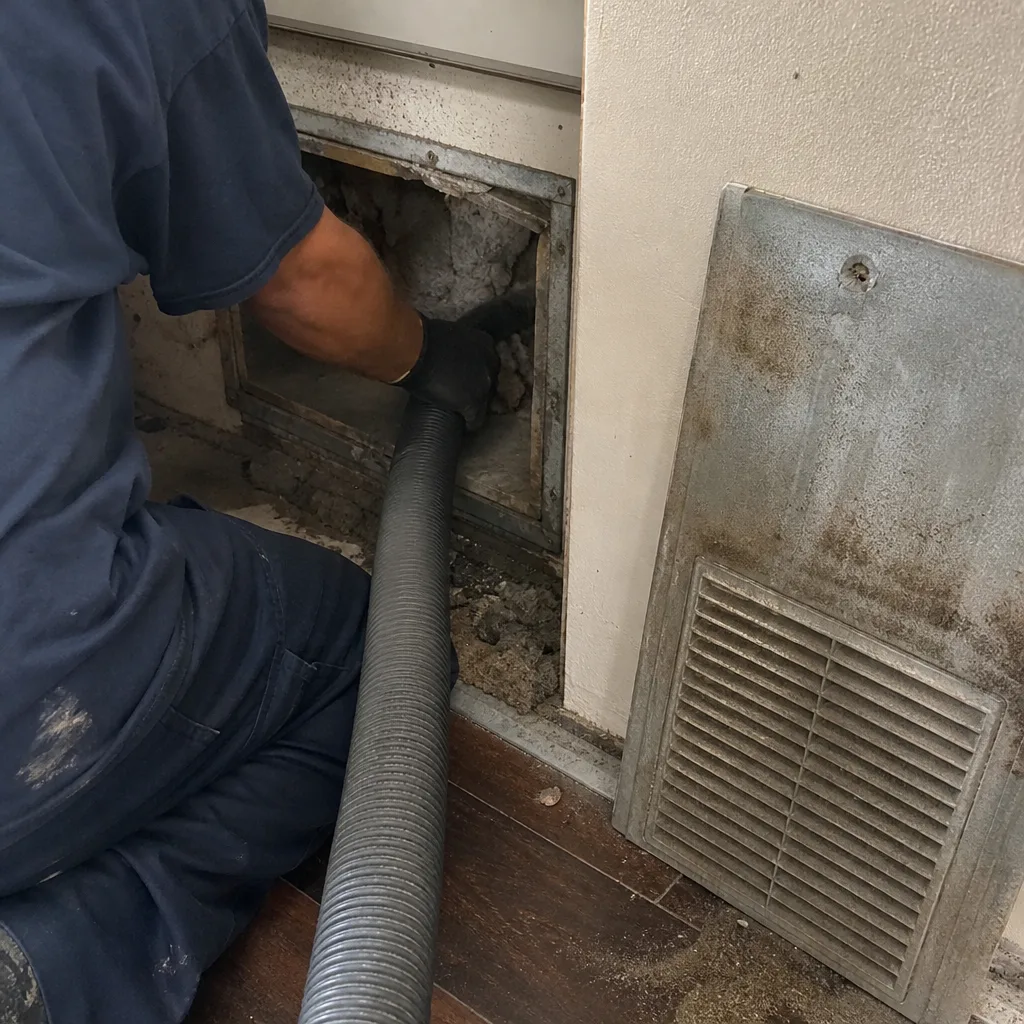 Before
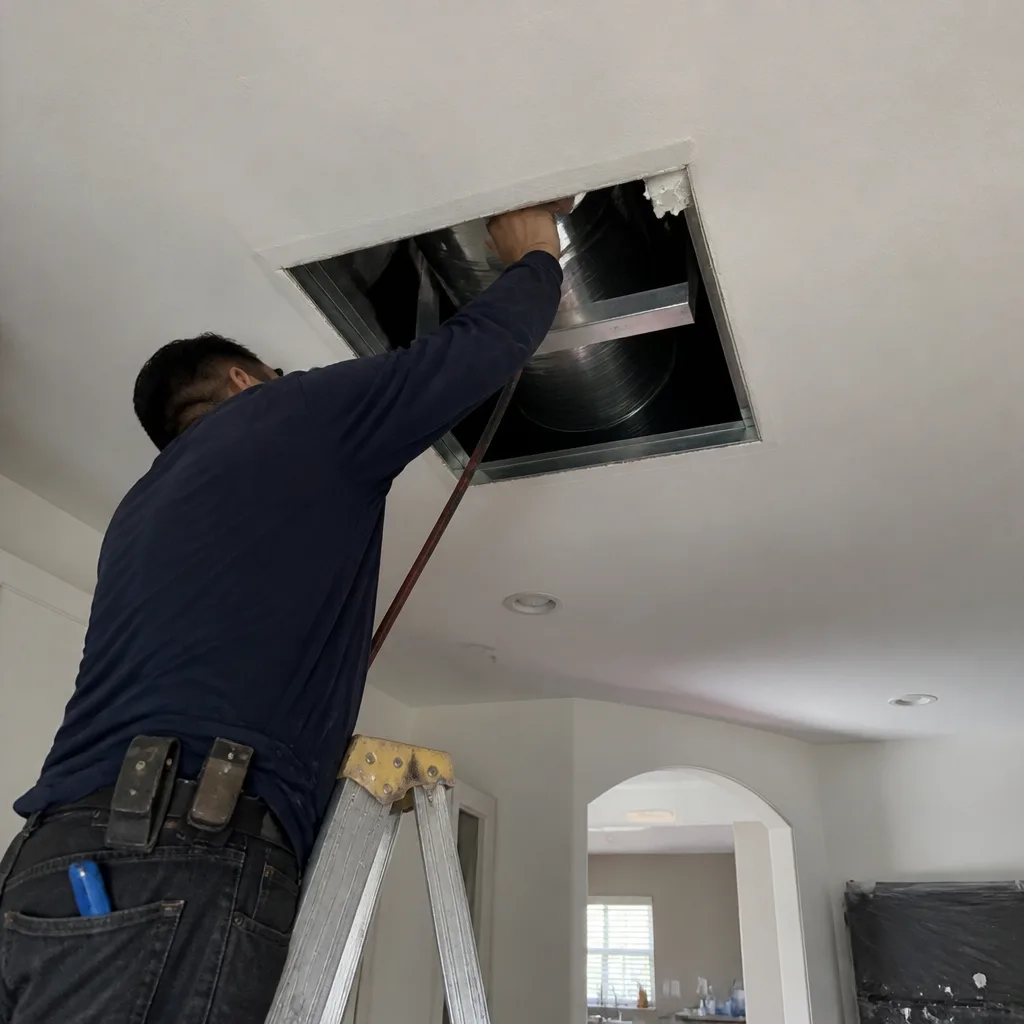 After
After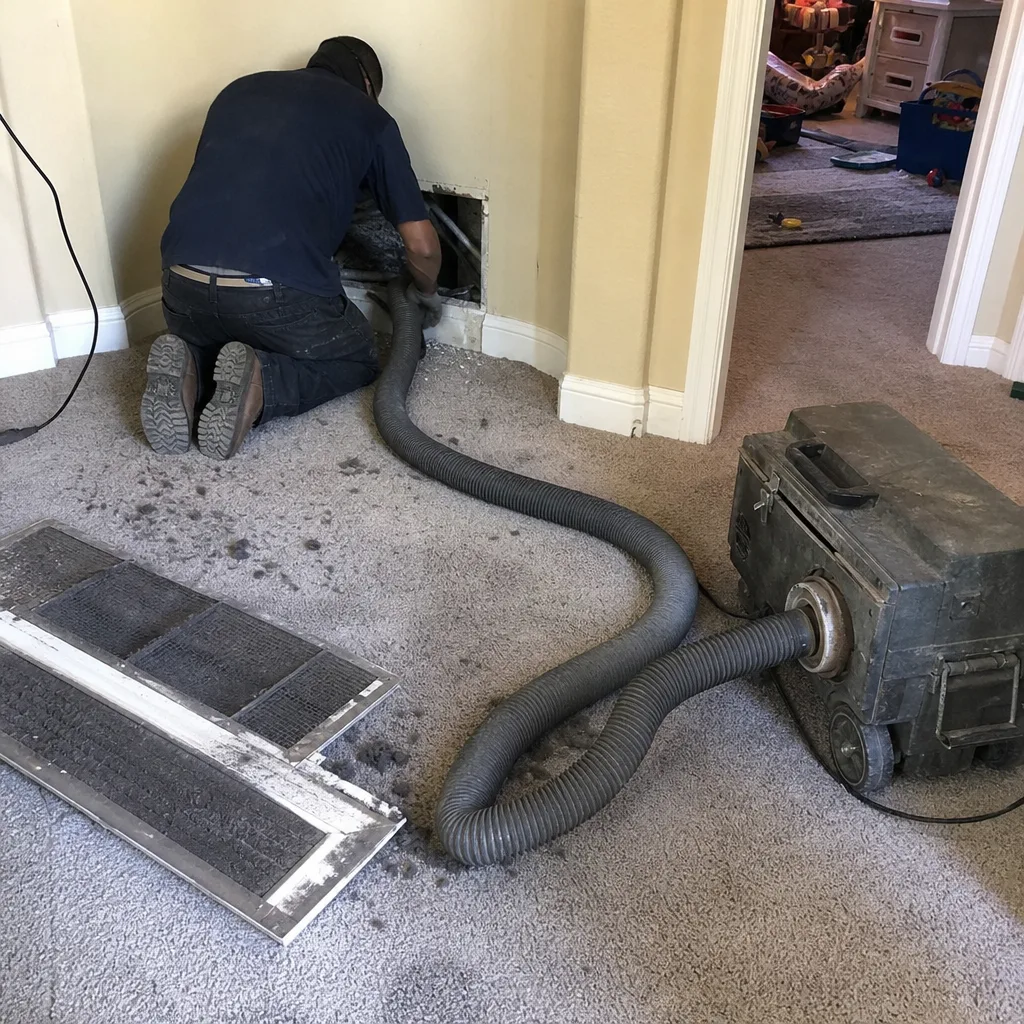 Before
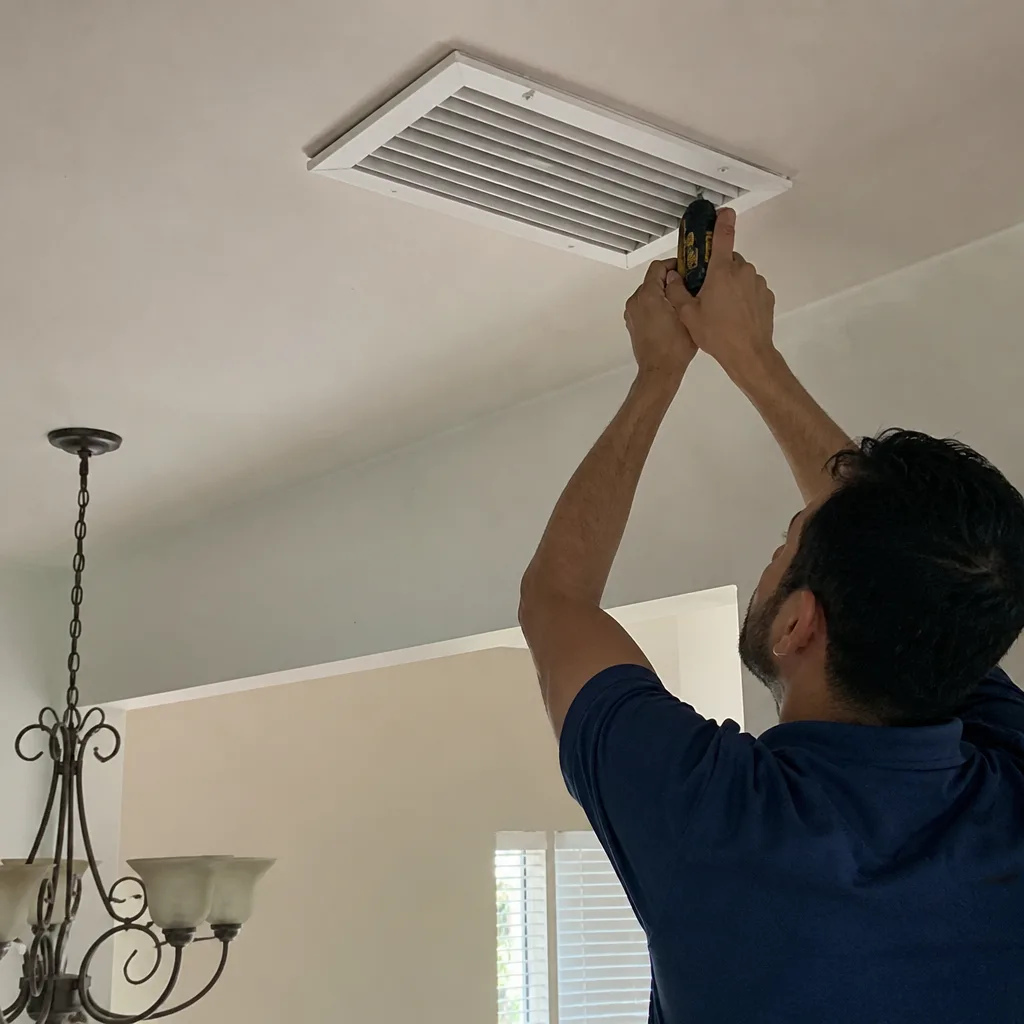 After
After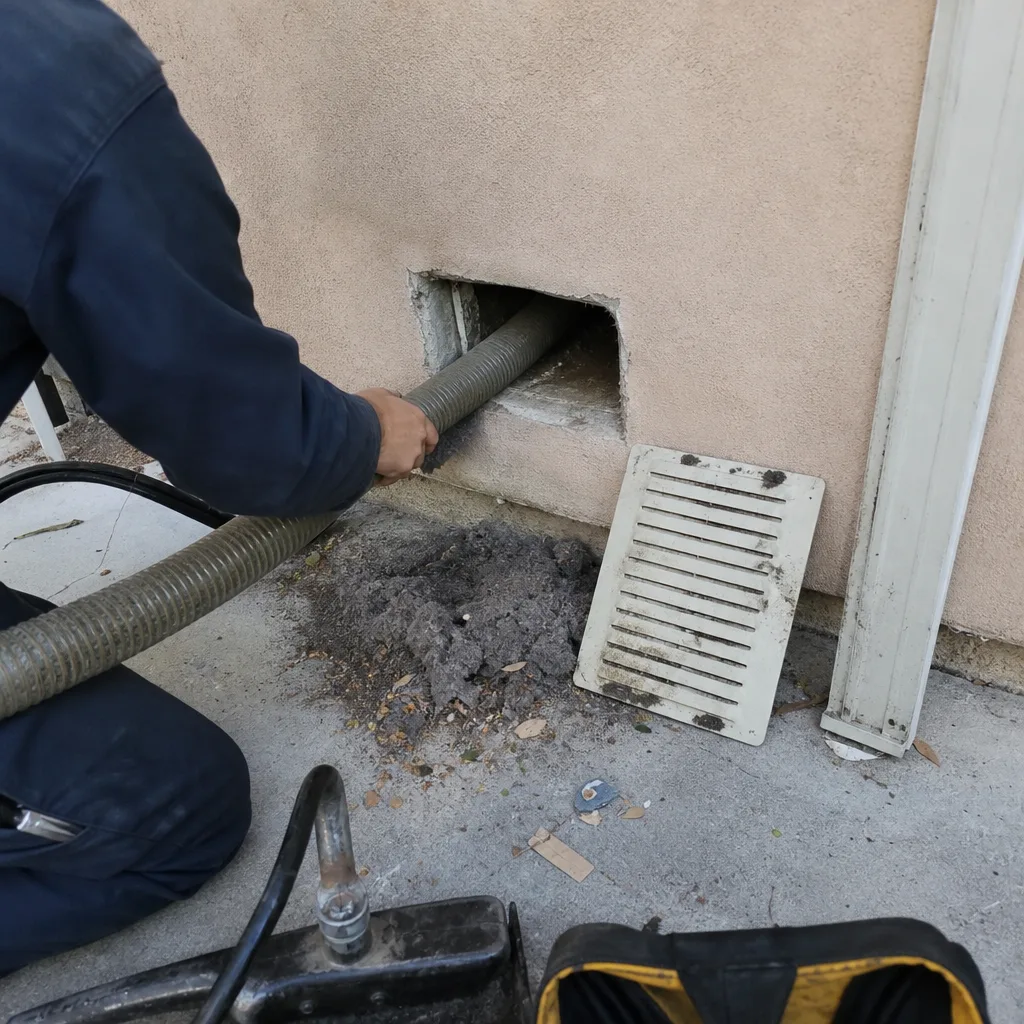 Before
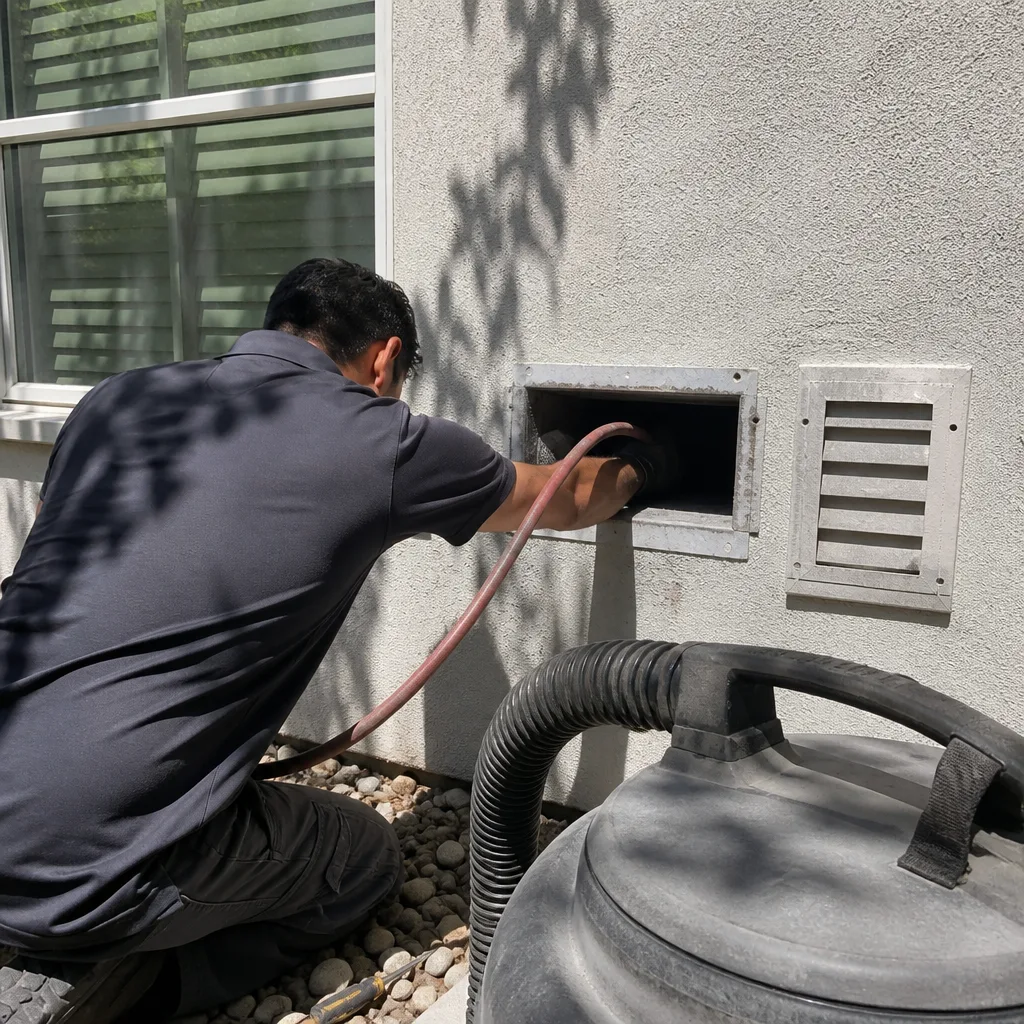 After
AfterReplacement Cost & What’s Included
Here’s what Rotobrush vent sanitizing replacement costs in Los Angeles, installed:
- Sanitizing cartridge only: $45 to $85 parts, $40 to $60 labor = $85 to $145 total
- Atomizer assembly (including nozzle and seals): $120 to $190 parts, $55 to $80 labor = $175 to $270 total
- Complete sanitizing system replacement (cartridge, atomizer, delivery line, pump rebuild): $240 to $390 parts and labor, depending on model year and what survived
What drives the range? The age of your machine and what the failure actually is. A cartridge swap is quick work. A full pump rebuild on a pre-2008 Beater-Brush, which often means tracking down a harder-to-find motor, lands at the top of this range. Our price is one flat number per job, written down before we touch a single component. No per-part add-ons at the door, no “while we’re in there” surprises. Every replacement carries the 365-Day Done Right Promise: if the part or our workmanship fails within the year, we return and make it right at no charge, in writing. And if it turns out we misdiagnosed the problem and your sanitizer still isn’t misting right after we leave, the second visit is also free. That’s not a courtesy. It’s the Kingswell Guarantee.
DIY or Call Us?
There’s a safe middle ground here. You can absolutely remove the sanitizing cartridge yourself and inspect the nozzle opening with a flashlight – clogged residue is visible. You can also check the reservoir for sludge or separation, which points to expired agent. What we’d flag before you go much further: the atomizer assembly on Rotobrush units sits close to the motor housing and the electrical side is exposed once the access panel is off. The sanitizing system is a low-voltage component, but you’re working near a machine that carries 110V through its main feed. If you’re not certain which wire is which, this is not a “watch a video and try it” job. A blown pump control board from a shorted probe costs far more than our labor charge would have been. Dale Whitmore grew up in the Palms neighborhood and has spent two decades working on these machines across Los Angeles; he’ll tell you straight up what’s worth doing yourself and what isn’t. Call (213) 733-0665 and describe what you’re seeing. Tell us what the unit’s doing, and we’ll give you an honest answer on the fix and the price before you spend a dollar.
FAQs
The typical Rotobrush sanitizing cartridge lasts 12 to 18 months of active use before the seal degrades or the metering valve starts to under-dose. In Los Angeles’s dry, warm conditions, we see the seal fail faster than the cartridge itself clogs, because the heat bakes the rubber fitting. If your machine sits unused for more than a month at a time, the residual sanitizing agent crystallizes in the nozzle and shortens the cartridge’s life. For a single-operating business running regular LA routes, budget one cartridge replacement a year. Call (213) 733-0665 and we can tell you whether your cartridge is showing early failure signs before you replace it.
Sometimes, and the call depends on what actually failed. A clogged nozzle is usually cleanable with the right solvent and compressed air; a cracked seal is a $20 fix. But once the atomizer’s internal check valve goes, rebuild kits are hit-or-miss and we’ve had better results replacing that assembly outright than trying to revive it. Our approach is to diagnose first, then quote the cheapest reliable fix – if a component can be repaired safely and stay reliable, we’ll tell you. If replacement’s the better long-term call, we’ll tell you that too, with a flat written price either way.
A cartridge swap takes about 20 minutes on site. A full atomizer and delivery line replacement typically runs an hour to 90 minutes, including testing the mist pattern on the brush head before we pack up. A complete system replacement, rare but sometimes necessary after a pump failure on older machines, can take a little over two hours. We carry the common parts on the truck, so unless you have a pre-2008 Beater-Brush needing a component we have to order, this is a single-visit job in most Los Angeles calls.
Yes. We keep Rotobrush-compatible sanitizing cartridges, atomizer assemblies, delivery lines, and seal kits on the truck for the aiR+, Beater-Brush, and Air-Sweep lines, along with OEM and quality aftermarket options for each. We also carry parts for Lennox, Trane, and Carrier systems we encounter on combined jobs. If your machine needs a component we don’t have on hand, we’ll tell you up front – in writing – what the part costs and when it’ll arrive, before you commit to anything.
Written by Dale Whitmore, Owner, Kestrel Air Duct Los Angeles at Kestrel Air Duct Los Angeles, serving Los Angeles and nearby areas.