
Last updated October 15, 2026
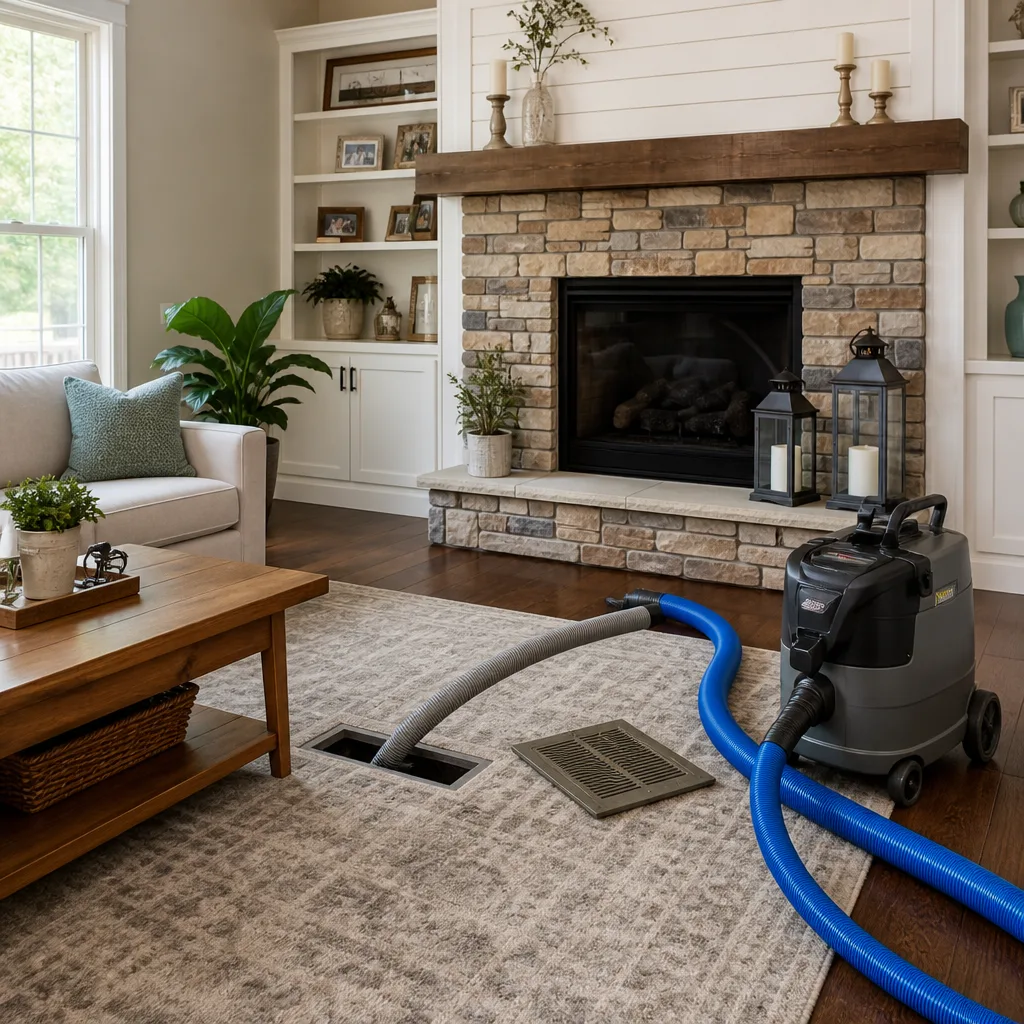 Whole-home duct cleaning
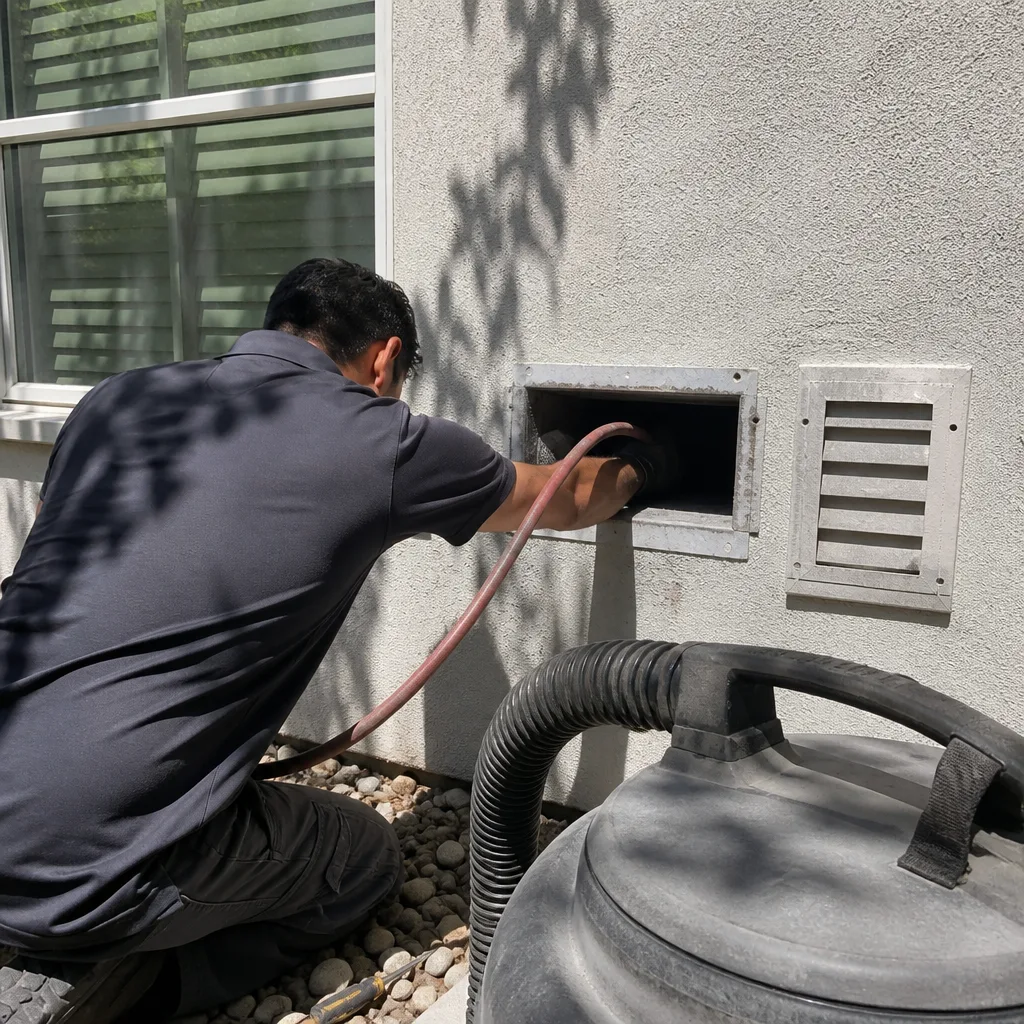
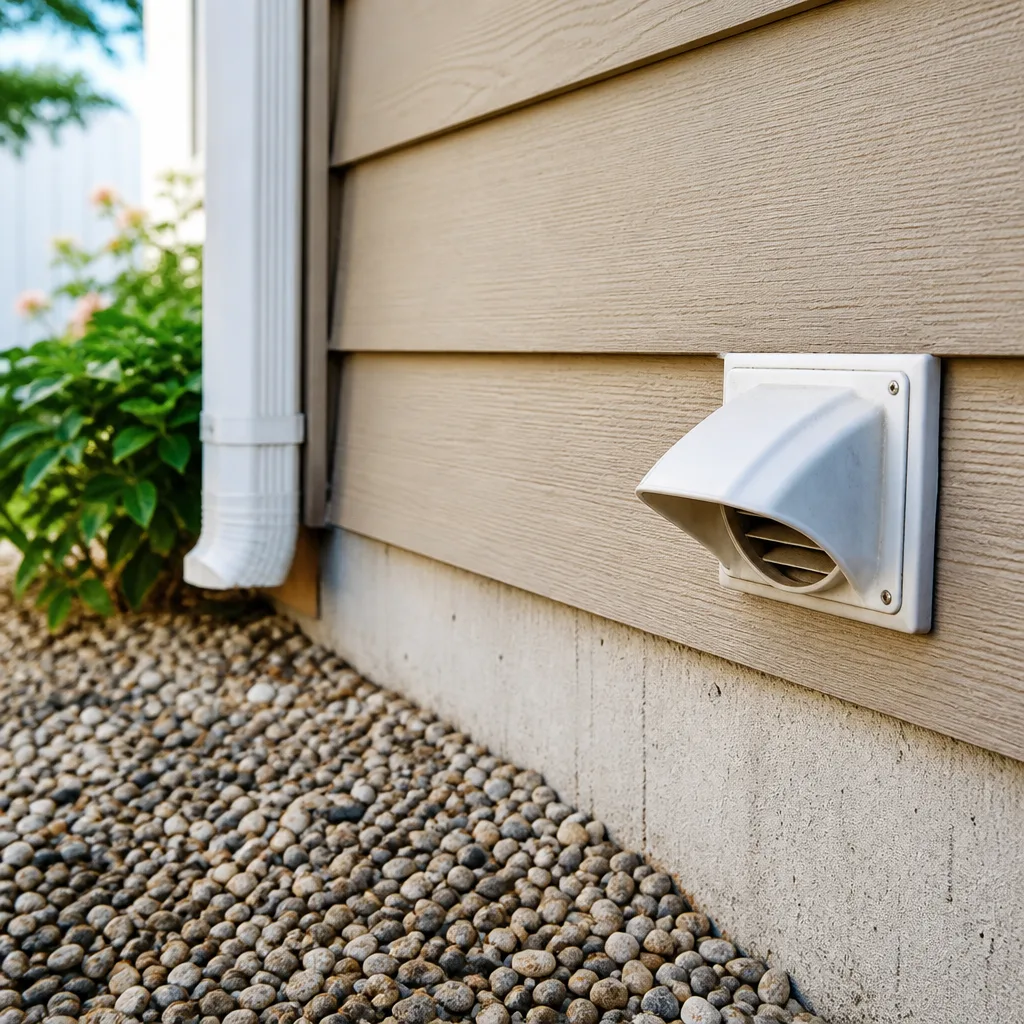 Dryer vent cleaning
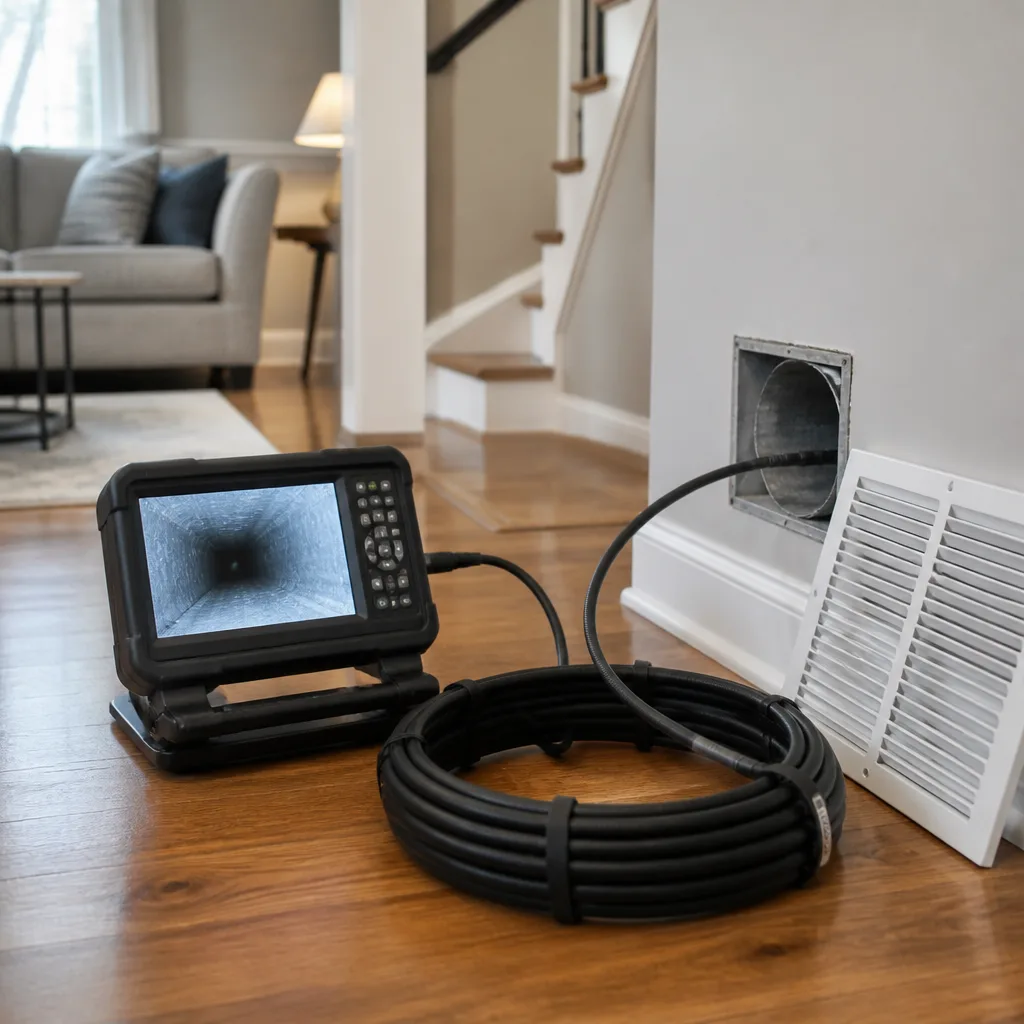 Camera inspection
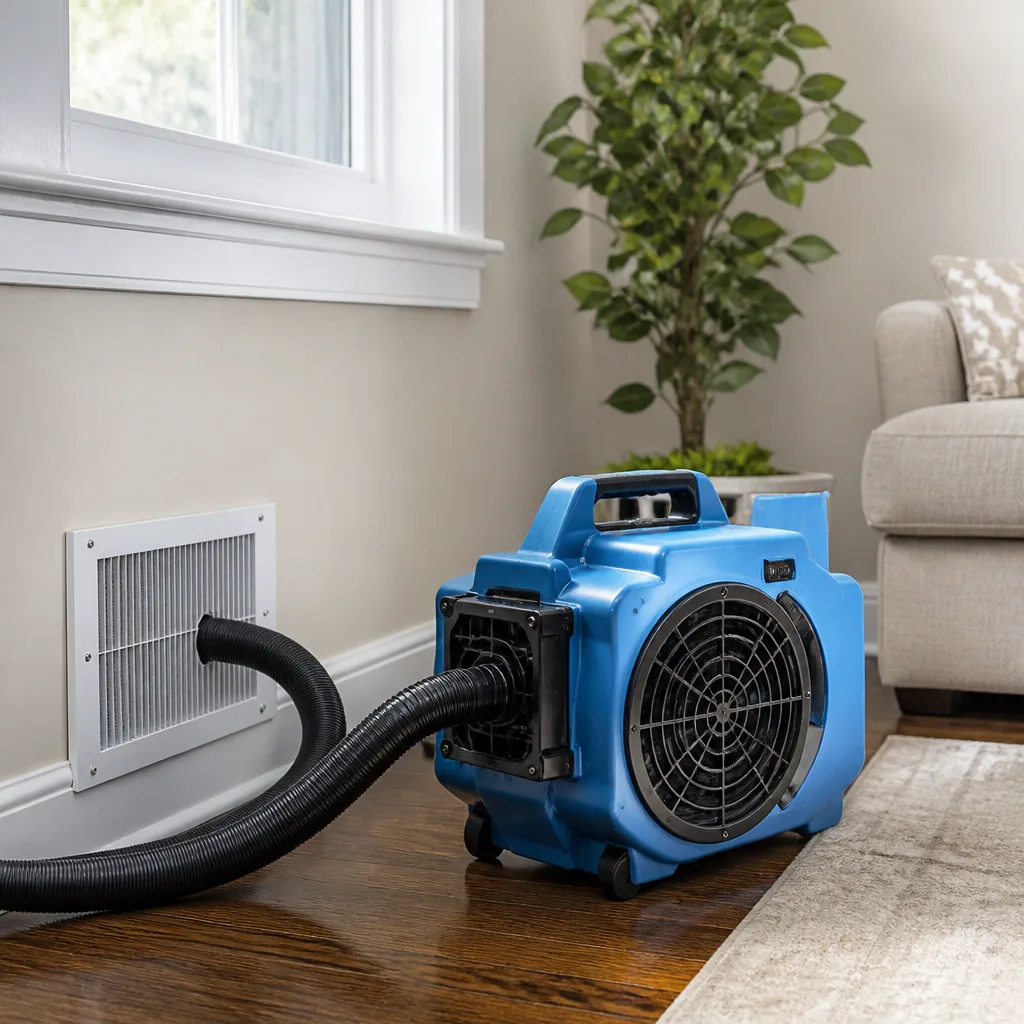 Sanitizing & deodorizing
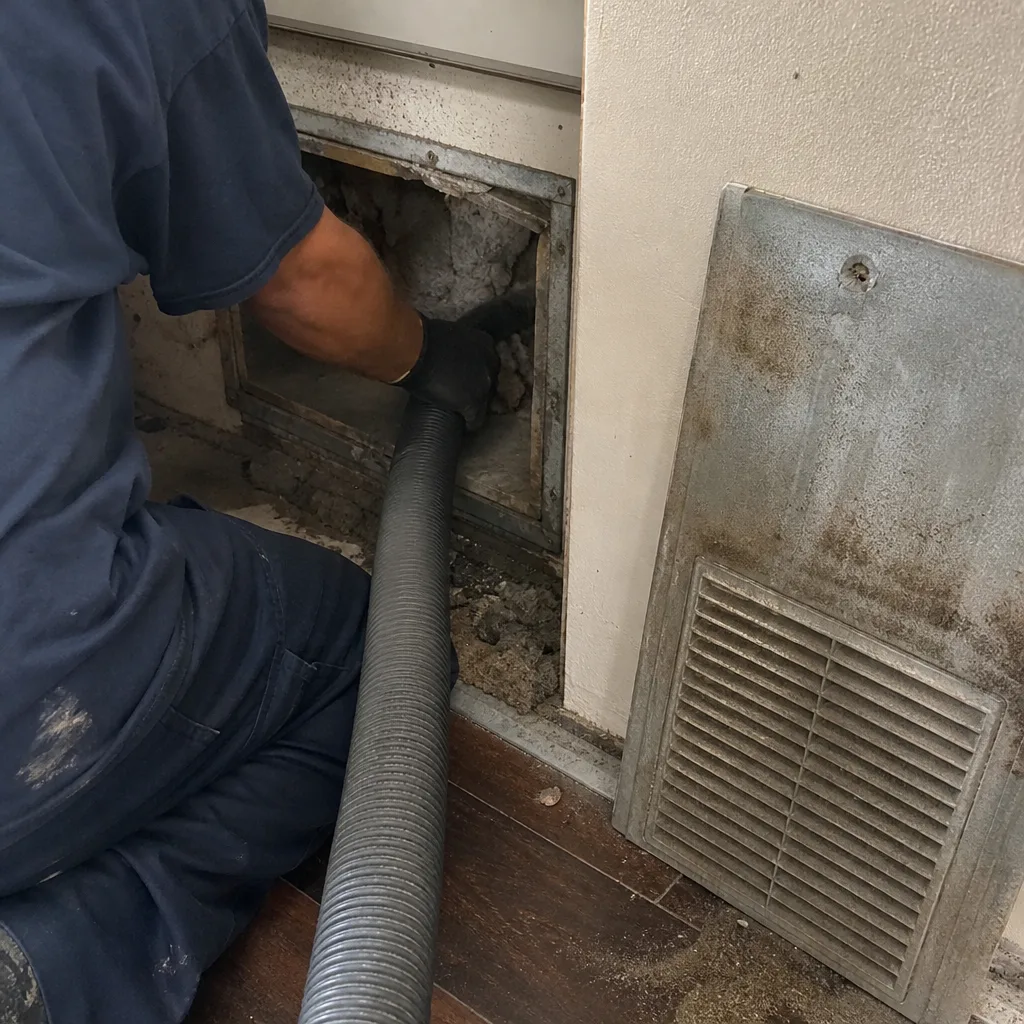
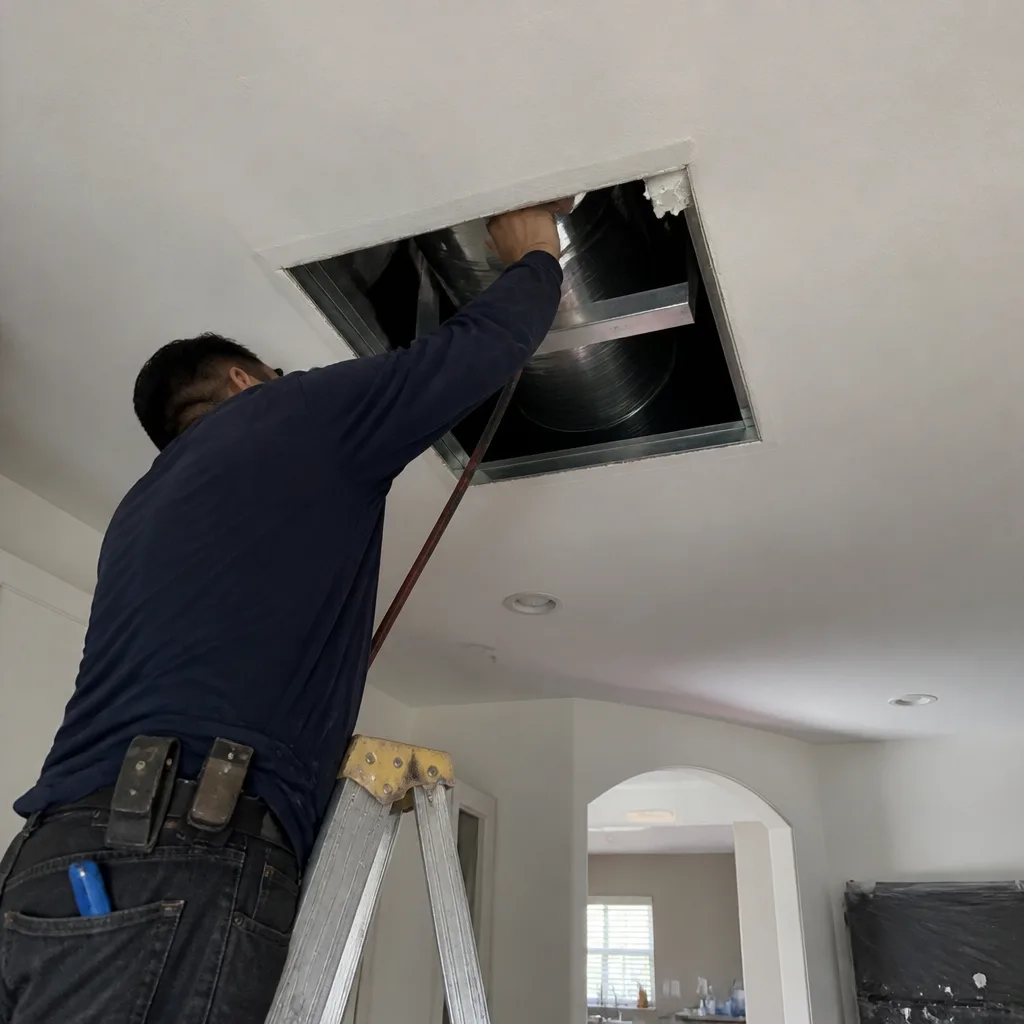
Whole-system duct and dryer vent check with before-and-after photos - you see exactly what came out of your vents
That "$99 whole-house special" is a bait ad - the real number appears once they are in your hallway, or the "clean" is a shop-vac at the register. We photograph the inside of your ducts before and after instead.
Air Duct Cleaning Maintenance Checklist for Los Angeles Homeowners
A $12 flashlight inspection of your return-air grille after any Santa Ana wind event takes four minutes and can tell you more about your duct condition than most Air Duct Cleaning inspections sold over the phone. Los Angeles homes face a unique combination of challenges: wildfire smoke, renovation dust from a city that’s constantly remodeling, and the fine particulate that Santa Anas push through every window seal and door jamb. This checklist responds to those conditions with specific triggers, specific measurements, and a clear line between what you can inspect yourself and what needs a professional’s tools.
Styles & brands we work with
Quick Answer
Air Duct Cleaning Warning Signs: A Los Angeles Homeowner’s Reference Guide makes clear this isn’t a once-a-year calendar task. It’s a condition-triggered maintenance schedule: inspect your return-air grilles monthly during wildfire and Santa Ana season, check your filter loading rate quarterly, and schedule professional cleaning when you see gray-brown dust accumulation thicker than a nickel on grille surfaces, when airflow drops noticeably in specific rooms, or after renovation or wildfire smoke events. Use a documented log so you’re tracking actual conditions, not guessing at dates.
Table of Contents
- The Room-by-Room Grille Inspection Protocol
- Trigger Events That Override Calendar Scheduling
- How to Read Your MERV Filter Loading Rate
- What to Document Before a Technician Arrives
- The Annual Duct Maintenance Log Template
- What Professional Equipment Actually Does
- Common Mistakes to Avoid
- When to Call a Professional
- Frequently Asked Questions
- The Bottom Line
The Room-by-Room Grille Inspection Protocol
Most Los Angeles homes have between 8 and 14 supply registers and 2 to 4 return-air grilles. The return-air grilles matter most for this inspection because they’re pulling unfiltered air from your living space back into the system. That’s where contamination becomes visible first.
What you need: a flashlight, your phone camera, and ten minutes. Start at the return-air grille closest to your living room or main hallway, then work room by room through every supply register.
What to look for, in order of severity:
- Light gray, dusty film – This is normal household dust and skin cells. If it’s thin enough to see the metal underneath, you’re within normal range. Note it, wipe it with a damp cloth, and move on.
- Dark gray to black accumulation thicker than a nickel – This is the signal for professional attention. It means the duct interior is holding enough particulate that it’s migrating back to the grille surface between cleanings. Not an emergency, but it’s now on the schedule.
- Brown or tan crusty buildup – In Los Angeles, this is often wildfire smoke particulate that has bonded with humidity inside the ductwork. It’s heavier and stickier than normal dust. If you smell a faint campfire odor when the system cycles on, this is your culprit.
- White or gray fibrous growth – In coastal and canyon neighborhoods where marine layer humidity is a daily fact, moisture inside ductwork can support microbial growth. If you see fibrous, white, or greenish patches – not just dust but something with texture and pattern – stop using the system in that zone and call a professional immediately.
- Visible debris protruding from register openings – Pet hair, construction debris, drywall dust, or pieces of insulation. This means the duct interior has accumulated enough material that air pressure is pushing it back out into your rooms.
Take photos of anything that concerns you. A photo with a coin for scale (a quarter works) gives your air duct professional a baseline before they arrive. In our experience in Los Angeles, homeowners who document their grilles monthly catch contamination six to eighteen months earlier than those who wait for a musty smell or visible dust on furniture to prompt a call.
One more Los Angeles-specific check: remove the supply register in any room that faces the street or an alley. Construction dust from nearby remodels, road resurfacing, and the general particulate load of city air settles in the first few feet of ductwork. If that section shows gray-brown accumulation while other rooms are clean, you’ve identified the entry point and likely the extent of the problem.
Trigger Events That Override Calendar Scheduling
A calendar reminder is the wrong tool for air duct maintenance in Los Angeles. The right tool is a trigger list. When any of the following events occur, move your duct inspection and potential cleaning to the top of the queue regardless of when the system was last cleaned.
Wildfire Smoke Within 20 Miles
Los Angeles sits in a basin that traps smoke. When fires burn in the Angeles National Forest, the Santa Monica Mountains, or any of the surrounding ranges, fine particulate works its way into homes through every small gap: window seals, door thresholds, exhaust vents, and even the HVAC system’s own condensate line. That particulate is far smaller and more invasive than household dust. It penetrates deep into ductwork and binds with existing dust to create a heavy, sticky residue that normal filter replacements won’t address. If wildfire smoke has been visible or the AQI exceeded 150 for more than 48 hours in your part of Los Angeles, schedule an inspection. Don’t wait for the next “annual” cleaning date.
Home Renovation of Any Size
Los Angeles is a city of constant remodeling. A bathroom re-tile, a kitchen gut, new flooring, even a significant drywall repair will pump gypsum dust, sawdust, and demolition particulate into your HVAC returns. That dust is abrasive and fine enough to bypass even a MERV 11 filter. Any renovation that required plastic sheeting or a dumpster means your ducts need at least an inspection afterward. If the renovation ran more than 30 days, schedule the cleaning – the duct load will be beyond what your filters can manage.
New Pet
A new dog or cat changes the particulate load in your home dramatically. Pet dander is lighter than human skin cells, stays airborne longer, and circulates through returns more readily. If you’ve added a pet, especially a long-haired breed common in Los Angeles apartments and homes, plan to inspect your return grilles monthly for the first six months. You’ll see the loading rate accelerate well before any odor develops.
HVAC System Replacement
New furnace, new air handler, new condenser – any of these means the old system’s accumulated contamination is now connected to new equipment. If the old system went years without duct cleaning, all that material is now resident in ductwork that feeds a new, tighter, more efficient system. The new system will move air differently, potentially dislodging years of settled material. Replacement time is the single best moment for a full duct cleaning, and many Los Angeles HVAC contractors explicitly recommend it during installation.
Post-Move-In
Moving into a new home in Los Angeles – whether it’s a 1920s bungalow in Highland Park or a 1990s tract home in the Valley – means inheriting the previous owners’ duct condition. You have no reliable way to know when the ducts were last cleaned, what pets lived there, or whether renovation dust was ever addressed. Treat move-in as a reset event. Inspect within the first week, and if the grilles show any accumulation, schedule a cleaning within the first month of occupancy.
Visible Dust Settling Rapidly After Cleaning
If you’re dusting furniture and within 48 to 72 hours a visible film has returned, the ducts are distributing particulate rather than containing it. This is a symptom, not a cause. When your HEPA-filtered vacuum and microfiber cloths can’t keep up with the pace of dust settlement, the reservoir is inside the duct system.
How to Read Your MERV Filter Loading Rate
Your HVAC filter is a measurement instrument, not just a protective layer. By tracking how quickly it loads with visible particulate, you get a proxy reading for how much contamination is circulating through your duct system. Here’s how to use it systematically.
Step-by-Step Filter Loading Assessment
- Establish a baseline with a new filter. Use a MERV 8 to MERV 11 filter for most Los Angeles homes. MERV 11 offers better wildfire-season particulate capture without restricting airflow on older systems. Write the install date on the filter frame with a permanent marker.
- Reset a simple loading timer. No special equipment needed. Plan to inspect the filter visually every 30 days. Hold it up to a bright light. If you can see light through the filter media, it’s still functioning. If light is blocked across more than 70% of the surface, it’s loaded.
- Track the days to 70% loading. A normal Los Angeles home with clean ducts and no renovation or wildfire exposure will load a MERV 8 to 11 filter to 70% in roughly 60 to 90 days. A home with contaminated ducts will hit 70% loading in 21 to 30 days. The accelerated loading rate means the duct reservoir is adding particulate faster than the filter can capture it.
- Repeat the tracking for three consecutive filter changes. Three data points tell you whether loading is stable, accelerating, or improving. Stable at 60 to 90 days is normal. Accelerating (each filter loads faster than the last) suggests the duct environment is degrading. Improving after a duct cleaning confirms the cleaning removed a significant particulate source.
For homes in Los Angeles neighborhoods with higher airborne particulate – those near the 405, the 10, or industrial corridors in the South Bay and San Fernando Valley – expect closer to 45 to 60 days for a MERV 8 filter. That’s not a duct problem. That’s ambient air quality, and it’s exactly what your filter is designed to do.
If you upgrade filtration, consider Aprilaire or Honeywell media filters, which offer higher MERV ratings with thicker media that maintains airflow. Kestrel’s Los Angeles home page has more detail on what filtration options work for different system types. The filter itself doesn’t clean ducts, but a good filter combined with clean ducts gives you an accurate loading-rate baseline.
What to Document Before a Technician Arrives
Before any air duct cleaning in Los Angeles, check Air Duct Cleaning Permits, Codes & Inspections in CA: What You Need to Know-a small documentation effort pays off in warranty enforcement and quality verification. Here’s what to capture and why it matters.
- Photograph every grille and return before work starts. Use your phone camera. Take one wide shot showing the grille in context, then one close shot showing the current condition of the grille surface. These photos are your pre-service baseline. If a question ever arises about whether a particular vent was addressed, you have evidence of its prior state.
- Note any odor in writing. When you smell it, what it smells like (musty, campfire, pet, chemical), and which rooms. Odors are transient and hard to verify after the fact. A written note with dates is far more useful than a memory. Share this with the technician when they arrive.
- Note rooms with uneven airflow. Walk the house while the system is running. Feel each register. Record which rooms feel weak, strong, or closed. This tells the technician which duct runs may be restricted, and it gives you an objective measure to compare after cleaning. If the weak room improved, the cleaning addressed a real obstruction.
- Check and document your filter’s current state. Leave the filter in place for the technician to see, but take a photo first. The filter’s condition tells the story of what’s been passing through the system.
- Write down the last cleaning date, if known. If the previous owner left a receipt or the home warranty documents mention it, note it. If you don’t know, write “unknown.”
- Clear access to the air handler. The technician needs to get to the blower compartment and the main return plenum. Move stored items away from that area before the arrival window. It speeds the work and reduces the chance of damage to your belongings.
This documentation takes 25 minutes. It transforms the discussion from “I think it might be dirty” to “Here’s what I’ve observed.” That specificity helps the technician target the work, and it gives you a defensible baseline if anything about the work quality is ever in question.
The Annual Duct Maintenance Log Template
Simple beats sophisticated here. A single page per year, kept in a binder or a Notes app on your phone, is all you need. The goal is a record that tells you, at a glance, what condition the system was in and when.
What to Track
- Filter changes: date installed, MERV rating, days to 70% loading, any visual notes on the used filter (color, thickness of dust, presence of large debris).
- Grille inspections: date, findings for each return and any supply registers you checked, photo file name or location.
- Trigger events: date and description of any wildfire smoke exposure, renovation work, new pet arrival, HVAC system work, or move-in.
- Professional cleanings: date, company name, scope of work completed, equipment used, final price paid, any before-and-after photos provided by the company.
- Post-cleaning airflow measurements: after any professional cleaning, walk the house and note which rooms improved, which stayed the same, and any rooms that got worse (not common, but worth documenting).
- Odor notes: any smell observations with dates and rooms.
Sample Log Entry
October 15: Filter changed, MERV 11, installed 8/1, loaded to 70% in 75 days. Normal. Grille inspection: living room return shows light gray film, acceptable. Hallway return clear. No action needed.
November 3: Santa Ana event. AQI in our part of Los Angeles topped 150 for two days. Checked all returns on November 5. Hallway return shows brown-gray accumulation in streaks. Photo taken. Scheduling inspection.
This log is not about being obsessive. It’s about having an objective record that guides decisions. When someone asks how often Los Angeles homeowners should clean their ducts, the honest answer is: “It depends on what your log tells you.” A home in Brentwood with no pets, no renovation, and good filters may go five years between cleanings. The same size home in Sherman Oaks with two dogs, a kitchen renovation last spring, and wildfire smoke exposure every fall may need cleaning annually. The log tells you which one you are.
Kestrel Air Duct Los Angeles provides a simple written log template to every customer after Air Duct Cleaning in Los Angeles service, so you don’t have to design the system yourself.
What Professional Equipment Actually Does
When a professional air duct cleaning company arrives at a Los Angeles home, the equipment matters more than the marketing. Here’s what the real tools do, explained plainly.
Rotobrush rotary brush agitation is a motorized brush head that spins inside the ductwork. The brush physically dislodges the particulate that has adhered to duct walls – the wildfire soot residue, the renovation gypsum dust, the accumulated pet dander that’s been compressed by months of airflow. Without mechanical agitation, you’re only removing the loose stuff. The brush removes what’s stuck.
Nikro negative-pressure extraction creates vacuum inside the duct system while the agitation is happening. The entire system is sealed and placed under negative pressure, so loosened debris is pulled back to a containment unit rather than escaping into the living space. Think of it as the difference between sweeping a floor with a broom and using a vacuum – negative pressure captures the airborne fraction that a broom just moves around the room.
Abatement Technologies HEPA filtration runs on the exhaust side of the extraction equipment, capturing 99.97% of particles at 0.3 microns. This matters in a Los Angeles context because the particles being extracted – wildfire smoke residue, construction dust, pet dander – are exactly the ones that trigger respiratory irritation. The HEPA filter keeps them out of the air while the work is happening.
Box-store vacuum attachments and DIY duct cleaning kits sold online cannot provide negative-pressure extraction. They lack the seal and suction to pull air through the entire duct run from a single access point. What they do is dislodge some surface dust and push the rest deeper into the system. Professional tools are a difference in kind, not just degree.
After cleaning, some homeowners add upgraded filtration. Honeywell and Aprilaire media filters hold more particulate between changes, and Guardsman products offer IAQ support for homes where occupants have respiratory sensitivities. These aren’t substitutes for duct cleaning – they’re additions that help maintain cleaner air between service visits. Our Dryer Vent Cleaning in Los Angeles page covers the separate but related issue of lint accumulation in dryer exhaust lines.
Common Mistakes to Avoid
- Relying on a calendar reminder instead of condition triggers. A duct cleaning scheduled every three years because “three years have passed” ignores the actual condition of the system. Wildfire season, renovation work, and pet additions all change the contamination rate. Inspect by condition, not by date.
- Accepting a low teaser price without a written scope of work. Some Los Angeles air duct cleaning ads quote a per-vent price that becomes a much larger invoice once the technician counts your vents and adds fees for access, debris removal, or “sanitizing.” A legitimate quote gives a whole-system price in writing before work starts.
- Skipping the pre-work photos. Without a photographic baseline, you can’t verify what changed. Take five minutes to photograph every grille and return before the technician arrives. If a dispute ever arises, your photos are the evidence.
- Assuming a new filter equals clean ducts. A filter captures particulate that passes through it. It does nothing for material already settled inside the ductwork. If the ducts haven’t been cleaned in years, a fresh filter just means cleaner air moving through dirty passages.
- Ignoring the dryer vent while focusing on HVAC ducts. Dryer lint is a fire hazard and a signal that the entire vent run needs attention. Los Angeles homes with long dryer vent runs – common in older construction – are especially prone to blockages. A dryer that takes two cycles to dry a load is telling you the vent is restricted.
- Treating all rooms the same. Supply registers near entry points, kitchens, and street-facing windows accumulate contamination faster than interior rooms. Focus inspection attention where the load is highest. If those rooms are clean, the rest of the system likely is too.
- Waiting until you can smell it. By the time a musty or smoky odor is noticeable from the vents, the accumulation is substantial. Visible film on the grilles comes weeks or months before odor. Inspect visually and act on what you see, not just what you smell.
When to Call a Professional
Some conditions warrant a professional inspection rather than a homeowner’s DIY check. If you see dark gray-to-black accumulation thicker than a nickel on return-air grilles, that’s a clear signal. Fibrous or patterned growth anywhere in the system is a professional matter, not a DIY project – moisture-related contamination needs specific protocol. If a renovation project ran more than 30 days, or if wildfire smoke was visible in your Los Angeles neighborhood for more than 48 hours, the duct load has likely exceeded what your regular filter replacement can manage. If rooms feel uneven in airflow and the weak room hasn’t improved after filter changes, the restriction may be inside the duct run itself. Kestrel Air Duct Los Angeles offers free estimates – call (213) 733-0665 for a written assessment.
Frequently Asked Questions
Most single-family homes in Los Angeles run between $400 and $900 for a full-system air duct cleaning, depending on home size, number of systems, and accessibility of the ductwork. That’s a whole-system price, not a per-vent calculation that gets inflated at the door. Some companies quote low per-vent prices and then count vents, add fees for access, and charge separately for “sanitizing” – the final invoice lands well above the teaser rate. A legitimate Los Angeles duct cleaning company gives you a written whole-system price before any work starts. Call (213) 733-0665 for an exact quote – estimates are free and the price you’re quoted is the price you pay.
There’s no universal answer for every Los Angeles home because contamination rate varies so widely by neighborhood, household composition, and event exposure. A typical pet-free home in a low-particulate area with good filter discipline may need cleaning every 4 to 6 years. A home with two dogs, a recent kitchen renovation, and annual wildfire smoke exposure may need it every 1 to 2 years. The condition-triggered approach – inspecting grilles monthly and tracking filter loading – tells you when your specific home needs service. Your log, not a generic schedule, is the answer.
Cheaper Los Angeles air duct cleaning quotes typically reflect a different scope of work. A $99 “whole house” special often covers only a surface vacuum of accessible registers, with technician compensation tied to upselling additional services on-site. The final invoice can reach $500 or more once “sanitizing,” “debris removal,” and per-vent fees are added. A flat, whole-system price from a company that gives it to you in writing before work starts is the only reliable comparison. If a quote seems too good to be true, ask what exactly is included and what costs extra.
Before the technician arrives, photograph every grille and return from two angles. After the work is complete, compare the photos. The grille surfaces should be clean, and if the company provides before-and-after photos of the duct interior – as Kestrel Air Duct Los Angeles does – you’ll see the wall surfaces changed from dark and coated to bare metal or near-bare. Run the system and check that the weak rooms you noted in your pre-job documentation now feel stronger. If the evidence doesn’t match the invoice, the work wasn’t done thoroughly, and that’s exactly when a written guarantee matters. For specific questions about your system, call (213) 733-0665.
The 365-Day Done Right Promise is a written guarantee from Kestrel Air Duct Los Angeles stating that if the air duct cleaning falls short within one year of the service date, Kestrel returns and makes it right at no charge. It covers issues like incomplete cleaning of duct runs, missed registers, or airflow problems that persist after service. To invoke it, you call, reference your original service date and written guarantee, and describe the specific issue. The same standard applies to dryer vent work. It’s not a vague satisfaction pledge – it’s documented on paper with every job.
No, a shop vac cannot clean air ducts. The hose doesn’t reach more than a few feet into the duct run, the vacuum lacks the seal needed for negative-pressure extraction through the entire system, and the filtration doesn’t capture the fine particulate that gets airborne during the work. What a shop vac does is dislodge some surface dust near the register and push the rest deeper into the system where it settles and compacts. Duct cleaning requires a rotary brush to agitate the duct walls and a negative-air system to extract the loosened material – equipment that professional companies bring to the job. As with any system involving mechanical agitation and air quality, this isn’t a DIY task for a trained professional to guide you through – call (213) 733-0665 with questions.
The Bottom Line
For more guides & resources, visit our blog. Air duct maintenance in Los Angeles is not a date-driven chore. It’s a condition-driven habit: monthly grille inspections, quarterly filter loading checks, documented trigger events, and a written log that tells you when the right time is for professional cleaning. The pre-job documentation and the post-job comparison are what separate a real cleaning from a surface vacuum job. When your log says it’s time, get a written whole-system price before work starts, and hold the company to a written guarantee – in Los Angeles, the accountable operators, like Kestrel Air Duct Los Angeles under the Kingswell Guarantee, have been doing it that way since 2004. Call (213) 733-0665 for a free estimate and a price you can point to.
Written by Dale Whitmore, Owner at Kestrel Air Duct Los Angeles, serving Los Angeles since 2004.
See the difference
 Before
 After
After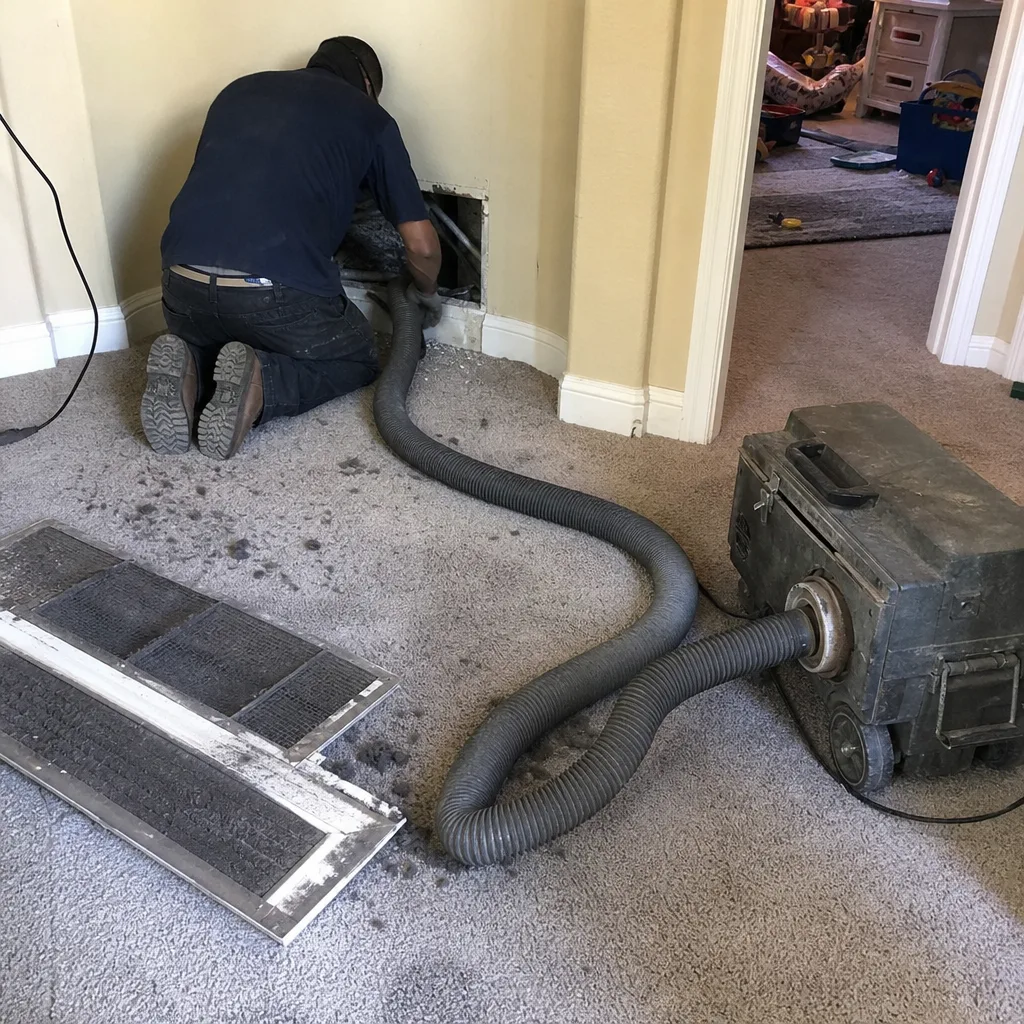 Before
 After
After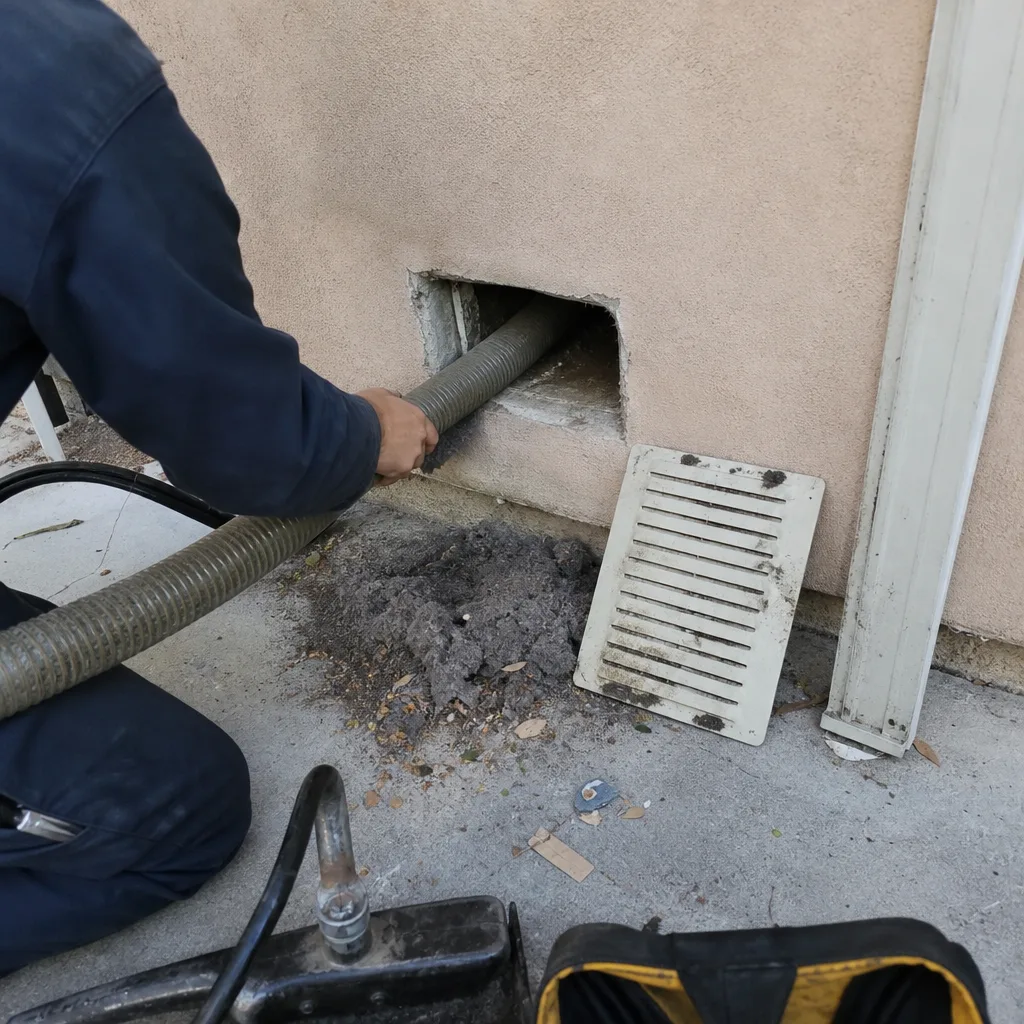 Before
 After
After