
Last updated October 15, 2026
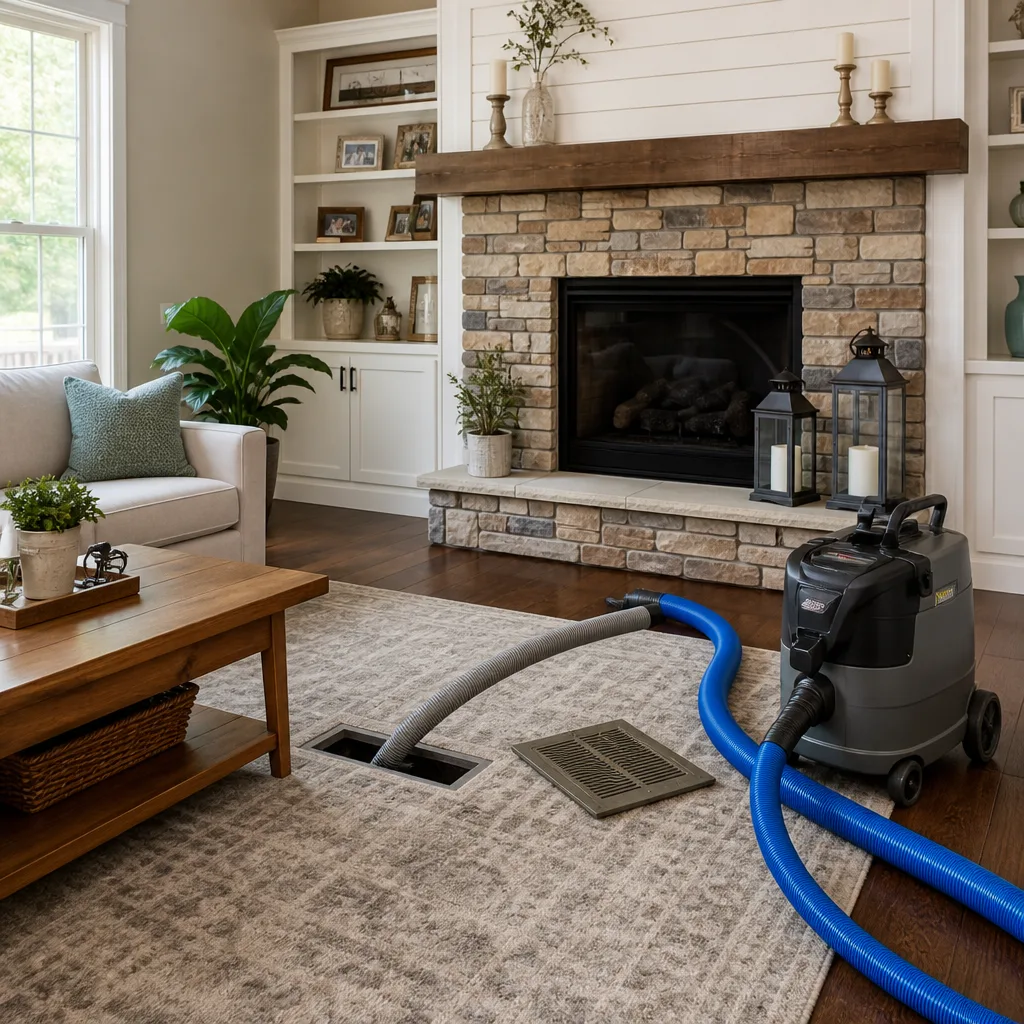 Whole-home duct cleaning
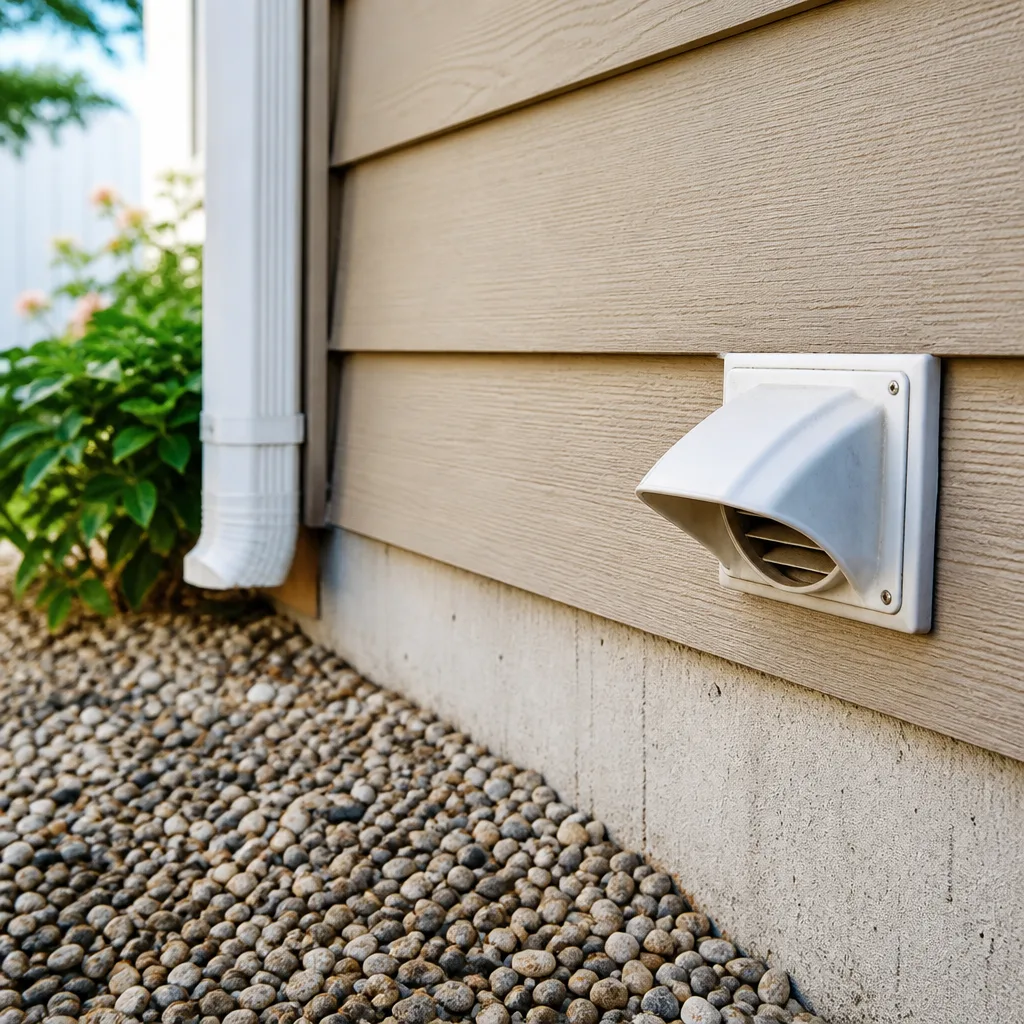 Dryer vent cleaning
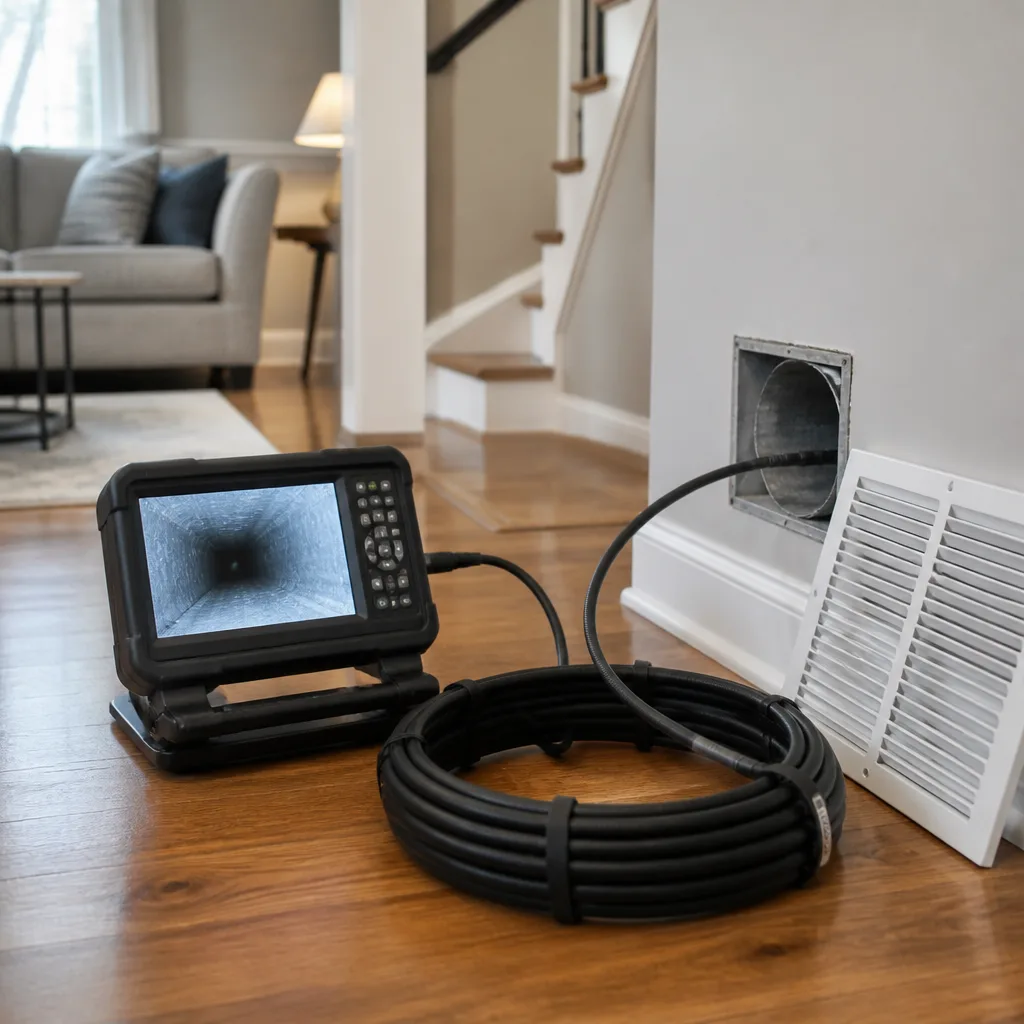 Camera inspection
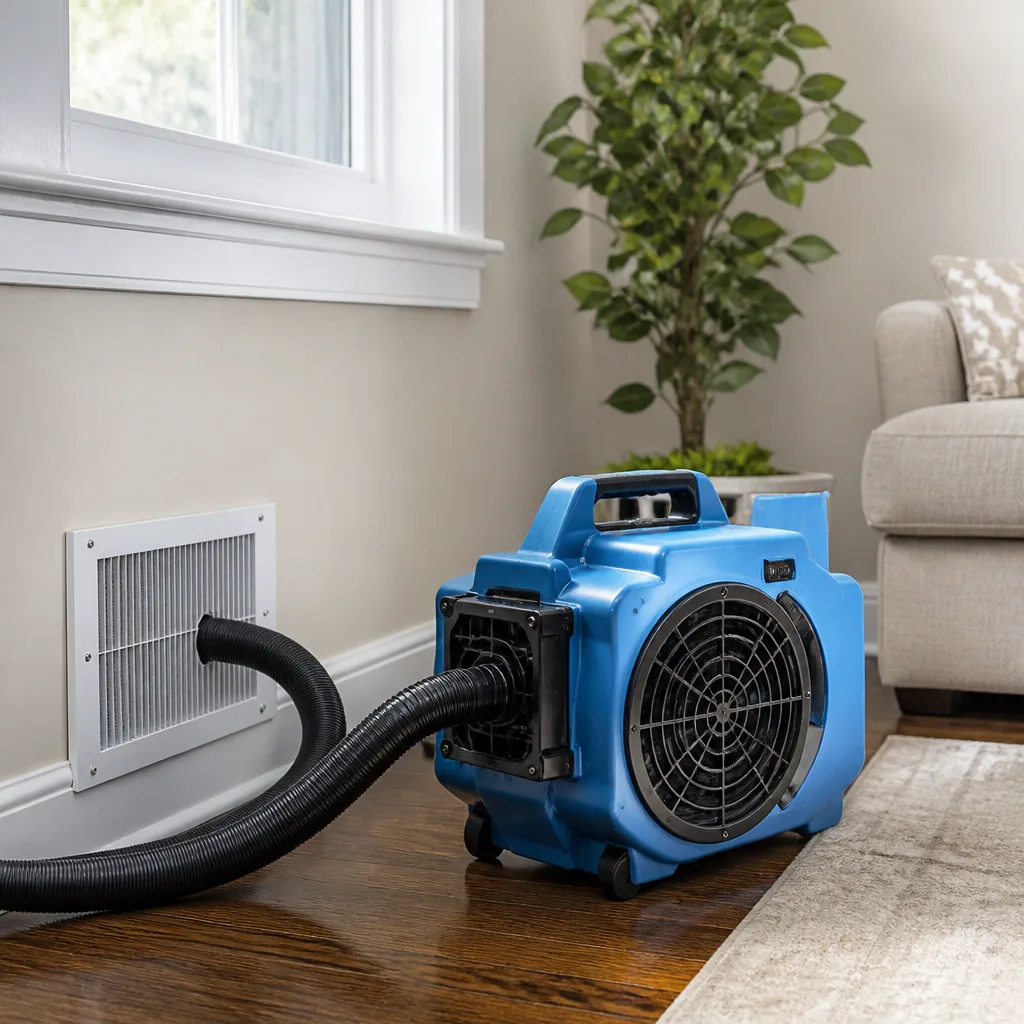 Sanitizing & deodorizing
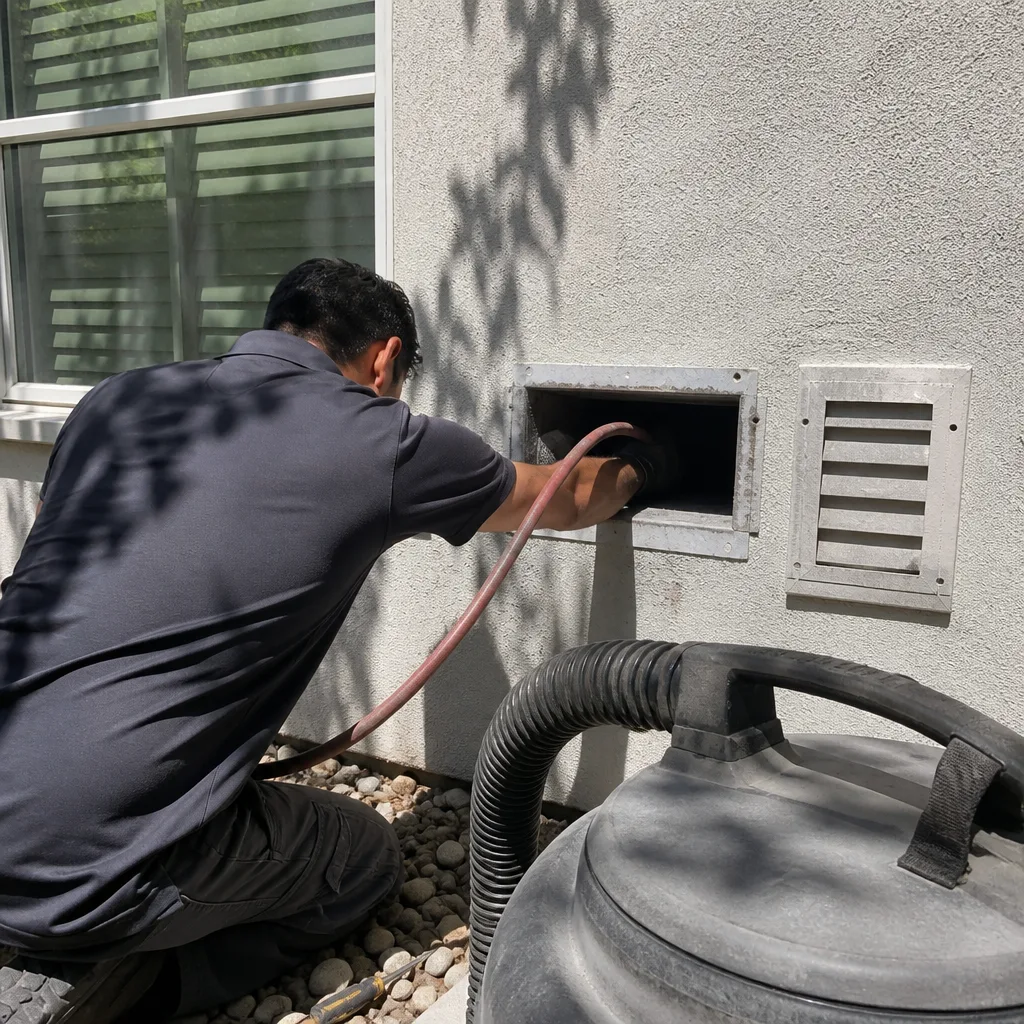
Whole-system duct and dryer vent check with before-and-after photos - you see exactly what came out of your vents
That "$99 whole-house special" is a bait ad - the real number appears once they are in your hallway, or the "clean" is a shop-vac at the register. We photograph the inside of your ducts before and after instead.
Air Duct Cleaning Warning Signs: A Los Angeles Homeowner’s Reference Guide
Here’s the uncomfortable truth about most air duct cleaning guides: they tell you to watch for black mold blooming across your vent covers or rooms that won’t heat at all. By the time you see either, you’re not looking at a cleaning problem anymore. You’re looking at a remediation bill or a compressor replacement. This guide takes the opposite approach. It’s built around the five early, subtle signals Los Angeles homeowners routinely dismiss as normal quirks of an older house. A dusty grille that reloads in weeks. A smell that only appears when the AC first kicks on. A room that runs four degrees warm and gets blamed on the afternoon sun. These signals show up twelve to eighteen months before the expensive failure. Catching one costs a cleaning fee. Missing all of them can cost an HVAC system. That’s the trade, and it’s one we’ve watched play out in hundreds of Los Angeles homes since 2004. For a deeper dive, read The Complete Guide to Air Duct Cleaning in Los Angeles.04.
Quick Answer
The most reliable early warning signs that your air ducts need cleaning are: a fine gray film on return-air grilles that reappears within two to three weeks of wiping, a musty odor that only occurs when the AC first starts each morning, rooms that run 4°F or more above the thermostat setting despite open vents, air filters that load with debris in under three weeks, and a faint ticking or hissing from the ductwork that isn’t thermal expansion. Any single sign warrants an inspection. Two or more present simultaneously means the duct system is actively circulating contaminants and restricting airflow, and Los Angeles homeowners should schedule our Air Duct Cleaning services for a professional evaluation rather than waiting for visible mold or total airflow loss.
Styles & brands we work with
Table of Contents
- The Gray Film That Isn’t Ordinary Dust
- The Morning Must: What That First-Start Smell Actually Means
- Uneven Room Temperatures as a Diagnostic Tool
- Filter Loading Speed: The Most Reliable Signal You’re Ignoring
- The Sound of Dirty Ducts: What to Listen For
- Why Los Angeles Conditions Accelerate Duct Contamination
- The Cost of Waiting: Cleaning vs. Repair vs. Replacement
The Gray Film That Isn’t Ordinary Dust
A return-air grille with a little surface dust is normal. Every home in Los Angeles pulls some airborne particulates through the return side. What’s not normal is a grille that you wiped clean three weeks ago and is now coated again in a fine, uniform gray powder. That reload speed is the signal, not the dust itself. Ordinary household dust accumulates slowly and unevenly, showing up as wispy patches near the edges of the grille. The gray film we’re describing coats evenly, almost like a thin layer of makeup, and it feels slightly gritty between your fingers. One type is cosmetic. The other is diagnostic.
In Los Angeles, that fine gray film often traces back to one specific source: particulate infiltration from a nearby fire event. Santa Ana wind seasons push ash and fine combustion particles into neighborhoods miles from any burn zone. That material is extraordinarily light, it stays airborne for weeks, and it deposits inside duct systems where it sits until airflow pushes it back out. If you live in the San Fernando Valley, the foothill communities, or anywhere east of the 405 corridor, you’ve likely seen this on your window sills after a bad wind event. The same particles that settled on those sills are inside your ducts.
But fires aren’t the only cause. The gray film also appears when the ducts themselves are degrading. Older flex duct in Los Angeles homes, particularly systems installed before 2000, breaks down internally as the inner liner ages. That degradation releases fine particulate material every time the blower cycles. You can’t see the inside of your flex duct without a camera. You can see the gray film it’s producing on your grilles.
What to do with this information: wipe the grille clean with a damp cloth, note the date, and check it again in three weeks. If the film has returned in roughly the same density, the source is inside the system or being actively pulled from outside. A professional inspection with a borescope camera will tell you which within minutes. In our experience in Los Angeles, homes near freeway corridors also show this pattern from brake dust and rubber particulates, so location matters in the diagnosis. The point is the same: a grille that reloads in weeks is telling you the system is circulating something it shouldn’t.
The Morning Must: What That First-Start Smell Actually Means
A musty smell that appears only when the AC first turns on each morning is one of the most specific diagnostic signals in residential HVAC work. It’s not random. It’s not “just how old houses smell.” It indicates overnight condensation inside the duct system and the biological growth that follows it.
Here’s the mechanism, in plain terms. During a Los Angeles summer day, your AC runs frequently and pulls warm, humid air across a cold evaporator coil. That coil condenses moisture out of the air, and most of that moisture drains away through the condensate line. But not all of it. Some residual moisture lingers in the coil area and the first few feet of the supply plenum. When the system shuts down at night, that moisture sits in a dark, warm environment. Microorganisms, mostly mold and mildew species that thrive in exactly these conditions, begin to grow. When the blower kicks on the next morning, it pushes air across those organisms and carries the smell into your living space. Within five to ten minutes, the air dilutes the odor enough that you stop noticing it. But it’s still there, and it’s still growing, every single night.
Los Angeles homeowners often dismiss this smell because it contradicts common sense. Los Angeles is dry, the thinking goes, so how could there be a moisture problem? But your system creates its own microclimate. The evaporator coil runs at roughly 40°F. When 85°F air with even 30 percent relative humidity hits that coil, water condenses out. It’s physics, not geography. Every air conditioner in Los Angeles produces condensation. The question is whether that moisture drains completely or lingers long enough to support growth.
This signal matters in flex-duct systems specifically because flex duct’s inner liner is textured. Smooth metal ductwork allows some condensation to bead and drain. Flex liner absorbs a small amount of that moisture into the liner surface itself. In Los Angeles, where many homes built between 1980 and 2010 use flex duct extensively, this is a common pattern. The growth starts in the liner, the smell carries through the first few minutes of each cooling cycle, and the homeowner adapts to the smell and stops registering it. That’s the trap. If you notice a musty smell only on first start, or when transitioning from cooling to fan-only mode, note it and mention it specifically when you call a technician. The specificity of that signal can save a contractor an hour of diagnostic guesswork.
Uneven Room Temperatures as a Diagnostic Tool
Every two-story Los Angeles house runs warm upstairs in August. That’s thermal stack effect, and it’s not a duct problem. But when a specific room on the same floor as other comfortable rooms runs 4°F or more above the thermostat set point, despite open vents and a closed door, you’ve got a diagnostic signal worth investigating. The pattern of the temperature difference tells you more than the difference itself.
Let’s set up the diagnostic framework. An evenly-built Los Angeles tract home from the 1960s or 1970s with a single-zone system should hold all rooms within about 3°F of each other when the system is running correctly. That’s the baseline. When one room sits at 78°F while the rest of the house holds at 74°F with the thermostat set to 74, something specific is happening. The most common cause is a restriction in the duct run serving that room. This is different from an insulation problem.
Here’s how to tell them apart. An insulation problem causes the room to respond to outside conditions. The room runs hot during the afternoon sun and cold on winter nights. The temperature swings track the weather. A duct restriction causes the room to run warm whenever the AC is running, regardless of the outside temperature, because the room simply isn’t receiving the conditioned air it should. At night, an insulated-but-restricted room may cool down fine as ambient temperatures drop. The key question: does the room warm up relative to the rest of the house exactly when the AC works hardest? If yes, suspect the duct. If the room tracks outside temperature, suspect insulation or windows.
Restrictions in duct runs develop from years of accumulated debris, collapsed flex duct sections, or disconnected joints where the duct has pulled away from the register boot. All three of these conditions are visible on a camera inspection. All three are also progressive, meaning they get worse over time. A room running 4°F warm this summer might run 6°F warm next summer as the restriction compounds. That’s the cost of waiting, and it translates directly to a compressor that runs longer cycles to satisfy a thermostat that never quite reaches set point in the warm room, which shortens equipment life. We’ve watched homeowners chase window film and attic insulation for years, only to find a collapsed flex run that a borescope camera would have identified in the first ten minutes.
Filter Loading Speed: The Most Reliable Signal You’re Ignoring
If you change your air filter on a schedule, you’re ahead of most Los Angeles homeowners. But the schedule is only half the information available. The other half is how the filter looks when you pull it. A filter that loads with visible debris in two weeks instead of six is a more reliable duct-condition signal than anything you can see on your grilles. Here’s why.
Your return-air filter’s job is to protect the equipment, not to clean your air. It catches what the return side pulls in. When your ducts are clean and sealed, the filter catches household-generated particulates: pet dander, human skin cells, cooking aerosols, the dust tracked in from Los Angeles streets. That loading is predictable, and a standard 1-inch filter in a clean system typically lasts four to eight weeks before visible loading in a typical Los Angeles home. When the filter loads in two weeks or less, something has changed. The two most common causes: a leak in the return ductwork pulling unfiltered attic or crawlspace air into the system, or an accumulation of debris inside the supply ducts that recirculates through the return each cycle.
The first cause is a mechanical problem. Los Angeles attics hold a tremendous amount of fine particulate, fiberglass insulation fibers, and decades of accumulated dust. A return duct with a separated joint or a punctured flex section pulls that air into the system directly. Your filter catches more because the system is exposing it to more. The second cause is a contamination problem. Debris sitting in the supply ductwork doesn’t stay put. Every blower cycle lifts some of it back into the airstream, where it eventually returns through the filter. The filter is a snapshot of what’s circulating.
Start tracking this. When you change your filter, write the date on the cardboard frame. If you find yourself changing it at three weeks, then at two, the trend line itself is diagnostic. A before-and-after comparison photo of a clean filter versus a two-week filter is also useful when you call a technician, because it tells us more about your system’s actual condition than any visual grille inspection can. Filters are cheap. The information they provide about your ducts, that’s what you’re really paying for.
The Sound of Dirty Ducts: What to Listen For
Your ducts make sounds. Some are normal. Some are not. Most Los Angeles homeowners have never been taught the difference, so they file all duct noise under the same mental category: the house settling. Settling is real, but it has a specific acoustic signature. So does debris impact. So does airflow restriction. Learning to distinguish them takes an attentive evening and a willingness to stand still in your hallway for five minutes.
Normal thermal expansion sounds like a single, isolated tick or pop when the system starts or stops. The metal in the ductwork expands slightly as warm air moves through it, and it contracts when the cycle ends. That’s a metallic ping, spaced minutes apart, and it doesn’t repeat in a pattern. Debris-impacted ducts sound different. When loose debris sits inside a duct run, the airflow will occasionally carry a particle against the duct wall. That’s a faint tick-tick-tick, rapid and irregular, like a small stone bouncing inside a pipe. It’s most audible in trunk lines near the air handler and in metal ductwork. Flex duct dampens this sound, so if you hear it through flex, the debris load is significant.
The third sound is the one that indicates restriction: a faint hiss or whistle from a register that was previously quiet. As debris narrows the effective opening of a duct run, the air velocity through that restriction increases. That produces a higher-frequency sound at the register. If you can close all the doors in a hallway and hear one register hissing while others are silent, you’ve identified a restriction. Note the room. A technician can verify it with an airflow meter and a camera, but your ears have already pointed us to the right duct.
What should you tell the technician when you call? Describe it in plain terms. Say “there’s a rapid ticking from the ceiling above the hallway when the AC runs, not the single pop from settling, it’s repeated clicking.” Or say “the register in the back bedroom whistles now and it didn’t last year.” That description is diagnostic gold. It narrows the inspection to a specific run and lets the technician spend less time exploring and more time resolving. Homeowners in Los Angeles with attic-installed systems hear these sounds most clearly at night, when ambient noise drops. The house itself is talking to you. The question is whether you’re listening.
Why Los Angeles Conditions Accelerate Duct Contamination
Every city has a contaminant profile. Los Angeles has several, and they interact with your duct system in ways that generic air duct cleaning advice doesn’t address. Understanding the local factors makes you a better diagnostician of your own house.
The first factor is Santa Ana wind events. These winds push dry, particulate-laden air from the interior deserts toward the coast. The fine dust that arrives during a Santa Ana event isn’t the same as the coarse household dust you find on furniture. It’s extremely fine, sometimes under 10 microns, which means it stays suspended longer and travels deeper into the duct system. Coarse dust settles near the registers and shows up quickly on grilles. Fine Santa Ana dust penetrates deep into the trunk lines and only emerges through the register slowly, over months. By the time you see it accumulating, the deposit inside the system is substantial. Los Angeles homeowners who track filter loading typically see a spike in the two weeks following a major Santa Ana event.
The second factor is the mix of older and newer housing stock. Much of Los Angeles’ single-family housing was built before duct sealing standards existed. Sheet metal duct systems from the 1950s and 1960s were assembled with methods that leak at every joint by design. Return leaks pull attic air. Supply leaks push conditioned air into the attic. Both problems introduce particulates into the system and accelerate filter loading. Newer homes aren’t immune, but their problems are different. Homes built since 2000 often use flex duct that, as discussed, degrades internally over time. The Los Angeles pattern is therefore split: older homes fight external infiltration, newer homes fight internal liner degradation.
The third factor is simply the age of systems. Los Angeles enjoys a mild climate compared to Phoenix or Houston, which means AC systems here run fewer total hours per year. That’s good for equipment longevity in theory. But it also means many homes are running heat exchangers and blowers that are fifteen to twenty years old, because they’ve never been pushed hard enough to fail. The duct system attached to that equipment has been accumulating contaminants for those entire fifteen to twenty years. A system in a harsher climate might have failed and forced replacement. A Los Angeles system just keeps running, quietly circulating air through decades of accumulated debris, until someone looks inside. The age of the system is not a reason to defer inspection. It’s the strongest argument for it.
The Cost of Waiting: Cleaning vs. Repair vs. Replacement
The economics of air duct maintenance in Los Angeles are clearer than most homeowners expect. The current market rate for professional air duct cleaning in Los Angeles typically runs between $350 and $700 for a full single-family home system, depending on the number of vents, the accessibility of the system, and the level of contamination. That range is an estimate based on what we’ve observed across the Los Angeles market, and a written quote before work begins should always be standard. If a contractor can’t give you that number in writing before touching a vent, that itself is a signal.
The cost of a restricted or contaminated system going unaddressed is higher, and it compounds. At the first stage, debris in the ducts increases static pressure in the system, which makes the blower motor work harder. That’s increased electricity consumption, month after month, in a city where air conditioning already accounts for a meaningful share of summer energy bills. At the second stage, the restriction worsens and rooms begin running warm, which leads to thermostat adjustments and longer run times, which further increases wear. At the third stage, the compressor outside is running extended cycles because the thermostat demands, and the system physically can’t satisfy. Compressor failure isn’t a repair problem. It’s a replacement event, and in Los Angeles that’s a $7,000 to $15,000 line item depending on the system size and efficiency rating.
The path from cleaning to repair to replacement is not inevitable. It’s a choice made in increments, usually by default. The homeowner who notices the morning musty smell and files it under “old house” is choosing, though not consciously, to let the system degrade another six months. The homeowner who notices the same smell and calls for an evaluation is choosing a different path. The cost of the inspection is usually waived as part of a cleaning estimate. The cost of the cleaning is a known quantity, and at Kestrel Air Duct Los Angeles, it comes with a 365-Day Done Right Promise in writing: if the work falls short within the guarantee period, we return and make it right at no charge. For context, see DIY vs Professional Air Duct Cleaning: The Los Angeles Homeowner’s Decision Guide. That guarantee is the reason we can tell you, without hedging, that the cost of action is the cost of knowing. The cost of waiting is the cost of not knowing, and not knowing is always the more expensive option.
Common Mistakes to Avoid
- Wiping the grille and considering the problem solved. The grille is the visible edge of an invisible system. Cleaning it removes the symptom, not the source. The debris you removed was pushed through the system by airflow; it’s still in the ducts behind the wall.
- Attributing all smells to “old house.” An old house changes smell gradually over years. A smell that appears only during the first five minutes of AC operation is a process happening right now, timed to the system cycle. That’s not age. That’s moisture and biology.
- Ignoring a single warm room because it’s “the sun side.” Sun load explains rooms that warm during sunny afternoons and cool at night. It doesn’t explain a room that underperforms whenever the AC runs, regardless of sun position. Test the pattern before you accept the explanation.
- Changing the filter on a set schedule without looking at it. The filter is a data source. Pull it, hold it up to the light, note the color and loading pattern. A filter that’s uniformly dark at two weeks is telling you something different from a filter that’s lightly loaded at eight. Both are information.
- Waiting for visible mold or airflow loss before calling. By the time you see mold on a register, the biological growth inside the duct system is established. By the time airflow stops entirely, you have a mechanical failure, not a hygiene problem. The early signals in this guide are early precisely because they precede the expensive ones.
- Assuming Los Angeles’ dry climate prevents duct moisture problems. Your AC creates condensation regardless of the outside humidity. The moisture question is about drainage, not geography. A dry climate doesn’t remove water from your coil. It just evaporates it faster outside the system, which can actually mask the early signs of a drainage problem until the biological growth is already established.
See the difference
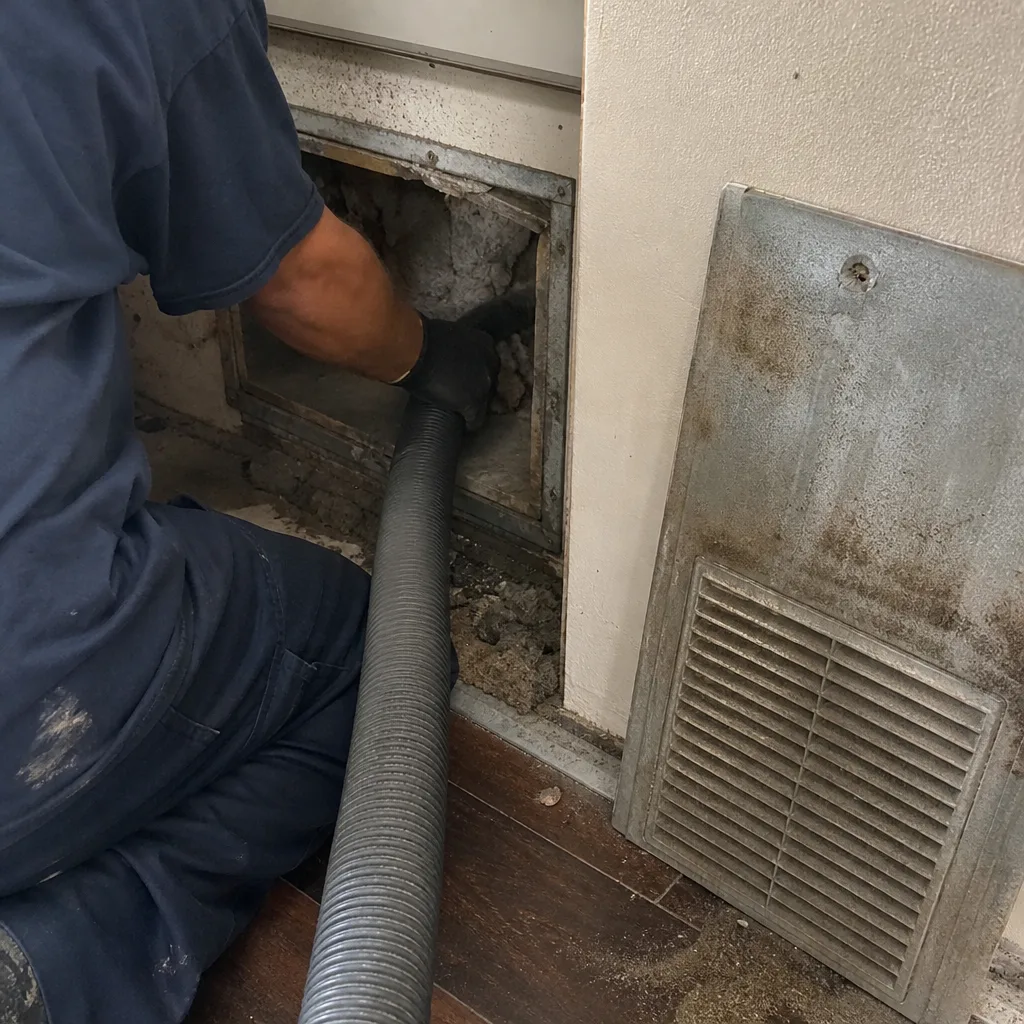 Before
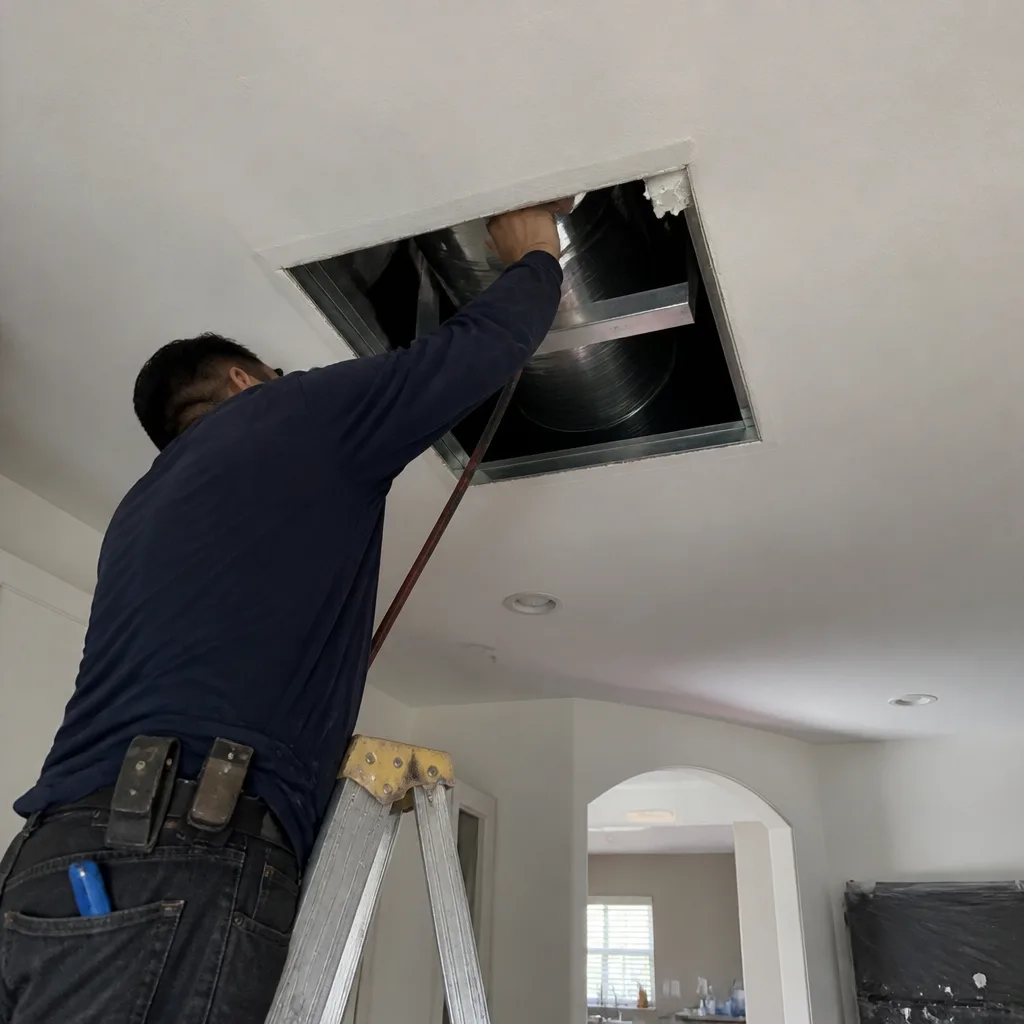 After
After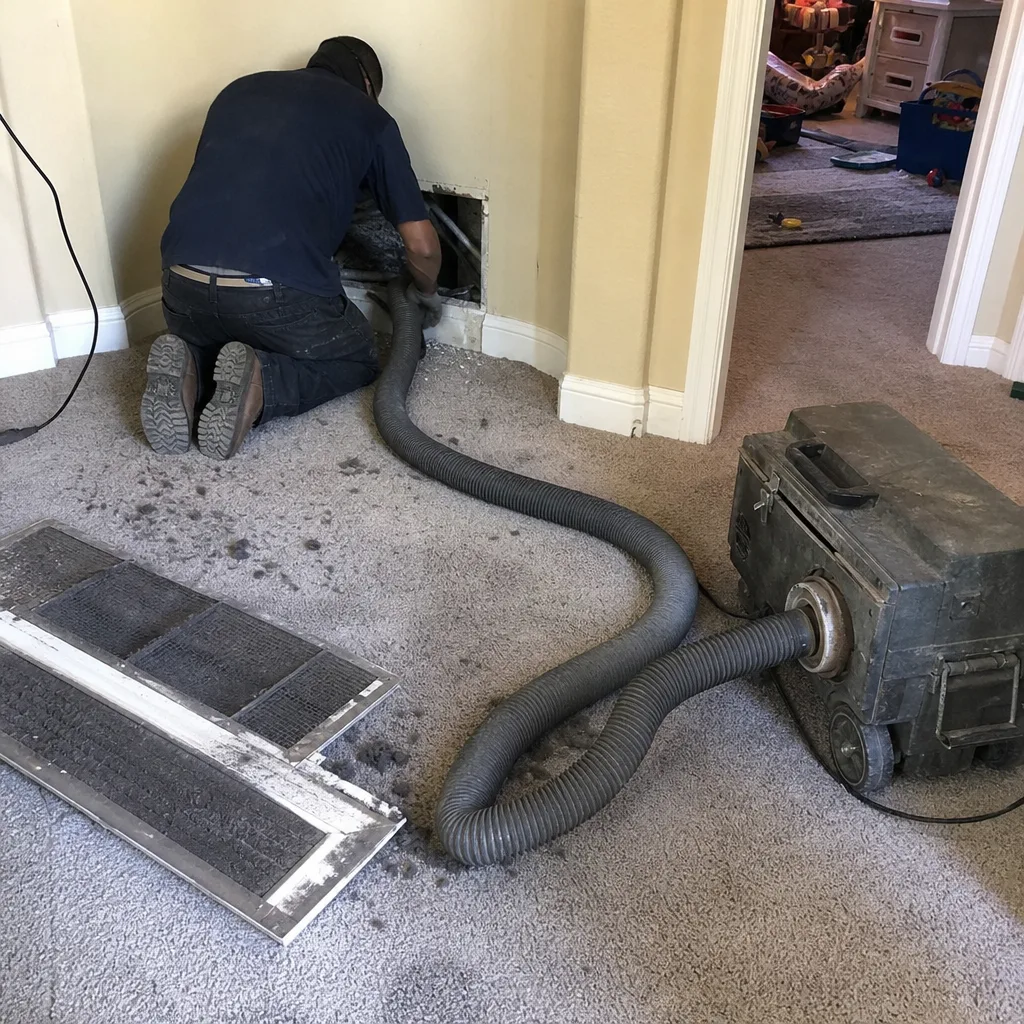 Before
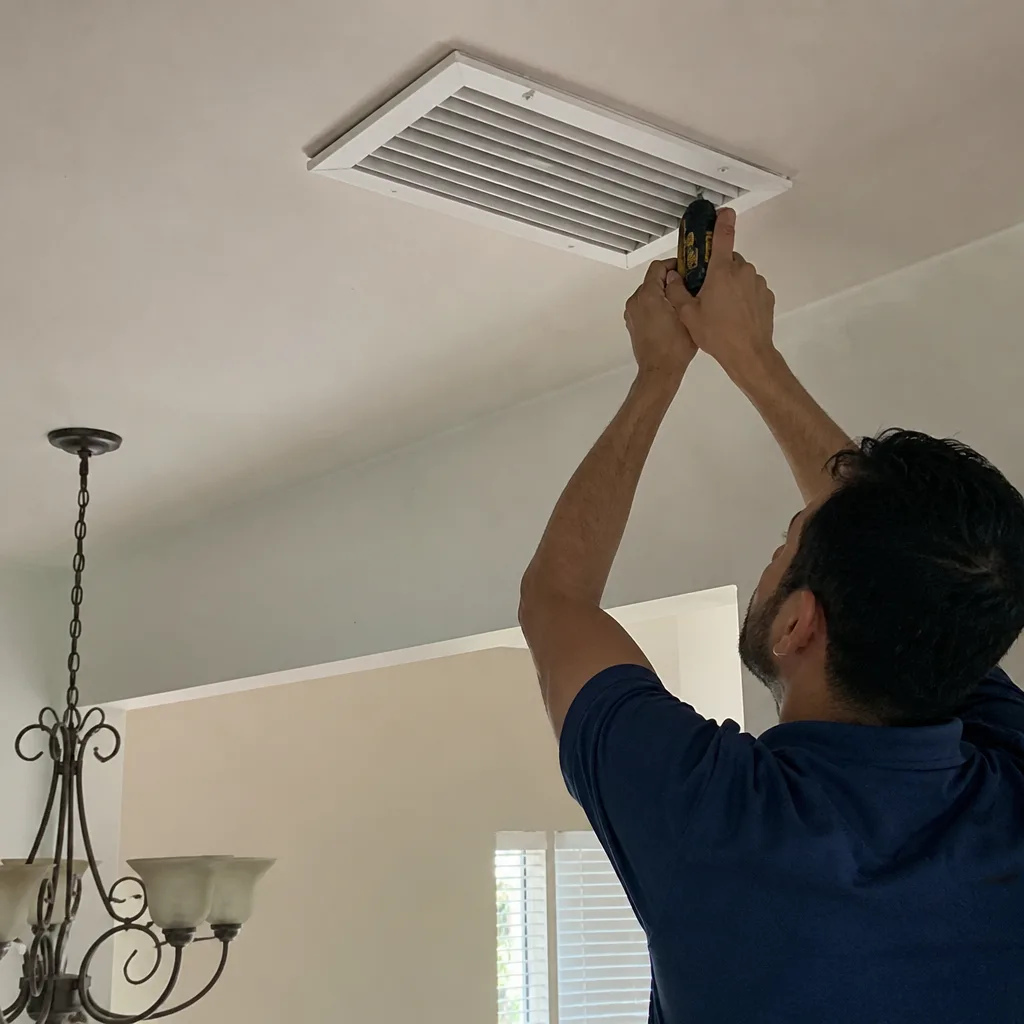 After
After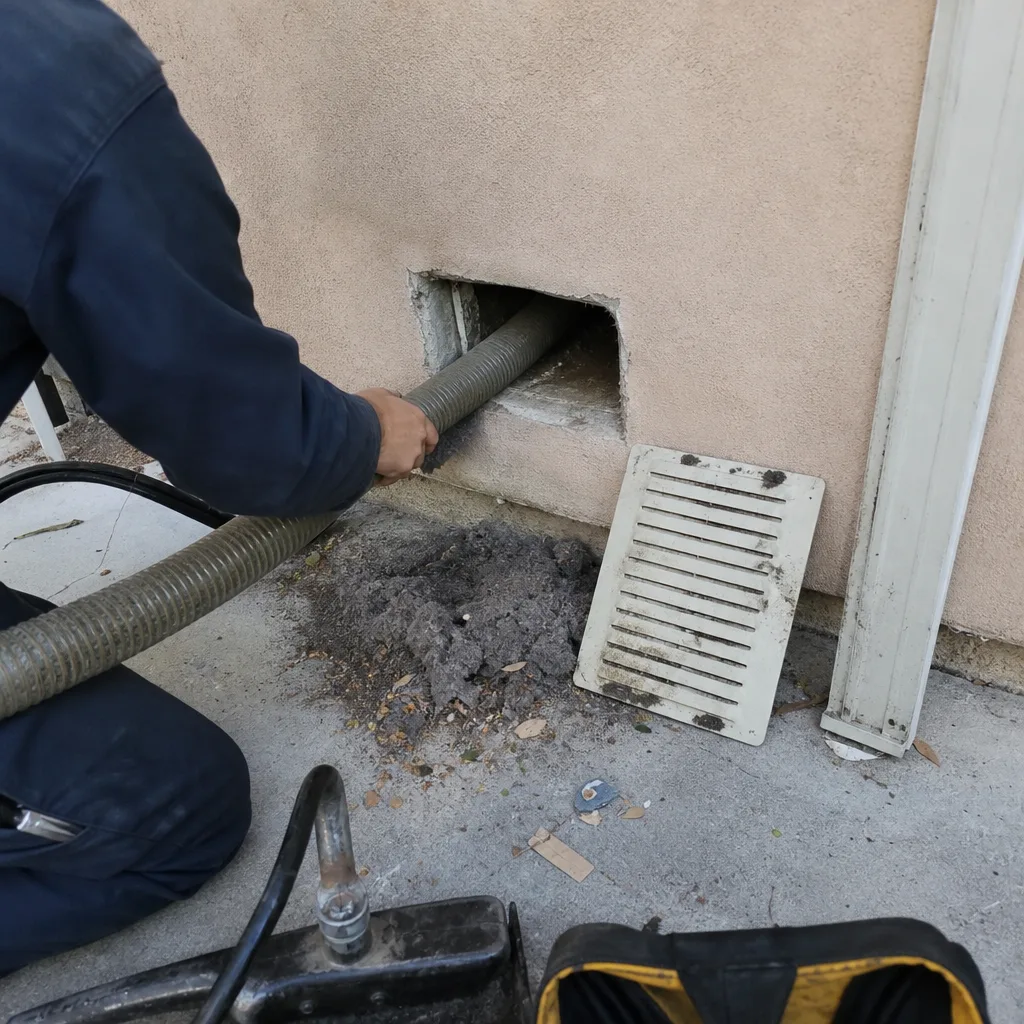 Before
 After
AfterWhen to Call a Professional
Any one of the five signals in this guide warrants a phone call. Two or more means the call should happen this month, not next quarter. Specific scenarios that justify immediate evaluation: the gray film returns within two weeks of cleaning the grille, the morning musty smell persists for more than three consecutive days, a single room runs 4°F or more above set point with vents open and door closed, the filter loads visibly in under three weeks, or you hear repeated ticking from inside the ductwork that isn’t the single pop of thermal expansion. These are not emergencies in the water-damage sense, but they are time-sensitive in the sense that the conditions causing them are progressive. Delays don’t reset the clock. They extend it. Kestrel Air Duct Los Angeles offers free estimates in Los Angeles, call (213) 733-0665. We’ll assess the system, show you what the camera sees, and give you a written price before any work begins. If the system is fine, we’ll tell you that too. The point of the evaluation isn’t to sell a cleaning. It’s to give you a definitive answer to the question your house has been asking.
Frequently Asked Questions
The most reliable indicators are a fine gray film that reappears on return-air grilles within two to three weeks of cleaning, a musty odor that only appears when the AC first starts each morning, rooms that run 4°F or more above the thermostat setting despite open vents, air filters that load with visible debris in under three weeks, and faint ticking sounds from the ductwork that aren’t thermal expansion. Any single sign warrants an inspection. Two or more present simultaneously means the system is actively circulating contaminants and restricting airflow. Call (213) 733-0665 for an evaluation, estimates are free and the price is always in writing before work begins.
Most single-family homes in Los Angeles run between $350 and $700 for a complete air duct cleaning, depending on the number of vents, system accessibility, and contamination level. This is a whole-system price. Beware of per-vent pricing, which invites the door-step revision problem: a low per-vent rate multiplied by more vents than the contractor counted over the phone. A written, whole-system price before work begins is the standard you should expect from any contractor in Los Angeles. If they won’t put it in writing, that’s your answer.
Cheaper quotes usually mean one of three things: a teaser price that will be revised upward once the technician is inside the home, a service that only vacuums the registers without cleaning the actual duct runs, or a contractor who isn’t using negative-air extraction equipment and is relying on a shop-vac approach that can’t reach the full system. The legitimate price range in Los Angeles reflects the cost of professional equipment, background-checked technicians, and a real guarantee in writing. A quote dramatically below the market range should be treated as a risk, not a deal.
Ask for before-and-after photos of the interior of your ducts. Any reputable Los Angeles air duct cleaning company using professional equipment will run a borescope camera through the system before starting and after finishing. The photos should show the same duct section at the same angle, and the difference should be obvious. At Kestrel Air Duct Los Angeles, we document every job this way because the 365-Day Done Right Promise depends on being able to verify the work in writing. If a contractor can’t or won’t show you the inside of your ducts after cleaning, the work probably wasn’t done to a defensible standard.
For most Los Angeles homes, professional air duct cleaning every four to seven years is appropriate, but the real answer depends on your specific conditions. Homes near freeway corridors, homes in fire-prone areas that experience regular Santa Ana wind events, homes with pets, and homes with recent construction or renovation all fall on the shorter end of that range. Homes with sealed systems, good filtration, and no specific contamination sources may run longer. The filtering loading speed test in this guide is the best ongoing indicator: if your filters load in under three weeks, the ducts are telling you the interval should be shorter. Find more guides & resources on our blog for ongoing maintenance tips. The number on a calendar is less useful than the data from your own system.
Yes, and in our view, you should. A camera inspection takes minutes, it’s non-invasive, and it gives you a definitive view of the interior of your duct system. Whatever the camera shows, you now have the information you need to make a decision. If the ducts are clean, you’ve bought certainty for the cost of a service call. If they’re not, you’ll see it yourself, not take anyone’s word for it. Kestrel Air Duct Los Angeles includes this inspection as part of the free estimate. Call (213) 733-0665 to schedule, and you’ll see exactly what we see before any decision is made.
The Bottom Line
Air duct contamination in Los Angeles doesn’t announce itself with a dramatic failure. It accumulates slowly, and it leaves a trail of subtle signals that most homeowners have never been taught to read. The gray film on the grille that returns in weeks. The musty first-start smell each morning. The room that runs four degrees warm. The filter that loads in a third of its normal time. The ticking in the ceiling that isn’t the house settling. These are not quirks of an older home. They are diagnostic data points, and each one points toward the same question: what is actually inside your duct system? You can answer that question for the cost of a camera inspection, or you can defer it until the system answers it for you, usually expensively. If you’re ready to look, our air duct cleaning service in Los Angeles starts with a free evaluation and a written price. If your dryer vent is the system that’s been neglected, our dryer vent cleaning service addresses the separate but related problem of lint accumulation. And if you’re still deciding whether any of this applies to you, start at the Kestrel Air Duct Los Angeles home page for a straight explanation of how we work. The house has been telling you something. The only remaining question is whether you’ll listen before the bill arrives.
Written by Dale Whitmore, Owner at Kestrel Air Duct Los Angeles, serving Los Angeles since 2004.