
Last updated October 15, 2026
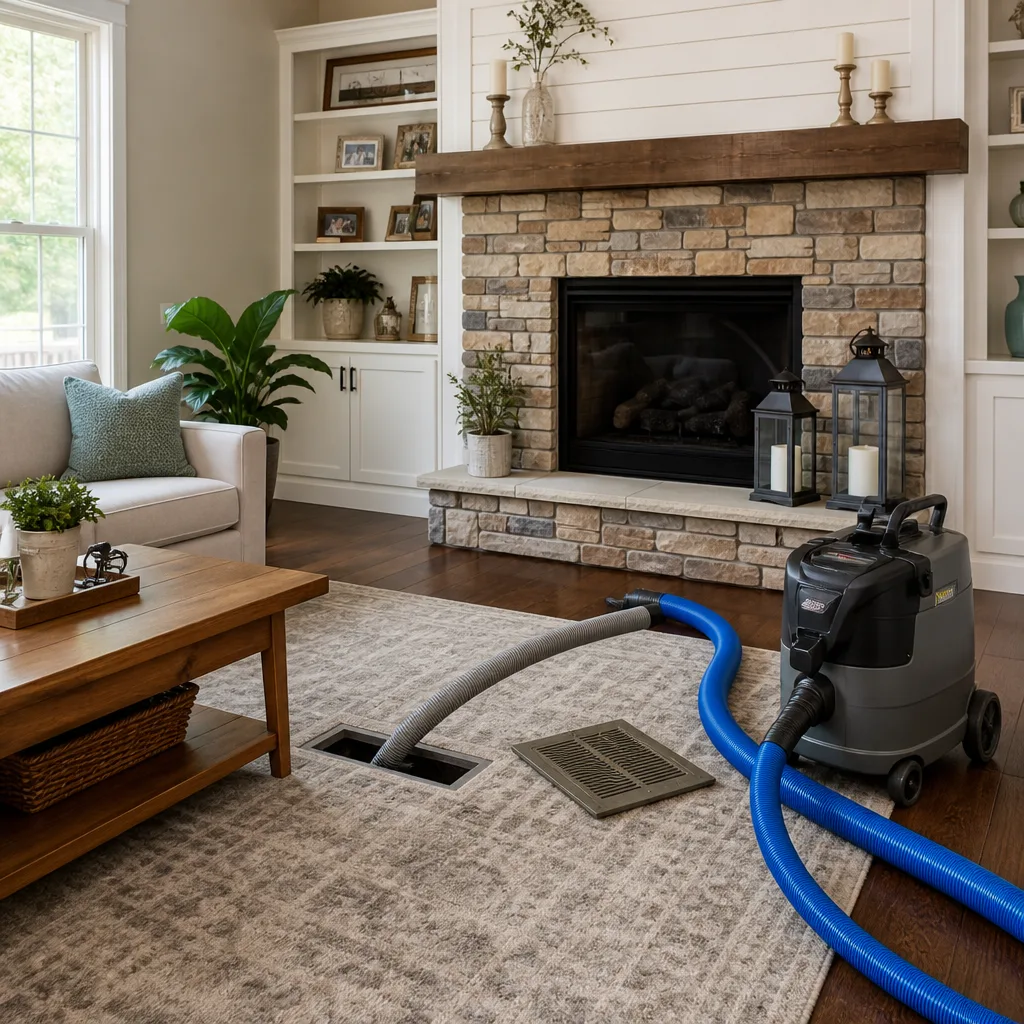 Whole-home duct cleaning
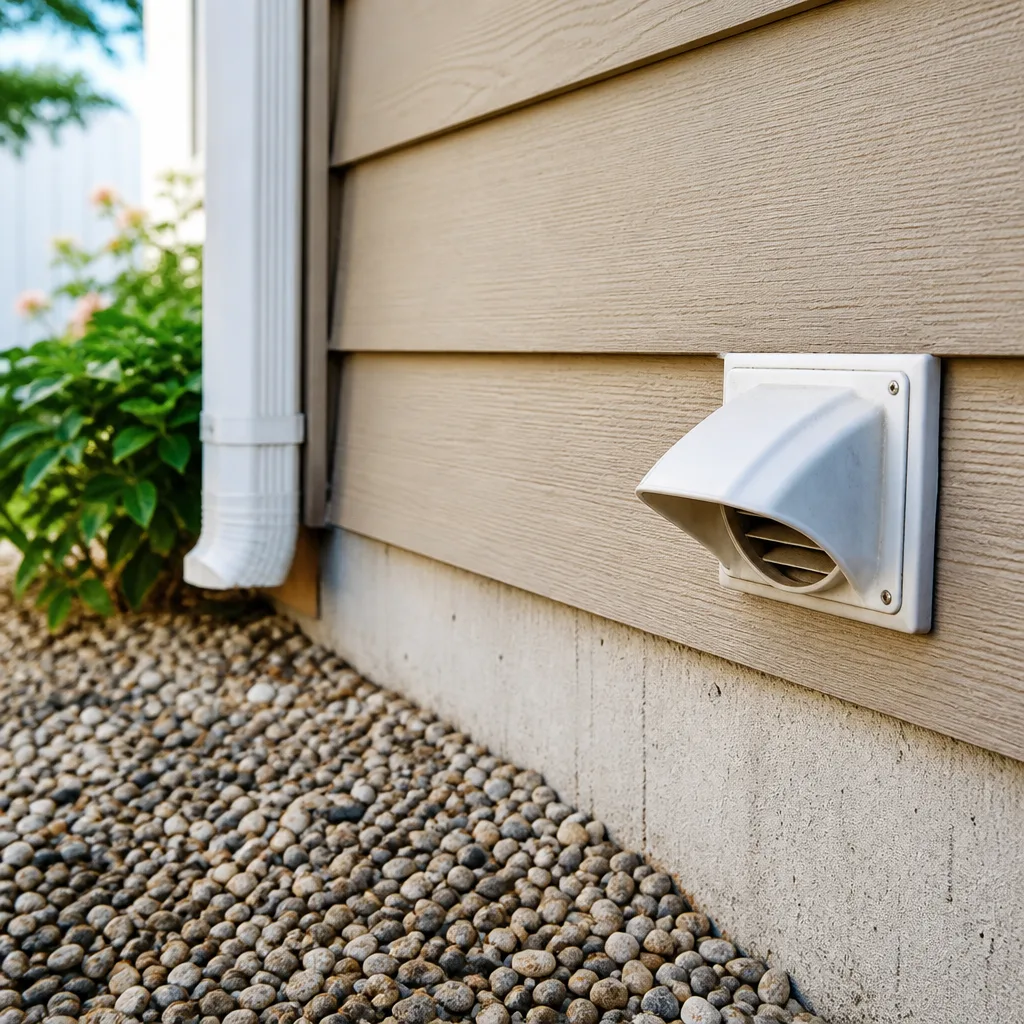 Dryer vent cleaning
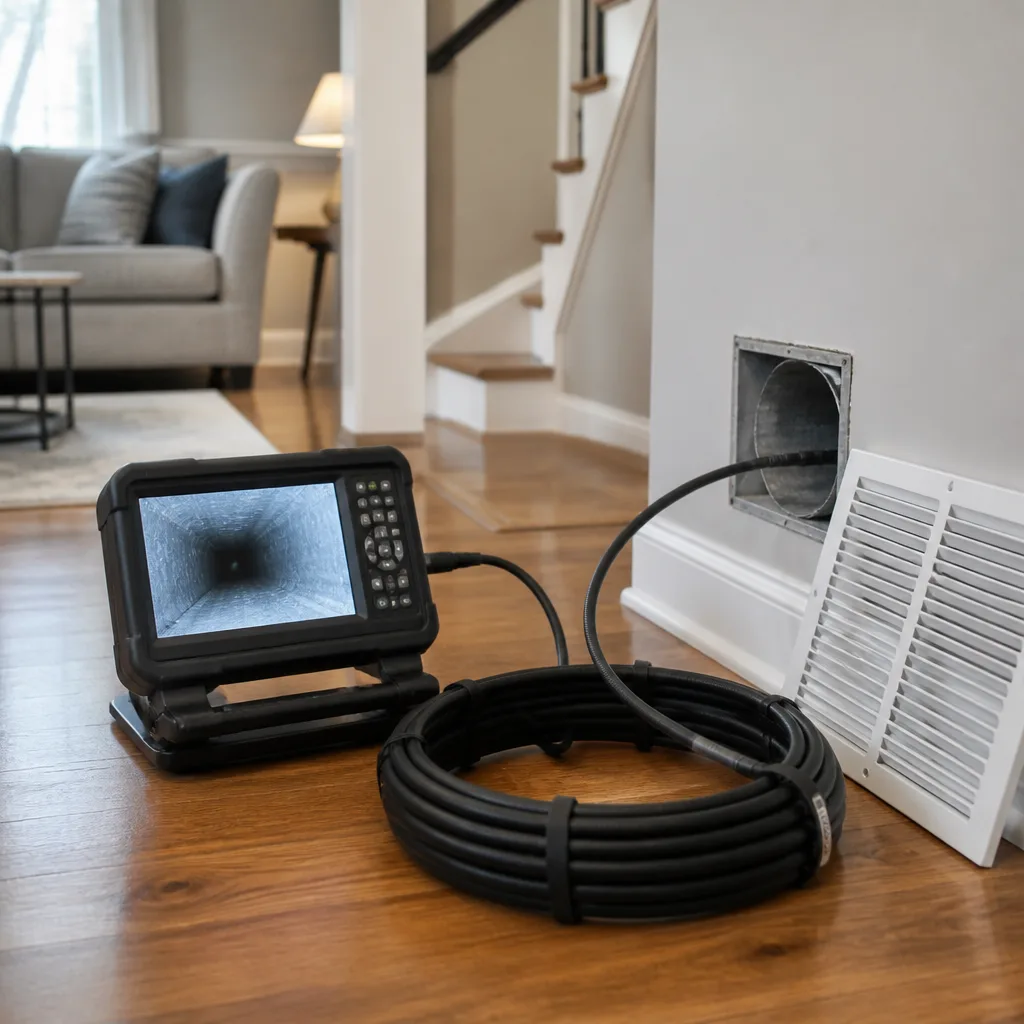 Camera inspection
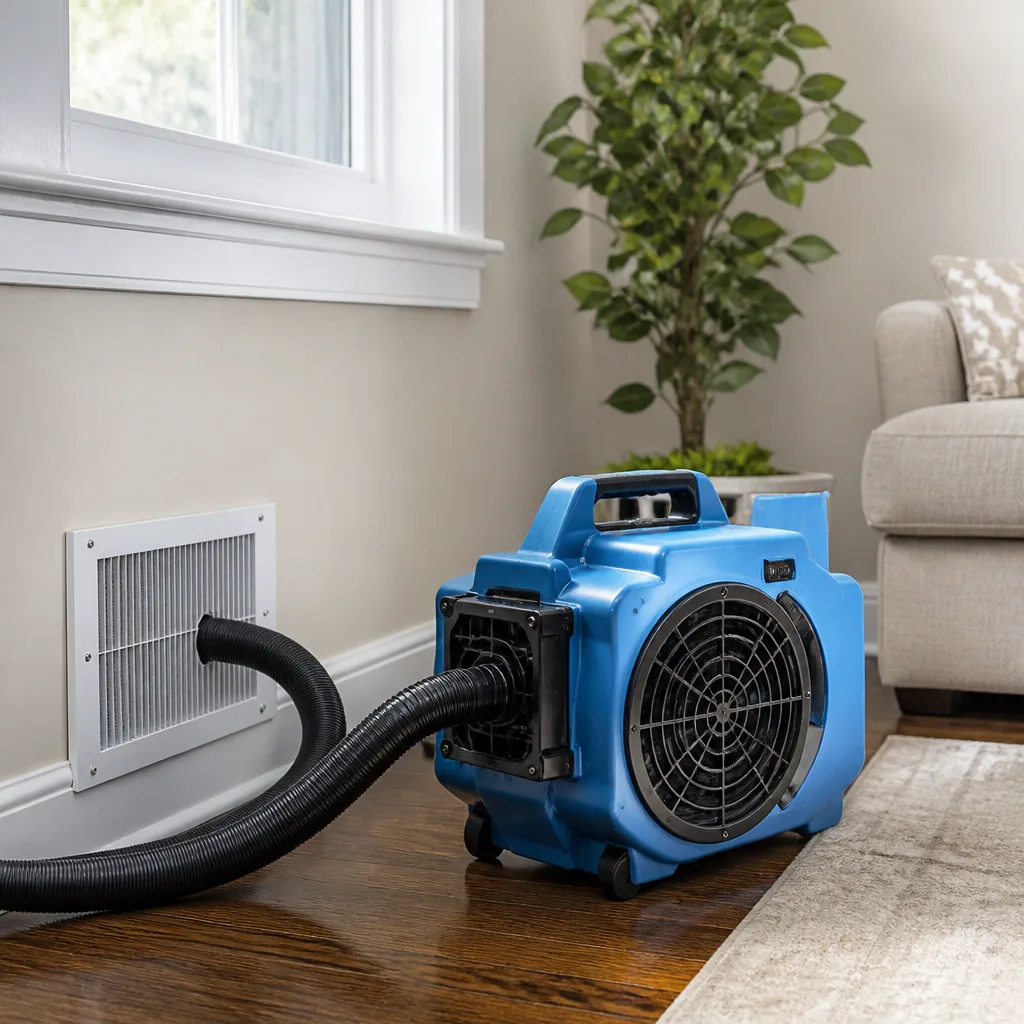 Sanitizing & deodorizing
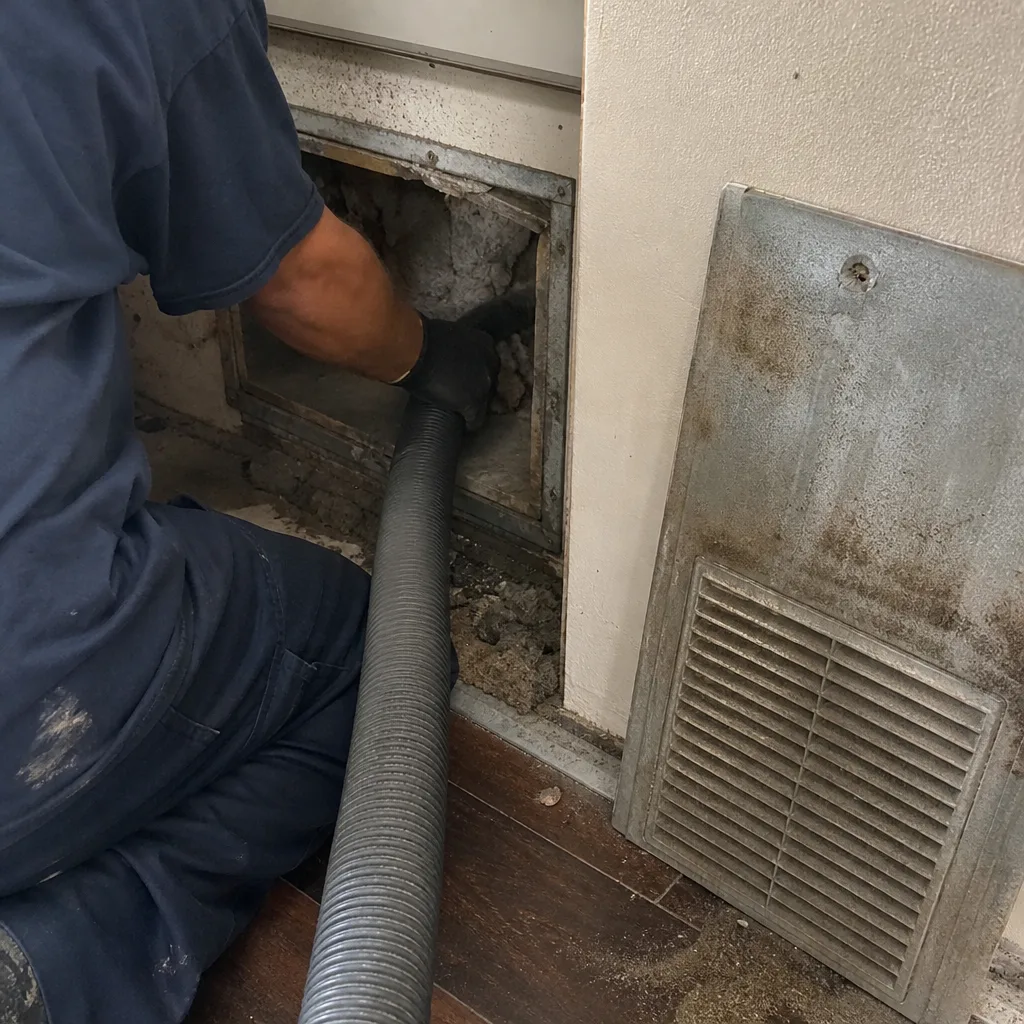
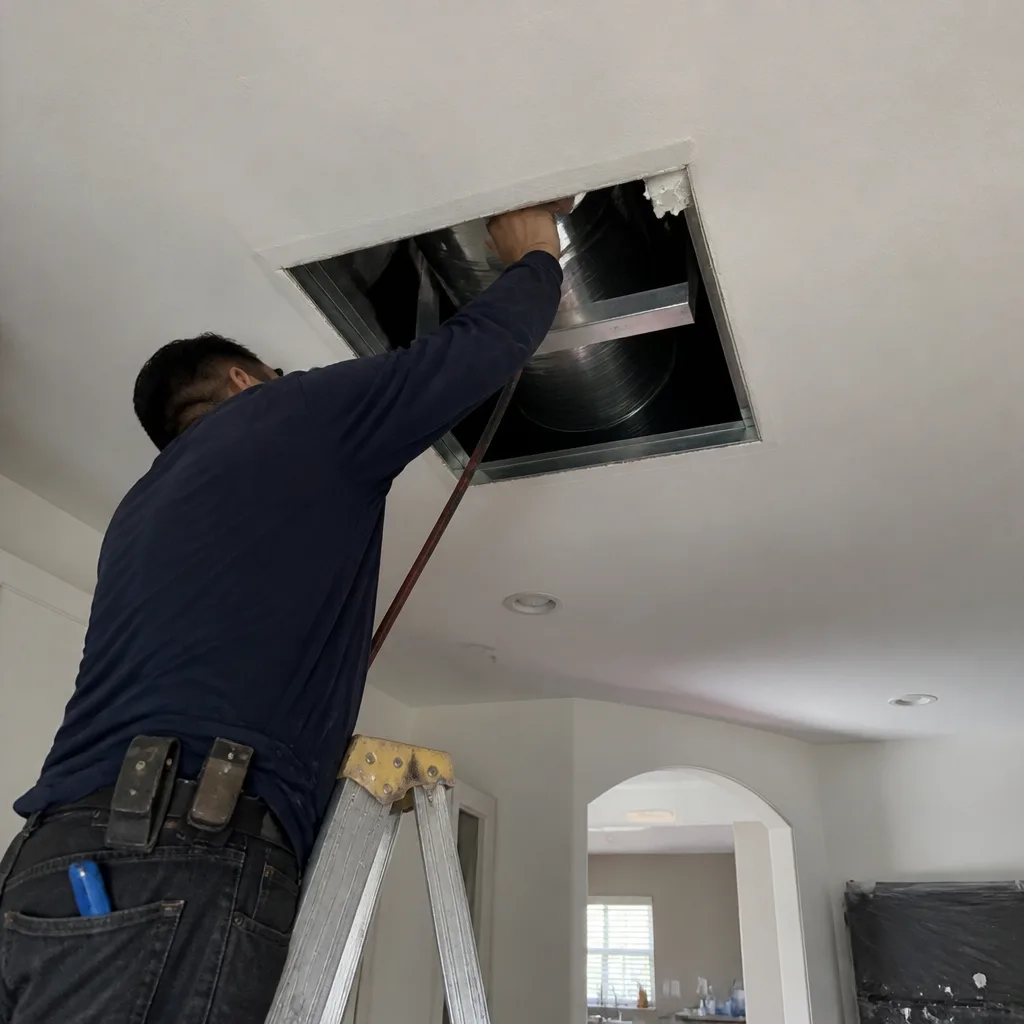
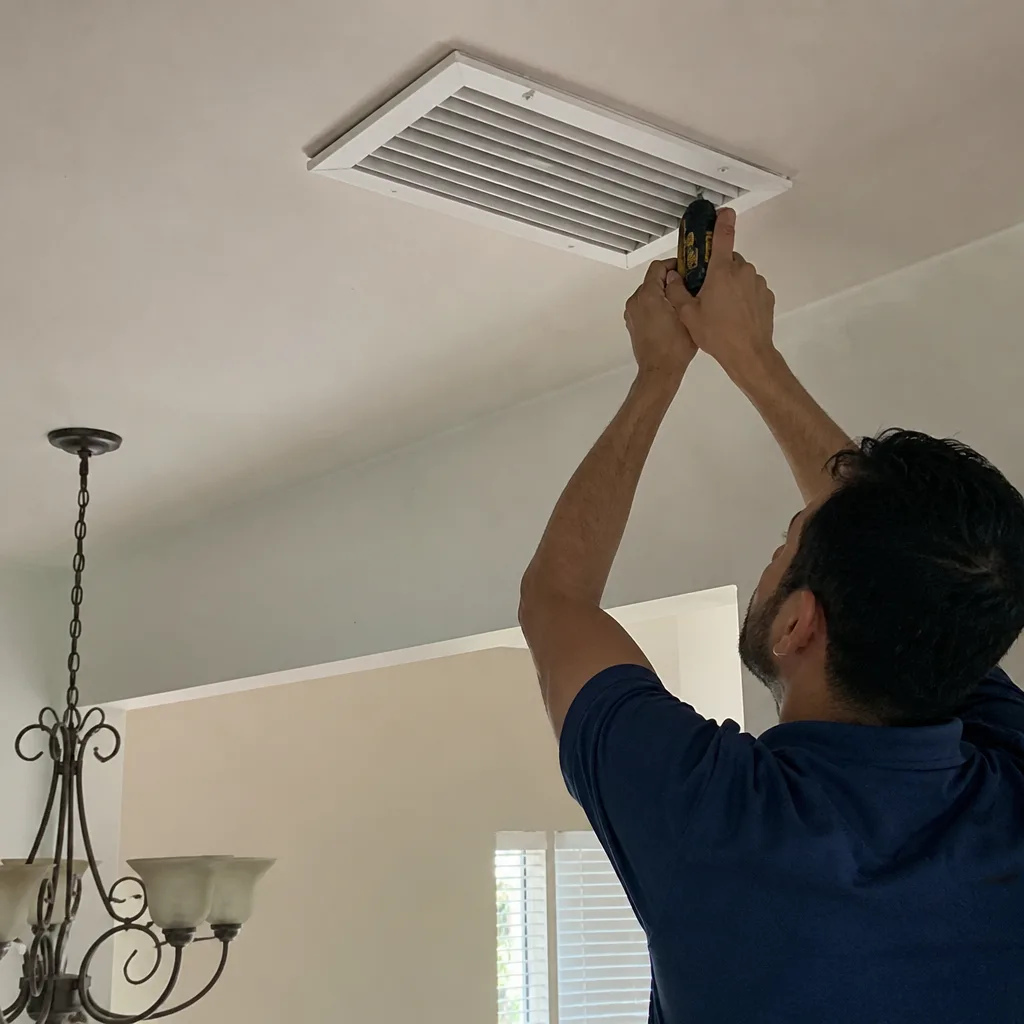
Whole-system duct and dryer vent check with before-and-after photos - you see exactly what came out of your vents
That "$99 whole-house special" is a bait ad - the real number appears once they are in your hallway, or the "clean" is a shop-vac at the register. We photograph the inside of your ducts before and after instead.
Air Duct Cleaning Permits, Codes & Inspections in CA: What You Need to Know
Here’s a statistic that surprises most Los Angeles homeowners: the single most common way people end up with unpermitted HVAC work isn’t a remodel, an addition, or a flipper cutting corners. It’s a duct cleaning visit. The technician arrives for routine maintenance, discovers a crushed return plenum or a disconnected branch line, offers to “just patch it up” for an extra charge, and thirty minutes later the homeowner has sealed, replaced, or modified ductwork that California building code says required a permit. That unpermitted modification quietly sits in your walls and under your floors until you sell the house, and then it becomes a disclosure problem you didn’t know you had. This guide covers exactly where that line sits between maintenance and modification under California law, how Los Angeles building departments handle after-the-fact permits, and the documentation you need before you schedule Air Duct Cleaning services any technician touches your system.
Quick Answer
Routine air duct cleaning, meaning the removal of dust and debris from existing, intact ductwork, does not require a permit anywhere in California. The moment a technician cuts a new access panel, replaces a duct section, seals joint gaps with mastic, or reconfigures any duct component, the work crosses into permitted territory under the California Mechanical Code (Title 24, Part 4). Always ask in writing whether the proposed work is maintenance or modification before work begins, and keep the written answer in your home file. For more guides & resources on protecting yourself, see our blog.
Styles & brands we work with
Table of Contents
- Where Maintenance Ends and Modification Begins
- Title 24 and the California Mechanical Code: What Actually Requires a Permit
- Los Angeles County and City of Los Angeles Permitting for Duct Work
- After-the-Fact Permits in Los Angeles: What Happens When Work Was Already Done
- Duct Sealing vs. Duct Replacement: Two Very Different Code Paths
- Real Estate Disclosure: Permitted vs. Unpermitted Duct Work
- How to Request Documentation From Any Contractor and What It Should Include
- Common Mistakes to Avoid
- When to Call a Professional
- Frequently Asked Questions
Where Maintenance Ends and Modification Begins
The California Mechanical Code (CMC), enforced through Title 24 of the California Code of Regulations, draws a practical line between two categories of work on your air ducts. Maintenance means servicing existing systems without changing their configuration: cleaning the interior of duct runs, removing debris from return boots, vacuuming the plenum, and washing registers and grilles all fall on this side of the line. Modification means changing what’s there: cutting new openings, replacing duct segments, adding or removing register locations, resealing seams with mastic or tape, and relocating runs all fall on the other side.
The distinction matters because California’s administrative code exempts “repairs and maintenance” from permit requirements only when the work does not alter the mechanical system. The relevant language appears in Section 105.2 of the CMC, which states that a mechanical permit is required for any installation, alteration, repair, replacement, or addition to a mechanical system, with exemptions limited to work like portable heating appliances and certain types of minor maintenance. In practice, California building departments have consistently interpreted “alteration” and “replacement” broadly. A tech who cuts open a section of existing flex duct to clean inside it and then reattaches the duct with mastic and a new zip tie has technically performed an alteration: the duct component was cut, reconnected, and sealed. That’s a permitted activity in the eyes of most inspectors.
We’ve watched homeowners in Los Angeles grapple with this exact scenario. In West Adams, we saw a house go into escrow where the seller had paid a handyman to “clean” the returns, which turned out to mean cutting new return grilles into hallway walls and patching drywall around them. The buyer’s inspector flagged the work because the new grilles changed the airflow design of the system. The seller had to file for an after-the-fact permit, which is the path every Los Angeles homeowner wants to avoid. If you are having your ducts cleaned and the technician proposes anything that involves cutting, relocating, reconnecting, or replacing, ask one question before saying yes: “Is this maintenance or modification, and will you put that in writing?” The Kestrel Air Duct Los Angeles home page explains our flat-price approach, which also means you’ll know the full scope before work starts.
Title 24 and the California Mechanical Code: What Actually Requires a Permit
Title 24 of the California Code of Regulations is the umbrella that covers the state’s building standards. Part 4 of Title 24 is the California Mechanical Code, and Part 6 is the California Energy Code. Both apply to residential duct work, but the Mechanical Code is the one that determines when a permit is necessary. The Energy Code governs how the work is done: sealing requirements, insulation values, and minimum airflow standards.
Under the CMC, the following duct-related tasks require a permit in Los Angeles and throughout California:
- Replacing any duct section, even a short run between two boots
- Cutting new register openings or new access panels into existing ductwork
- Rerouting or reconfiguring any portion of the duct system
- Adding a new supply or return branch
- Sealing duct joints as a standalone service (the sealing itself is not exempt when performed as a corrective measure, though some counties handle sealing differently in practice)
- Installing or replacing dampers, even manually operated ones
- Replacing a plenum or modifying plenum connections
The list of exempted work is shorter and narrower than most homeowners assume. You do not need a permit to clean the inside of existing ducts, replace a dirty register grille with an identical-size grille, change an air filter, clean a dryer vent from the exterior, or inspect a system. Those are maintenance tasks. The California Energy Code adds another layer: since 2005, duct systems in climate zone 9 (which includes Los Angeles) must be sealed and tested when significant duct work occurs. Any technician proposing duct modification should be able to explain how they’ll comply with the Energy Code’s verification requirements, because that documentation will be part of the permit file.
Los Angeles County and City of Los Angeles Permitting for Duct Work
Los Angeles is unusual in that two separate building departments regulate the same residential market. The Los Angeles Department of Building and Safety (LADBS) handles permitting for properties within city limits: neighborhoods like Silver Lake, Encino, Westchester, and the San Fernando Valley’s incorporated areas. The Los Angeles County Building and Safety Division handles unincorporated county areas, which include communities like Altadena, Marina del Rey, and parts of Topanga. Both departments enforce the same California Mechanical Code, but their administrative processes differ in ways that affect how homeowners experience the permit path.
Within the City of Los Angeles, mechanical permits for duct work are processed through LADBS as “Mechanical” permits with a specific scope of work. The application requires a description of the duct modification, a floor plan showing the affected areas, and in many cases a licensed contractor’s signature. The permit fee for residential duct replacement or modification typically falls in the $150 – $400 range depending on the valuation of the work, though that figure varies by project. LADBS also requires that the work pass a field inspection before the permit is finalized. For unincorporated LA County, the County’s Building and Safety Division runs a similar process through their Mechanical section, with permit fees generally in the same range but sometimes requiring additional plan review for more extensive changes.
What most Los Angeles homeowners don’t realize is that the permit follows the property, not the person. If you sell your home, the buyer’s escrow process will include a check of the property’s permit history. LADBS maintains online records that agents and buyers can search by address. A duct replacement done in 2019 without a permit will appear as missing from the record when the buyer’s inspector compares the listed system to the physical condition. If you’re having duct work done in Los Angeles, the single most important question to ask any contractor is whether they will pull the permit in their name or whether you must. Unlicensed handymen cannot pull permits, which is one reason they’ll tell you no permit is needed. Don’t accept that answer for modification work. Our Air Duct Cleaning in Los Angeles page covers what legitimate maintenance work actually looks like, so you can recognize the difference before a technician ever touches a tool.
After-the-Fact Permits in Los Angeles: What Happens When Work Was Already Done
If unpermitted duct work already exists in your home, you have options, and the path through Los Angeles building departments is more common than you might think. Both LADBS and LA County process after-the-fact permits regularly, and the name tells you what they are: a permit application submitted after the work has already been completed. The building department reviews the application, sends an inspector to verify the work meets current code, and either approves the permit or flags deficiencies that need correction.
Here is the step-by-step process for an after-the-fact permit in Los Angeles for duct work already completed:
- Contact the appropriate building department (LADBS for city properties, County Building and Safety for unincorporated areas) and explain the scope of the unpermitted work.
- The department will request a description of what was done, often with photos, along with a floor plan showing the affected duct runs.
- You or a licensed contractor with workman’s comp insurance will need to complete the permit application and pay the permit fee, which for after-the-fact permits is often double the standard fee as a penalty for the initial non-compliance.
- An inspector will schedule a field visit to examine the duct work. If the work is concealed behind walls or in inaccessible spaces, the inspector may require exposure: cutting open drywall or ceiling sections so the duct work can be visually verified.
- If the work passes inspection, the permit is finalized and becomes part of the property’s official record. If it fails, the inspector will issue a correction notice with specific items that must be fixed before re-inspection.
The penalty structure is worth understanding. LADBS does not issue fines for unpermitted mechanical work in most residential cases when the homeowner cooperates and files for the after-the-fact permit. The primary cost is the doubled permit fee plus the cost of any corrections, plus the labor and material costs for exposing concealed work. In cases where unpermitted work created a safety hazard, the department can require immediate correction regardless of permit status. We’ve worked with Los Angeles homeowners in neighborhoods from Mid-City to Woodland Hills who went through this process, and the most consistent advice we offer is to handle after-the-fact permitting before you list the property, not during escrow, because correction timelines can push past a buyer’s contingency deadline.
Duct Sealing vs. Duct Replacement: Two Very Different Code Paths
Many Los Angeles homeowners confuse sealing and replacement, and the confusion has real consequences. Duct sealing means applying a material to close leaks at seams, joints, and connections in existing duct work. Duct replacement means removing a duct section and installing new material. The code treats them as fundamentally different types of work.
Aeroseal, the aerosolized sealant that’s blown through the duct system from the inside, is a sealing technology often deployed without a permit in Los Angeles. The logic is that the duct components themselves are not being altered: the sealant fills existing gaps from the inside without cutting, reconnecting, or replacing anything. Mastic sealing, where a paste-like sealant is brushed onto exposed joints, sits in a gray area. Some Los Angeles inspectors consider brush-applied mastic on accessible seams to be maintenance because it reinforces an existing connection without modifying the system. Others classify it as an alteration requiring a permit, particularly when the mastic is used to connect a previously disconnected joint. The practical advice is to ask the building department that governs your address before proceeding with any sealing work that involves disconnecting and reconnecting duct sections.
Duct replacement is unambiguous: any time a duct section is removed and new material installed, a permit is required. There is no exception for a “short section” or for “emergency” repairs. The California Mechanical Code does not create an emergency exception for duct replacement, and no Los Angeles building official will accept “the tech said it couldn’t wait” as a justification. If you’re told that a duct section is too damaged to clean and must be replaced, stop the job and get the permit conversation started before the cutting begins. A new duct section that’s clean, sealed, and properly insulated will also perform better, which is one reason many Dryer Vent Cleaning in Los Angeles customers ask us about the difference between vent and duct work, and we’re straightforward about which side of the permit line each one falls on.
Real Estate Disclosure: Permitted vs. Unpermitted Duct Work
California law requires sellers to disclose material facts about a property, and unpermitted modifications to a mechanical system fall squarely into that category. The standard California Association of Realtors Transfer Disclosure Statement (TDS) asks explicitly whether the seller is aware of any “alterations, repairs, or replacements” made without necessary permits. If you know that duct work was modified without a permit and you check “no” on that question, you’ve created a legal exposure that can follow you after the sale closes.
The disclosure landscape is more specific than many Los Angeles homeowners realize. Here is what must be disclosed and when:
- Unpermitted duct replacement: must be disclosed on the TDS and the Seller Property Questionnaire, with a description of what was done and when.
- Permitted duct replacement with final inspection approval: no disclosure required beyond the normal disclosure of the work having been done, which most sellers include as a value-add.
- After-the-fact permit pending at time of sale: must be disclosed, and most buyers will expect the permit to be closed before close of escrow.
- Duct sealing without permit where sealing is classified as maintenance: no disclosure required in most cases, but prudent sellers note it anyway.
- Any duct work done by an unlicensed worker: must be disclosed regardless of permit status, because California law requires contractors to be licensed for mechanical work over $500.
Buyers in Los Angeles are increasingly savvy about unpermitted work because the city’s housing stock is old, and so many properties have been through multiple hands. A buyer’s home inspector will frequently note discrepancies between the duct system’s apparent age and configuration and the home’s permit history. When that happens, the escrow stall is almost inevitable. The buyer asks for a price reduction, a credit, or a completed after-the-fact permit, and the seller is negotiating from a position of weakness. If you are planning to sell in the next five years and you know your duct work has unpermitted modifications, the most cost-effective move is to resolve the permit issue now, on your own timeline, rather than during escrow when every day costs money.
How to Request Documentation From Any Contractor and What It Should Include
The paper trail protects you, and strong documentation is also a selling feature when you eventually list the home. Any contractor doing duct work in your home, whether maintenance or modification, should be willing to provide a written record that fully describes the work performed. You have to ask, because most contractors default to a brief receipt that doesn’t capture what actually happened.
Here is the documentation set you should request and keep in your home file:
- A written scope of work, prepared before the job starts, that lists every duct component touched: boots, registers, plenum, transition sections, branch lines, trunk line, dampers.
- A written classification of each task as maintenance or modification, with a brief note on why the contractor believes the classification applies.
- All permit documents if any portion of the work required permitting: the permit application, the permit number, the inspection record, and the final approval letter from LADBS or LA County.
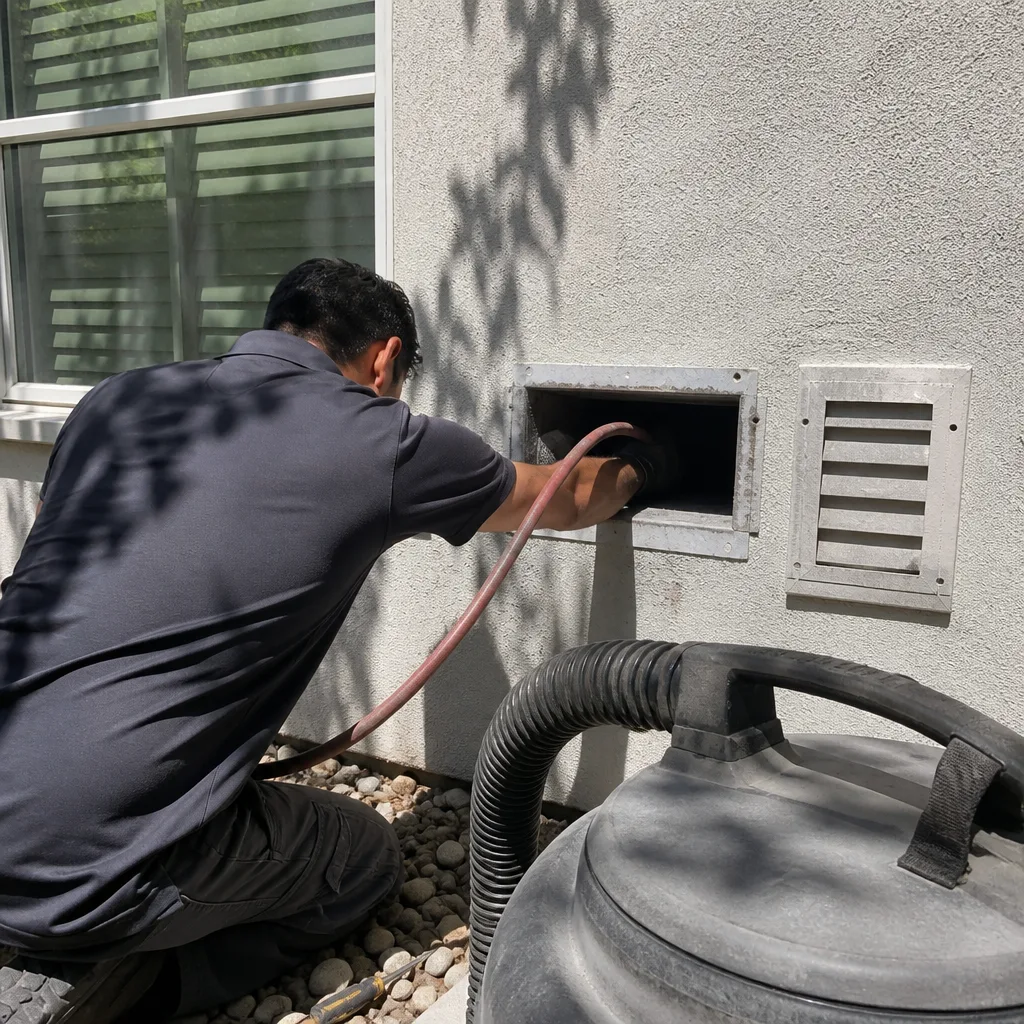
- Before-and-after photos of the work. Reputable companies using professional equipment like Rotobrush rotary brush systems and Nikro negative-pressure units typically provide these automatically because the photos demonstrate that debris was actually removed. We use Rotobrush brushes to dislodge debris at the duct wall, Nikro negative-pressure to pull contaminants out, and Abatement Technologies HEPA filtration to keep loosened particles out of your living space during cleaning.
- A written warranty or guarantee that states what’s covered, for how long, and what you need to do to invoke it. The Kingswell Guarantee, which governs every Kestrel job, puts a written price in your hands before work begins, defines an arrival window, commits to a clean job site, and includes a written guarantee on the work with a free return visit if the work fails within the guarantee period.
- The contractor’s license number and workers’ compensation carrier, which in California you can verify against the Contractors State License Board database.
When documentation comes back thin, treat it as a signal. A contractor who can’t write a clear scope of work usually can’t defend a clear scope of work, and if a permit question ever arises, you’ll be the one holding an unsigned receipt with no detail. The technicians we send to Los Angeles homes are background-checked and uniformed, and the Kestrel Air Duct Los Angeles home page lays out the written-price commitment that applies to every visit. Paperwork isn’t the exciting part of clean ducts, but it’s the part that protects you.
Common Mistakes to Avoid
- Accepting “you don’t need a permit for that” without a written explanation. The moment a technician says a permit isn’t needed for a modification, ask them to put that in writing. If they won’t, you’ve learned something about how they’ll stand behind the work.
- Letting a technician “add a vent” during a cleaning. Adding a register boot to an existing duct is a mechanical modification requiring a permit. No legitimate contractor will do this as an add-on to a cleaning visit without documentation.
- Assuming a buyer won’t check permit history. Los Angeles buyers check. Agents check. Inspectors check. The LADBS online permit search is public and takes sixty seconds.
- Waiting until escrow to file an after-the-fact permit. Escrow timelines in Los Angeles move fast, and a pending permit can push past the contingency deadline and kill the deal.
- Believing that duct tape or mastic applied to a disconnected joint is “just a quick fix.” Reconnecting and sealing a separated duct is an alteration. A disconnected supply branch is also an airflow and air-quality problem, which is exactly what proper cleaning is designed to prevent from accumulating in the first place.
- Hiring an unlicensed worker for duct modification because the quote is lower. California law requires a contractor’s license for mechanical work over $500, and unlicensed workers cannot pull permits. The apparent savings evaporate the first time an inspector asks for documentation.
When to Call a Professional
Call a licensed professional any time the work involves cutting, reconnecting, replacing, or sealing duct components. Call when you see a supply register that’s not blowing air, hear airflow inside a wall cavity that shouldn’t be there, or notice that rooms have become impossible to cool even though the system runs constantly. These are Air Duct Cleaning Warning Signs: A Los Angeles Homeowner’s Reference Guide to disconnected or collapsed ducts, which is a modification-scale repair, not a maintenance-scale cleaning. Call when you’re buying or selling and the inspection report flags duct work with an unclear permit history. And call when you simply want an honest assessment of whether your ducts need cleaning, repair, or replacement, from someone who’ll give you the written answer. Kestrel Air Duct Los Angeles offers free estimates in Los Angeles. Call (213) 733-0665 and we’ll tell you what’s there, what it needs, and what it doesn’t.
Frequently Asked Questions
No. Routine air duct cleaning that removes debris from existing, intact ductwork does not require a permit anywhere in California, including Los Angeles. A permit is only required if the technician cuts new access openings, replaces duct sections, reconnects separated joints, or otherwise modifies the duct system. Call (213) 733-0665 if you’re not sure which category your situation falls into.
A mechanical permit for residential duct work in Los Angeles typically costs between $150 and $400 depending on the valuation of the work and whether the project is within LADBS or LA County jurisdiction. After-the-fact permits, which apply when work was already completed without a permit, are usually double the standard fee. For an exact permit cost for your address, contact the building department that governs your property.
Yes, you can sell, but you must disclose the unpermitted modification on the Transfer Disclosure Statement, and the buyer will almost certainly ask you to resolve it before closing. The cleanest path is to file for an after-the-fact permit before you list, so the permit is finalized and becomes part of the property’s official record before escrow begins.
Duct sealing, such as Aeroseal or brush-applied mastic on accessible seams, is often treated as maintenance and may not require a permit in Los Angeles, depending on how the sealing is performed and whether the system is disconnected during the work. Duct replacement, which means removing any duct section and installing new material, always requires a permit under the California Mechanical Code.
Ask whether the work they’re proposing is maintenance or modification, and ask them to put that answer in writing. Ask for a written price before any work begins. Ask for before-and-after photos so you can see that debris was actually removed. And ask what equipment they’re using: Rotobrush rotary brush systems dislodge debris at the duct wall, Nikro negative-pressure units pull contaminants out, and Abatement Technologies HEPA filtration keeps loosened particles out of your living space during cleaning.
Signs include supply registers in locations that don’t match the home’s original floor plan, duct runs visible in attic spaces with newer material than the rest of the system, and mastic sealing on joints that appears fresh on a system that’s decades old. You can also search your property’s permit history online through LADBS or LA County’s Building and Safety portal and compare that record to what you see in the attic or crawl space.
The Bottom Line
Duct cleaning as a standalone service is permit-free across California. The permit line is crossed when a technician modifies, replaces, reconnects, or seals duct components during what started as a cleaning visit. Know the line, ask the right questions in writing, and get documentation for everything. Los Angeles homeowners who understand this distinction-see The Complete Guide to Air Duct Cleaning in Los Angeles for full details-avoid unpermitted work that surfaces during resale and costs far more to fix than the original permit ever would. The Kingswell Guarantee that Kestrel operates under exists precisely so you’ll never face a surprise scope change: written price before work begins, a defined arrival window, a clean job site, and a written guarantee with a free return visit if the work fails within the guarantee period.
Written by Dale Whitmore, Owner at Kestrel Air Duct Los Angeles, serving Los Angeles since 2004.
See the difference
 Before
 After
After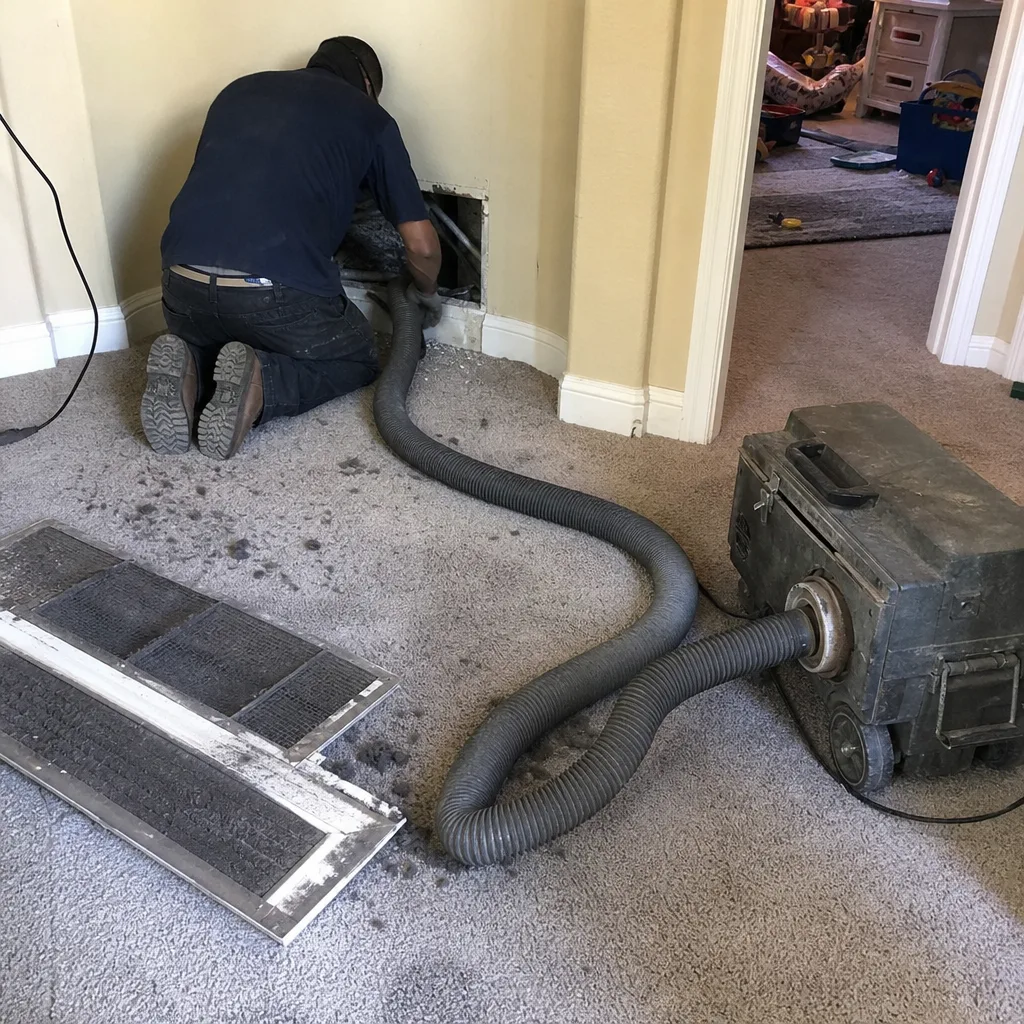 Before
 After
After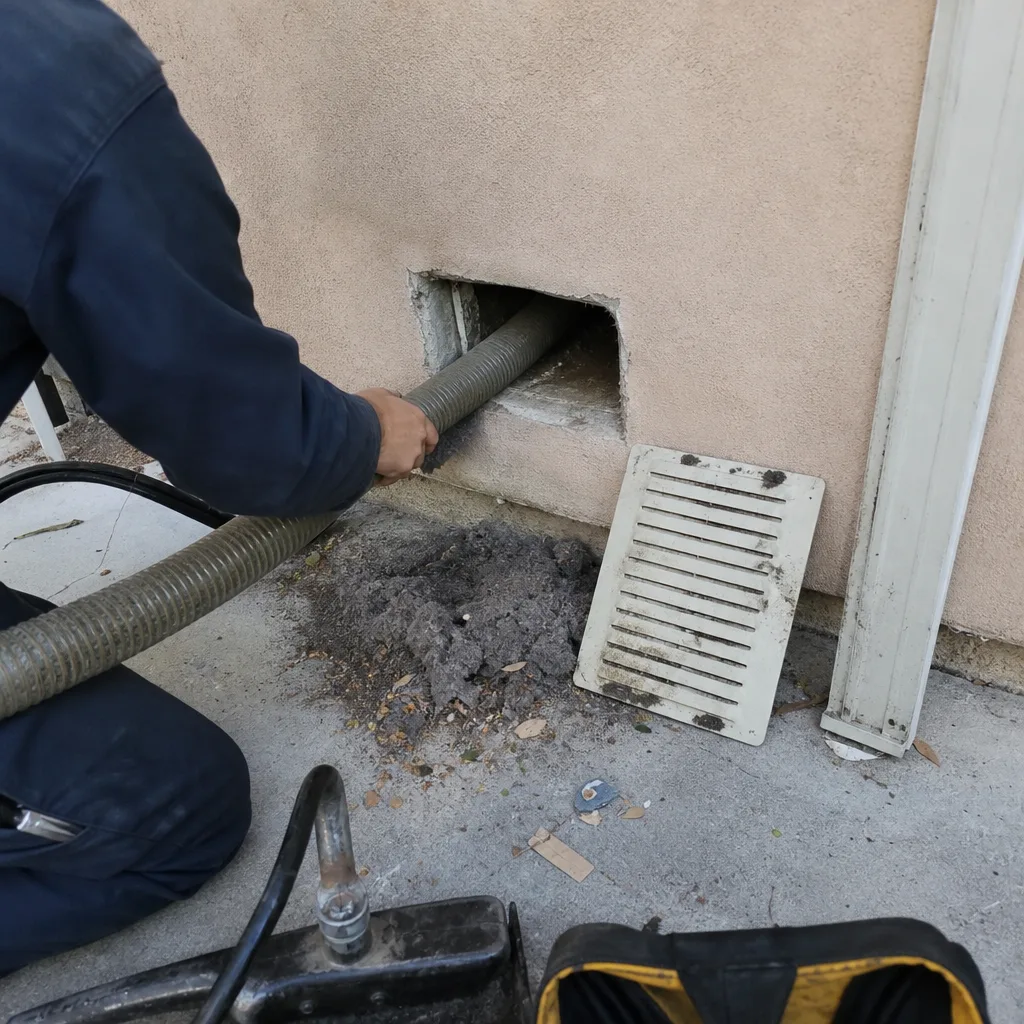 Before
 After
After