
Last updated October 15, 2026
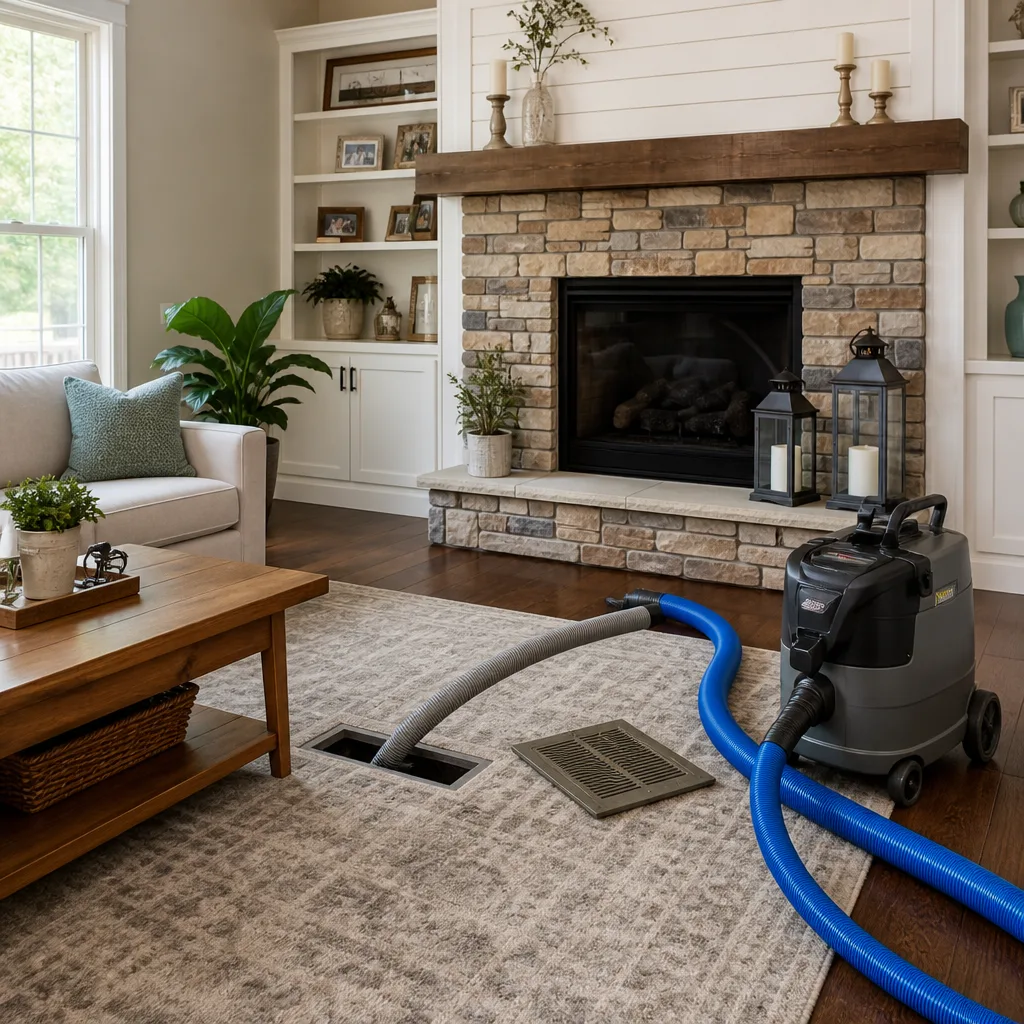 Whole-home duct cleaning
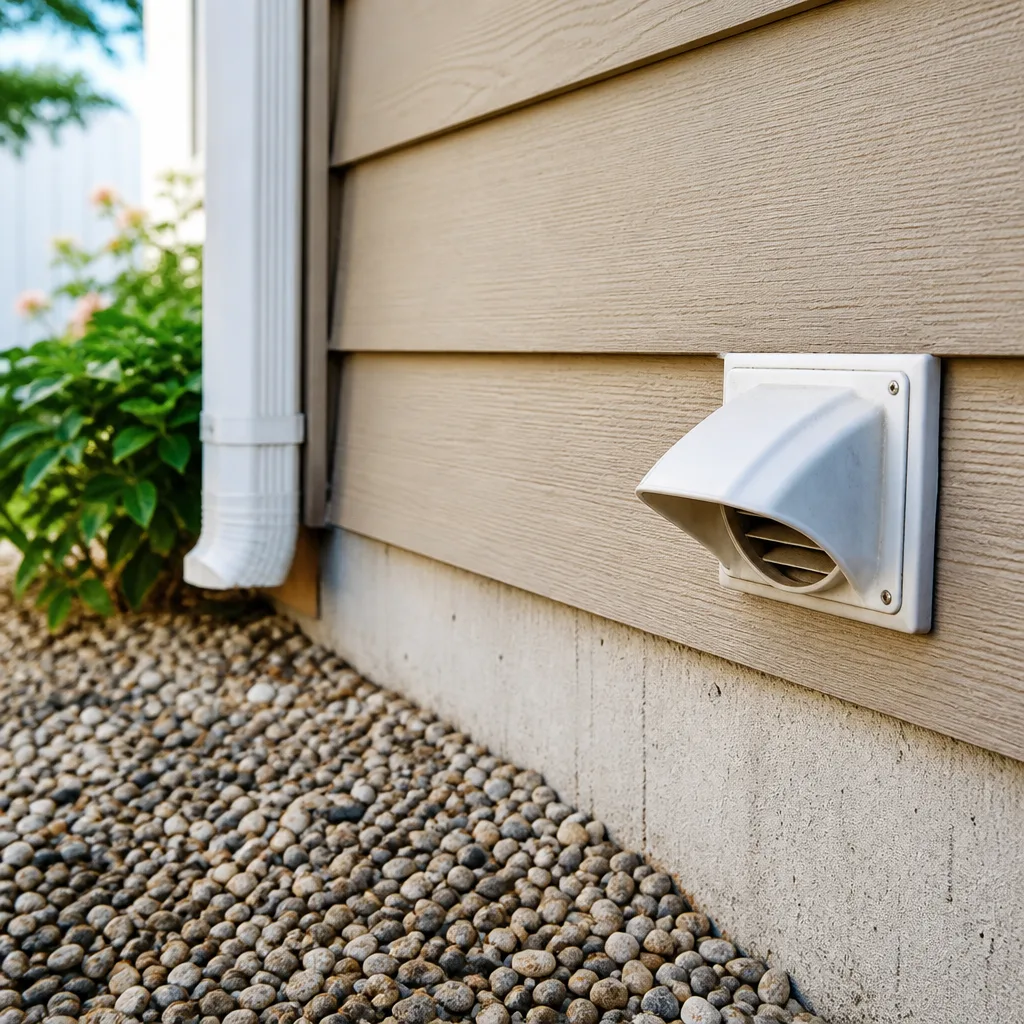 Dryer vent cleaning
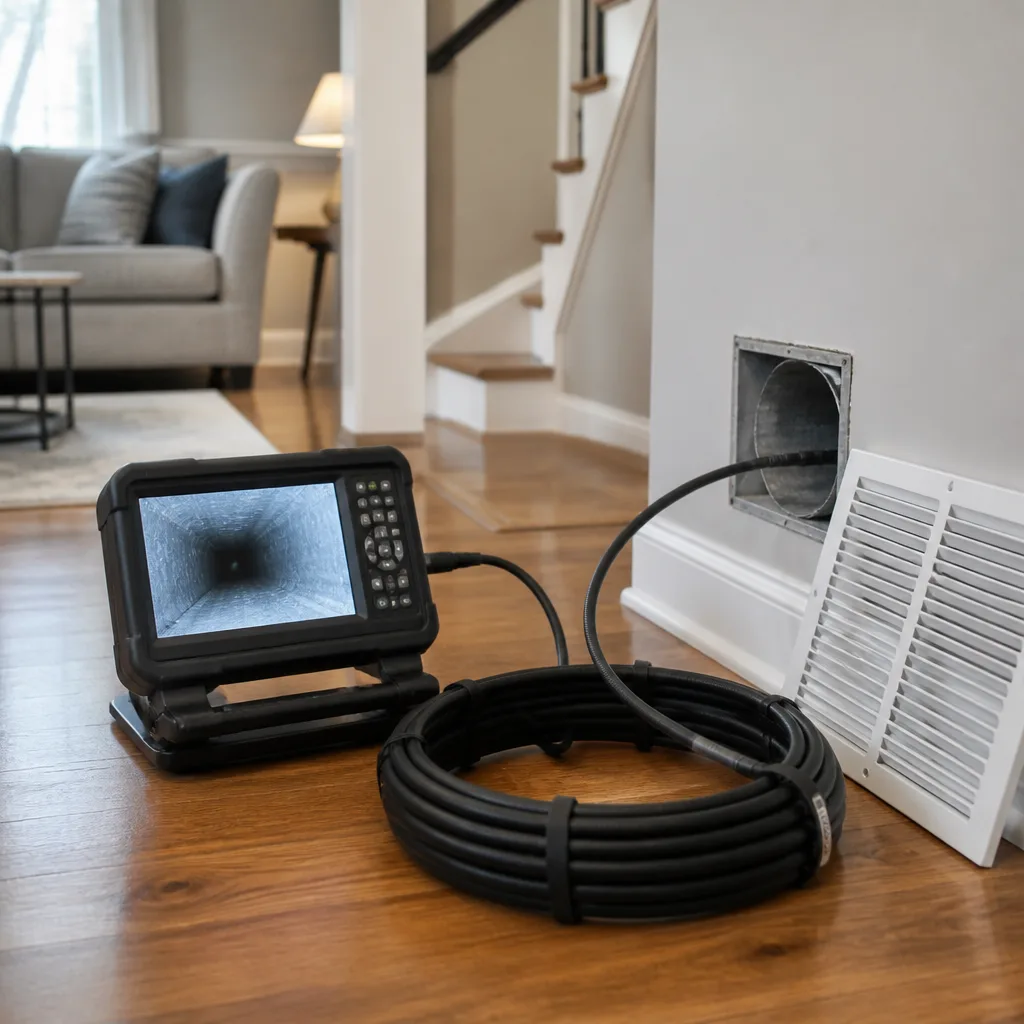 Camera inspection
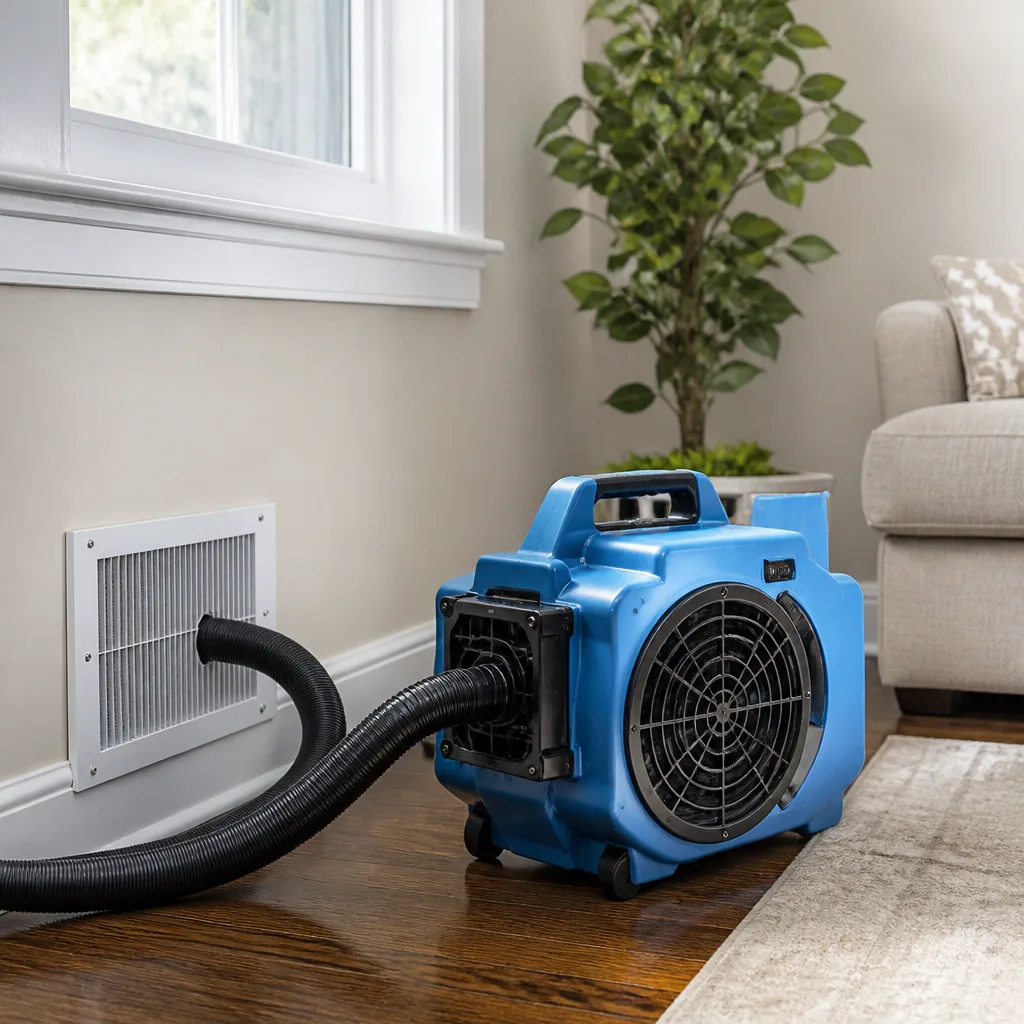 Sanitizing & deodorizing
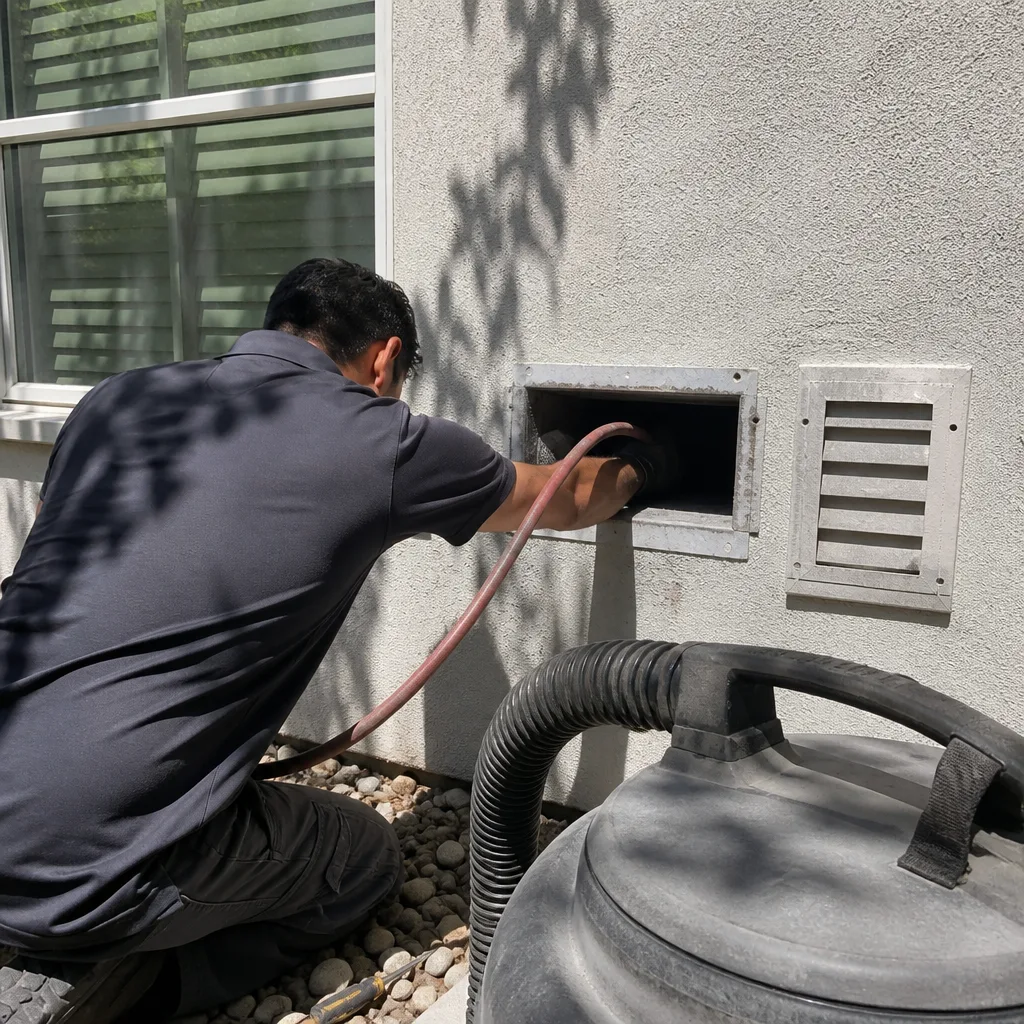
Whole-system duct and dryer vent check with before-and-after photos - you see exactly what came out of your vents
That "$99 whole-house special" is a bait ad - the real number appears once they are in your hallway, or the "clean" is a shop-vac at the register. We photograph the inside of your ducts before and after instead.
How to Hire a Air Duct Cleaning Contractor in Los Angeles: A Step-by-Step Guide
The California Contractors State License Board logged more than 300 complaints tied to HVAC and duct cleaning upsells in Los Angeles County over a recent two-year window. The pattern in most files is nearly identical: a $49 mailer draws the call, a technician arrives, and within thirty minutes the invoice has ballooned to $800 for “mold treatment” or “extra vent charges” nobody agreed to. The homeowner, standing in their own hallway with a stranger holding a tablet, pays. This guide exists so you never stand in that hallway. You’ll learn the exact license category to verify before booking, five phone questions that separate legitimate companies from bait-and-switch operations, what a real scope-of-work document looks like, and how to use a written warranty as your sharpest screening tool. Los Angeles has hundreds of duct cleaning companies. Very few survive this script.
Styles & brands we work with
Quick Answer
To hire an Air Duct Cleaning contractor in Los Angeles, verify their CSLB license under the “C20 – Warm-Air Heating, Ventilating and Air-Conditioning Contractor” classification, request a written scope of work with a fixed total price before any truck is dispatched, and ask five specific phone questions covering equipment, linear footage, access points, per-register counts, and the terms of their written warranty. Any contractor who hesitates on the written price or pivots to an on-site “inspection” before quoting should be disqualified immediately. A legitimate Los Angeles air duct cleaning for a typical single-family home runs $300 to $650 whole-system, not $49 per vent.
Table of Contents
- Why Two Out of Three LA Duct Cleaning Ads Underprice the Job on Purpose
- Step 1: Verify the CSLB License Category (C20, Not “Registered”)
- Step 2: Run the Five-Question Phone Script Before Any Truck Rolls
- Step 3: Demand a Written Scope of Work That Names Numbers
- Step 4: Ask What Equipment Is on the Truck (and What Each Piece Does)
- Step 5: Use the Warranty Question as Your Best Screening Tool
- Six LA-Specific Red Flags That Should End the Conversation Immediately
- Common Mistakes to Avoid
- When to Call a Professional
- Frequently Asked Questions
- The Bottom Line
Why Two Out of Three LA Duct Cleaning Ads Underprice the Job on Purpose
We’ve spent two decades watching the Los Angeles duct cleaning market from the inside, and the economics are not complicated. A real whole-house cleaning on a 2,000-square-foot home with eight to twelve registers, using a truck-mounted negative-air unit and a rotary brush system, takes a two-person crew three to five hours. Labor, fuel, equipment amortization, and disposal costs put the honest price between $300 and $650 for most homes. So when a postcard arrives promising $49 whole-house cleaning, the math only works one way: the $49 is bait. The technician is under instruction to find “problems” once inside. In Los Angeles, where homes in Encino, Sherman Oaks, and Pasadena often have attic-mounted furnaces and decades of accumulated debris, the upsell script writes itself: “Your ducts have microbial growth. We can treat that today for another $400.” No testing beforehand. No written quote for the add-on. Just a tablet turned toward you with a new number.
This is the reason the phone script in this guide matters more than any review site. A contractor who quotes honestly over the phone has nothing to hide. One who insists on seeing the property “before we can give you any kind of number” is almost always running the on-site escalation playbook. In Los Angeles, the vast majority of homes have accessible attics and crawl spaces. A competent company can quote from the home’s square footage, the number of registers, and the linear footage of duct runs. You don’t need anyone in your hallway to get an honest price. If they tell you otherwise, hang up.
Step 1: Verify the CSLB License Category (C20, Not “Registered”)
Before you book anything, go to the California Contractors State License Board website and pull up the company’s license. You are looking for one specific classification: “C20 – Warm-Air Heating, Ventilating and Air-Conditioning Contractor.” That classification exists precisely because ductwork is part of the HVAC system. A C20 holder has passed a trade exam, carries a contractor’s bond, and has verifiable experience in the field. A business that is merely “registered” with the city or the county is not a licensed contractor. Registration is a tax designation, not a trade qualification. If the company cannot produce a CSLB number, or shows a number under a different classification (a “B” general building license does not automatically cover HVAC duct cleaning in a way that mirrors C20 scope), that’s your first exit.
Dale Whitmore, owner at Kestrel Air Duct Los Angeles home, started this company in 2004 and has watched the licensing gap widen every year. “The giveaway is usually in the fine print of the ad,” he says. “A ‘licensed and insured’ claim without a CSLB number printed right alongside it means they’re hiding from the database search.” Take ninety seconds. Verify the license. If the number doesn’t pull up a C20 in good standing, you’ve saved yourself the cost of a very expensive lesson. Los Angeles is a tough enough market for homeowners without hiring an unlicensed operator to work inside the lungs of the house.
Step 2: Run the Five-Question Phone Script Before Any Truck Rolls
This is the section that will save you real money. When you call a Los Angeles duct cleaning company, work through these five questions in order. The order matters because the answers reveal more than the questions do on their own.
- “What’s the flat price for my whole system, in writing, before you dispatch?” A legitimate company will ask you for the square footage, the number of bedrooms, and the number of supply and return registers. Then they will give you a dollar figure. A range is acceptable. A refusal to give any figure until an on-site visit is not.
- “How do you calculate linear footage of duct runs, and is it included in the quoted price?” Professional duct cleaning prices account for the total linear feet of supply and return ductwork. Some companies charge a base price and then add “per foot” charges on site. Ask directly: “Is the linear footage included in the number you just gave me, or is it an add-on?”
- “What does the price cover per register? How many supply and return registers are in the quote?” A real quote itemizes the count. If the phone person cannot tell you how many registers are included, the on-site tech will count them after the work starts and hand you the difference.
- “What exactly happens if you find ‘contamination’ or ‘mold’ once you’re inside?” The answer you want sounds like this: “We show you the photos from our camera. We explain what we see. We give you a written add-on price. You decide.” The answer you don’t want is any version of “we take care of it right then” or “we can’t leave the job like that.” Duct cleaning in Los Angeles is not a hostage negotiation.
- “Is your warranty in writing? What does it cover, and for how long?” This is the question that changes the entire dynamic. Companies that behave badly on site almost never put their guarantee in writing, because a written guarantee is enforceable. Companies that do put it in writing behave differently at every step of the job. The 365-Day Done Right Promise at Kestrel is exactly that: a documented guarantee, not a handshake. If the work falls short within a year, the crew returns at no charge. If a repair fails, the return visit is free. Ask any contractor you’re considering what their version of that looks like. Then ask to see it before you commit.
Here’s the thing about Los Angeles: the market is saturated, and saturation breeds sloppy operators. Running this script takes four minutes. It filters out the bait-and-switch crowd before they ever see your address. The companies that pass all five questions are the ones worth scheduling.
Step 3: Demand a Written Scope of Work That Names Numbers
A legitimate scope-of-work document for air duct cleaning in Los Angeles should read like a contract, not a brochure. Before any technician walks through your door, you should have a document in hand (email works) that specifies these five items by number: linear footage of duct runs, the number of supply registers, the number of return registers, the access points the crew will use (attic hatch, crawl space entry, closet access panels), and the total flat price for the job. If any of those numbers are missing, or if the document says “to be determined on site,” you have not received a scope of work. You’ve received a teaser.
We see the same gap in the Los Angeles market over and over: a company quotes $325 on the phone, then the written confirmation lists “one main return and up to 6 supply vents, additional vents $29 each.” The home has eleven supply vents. The final invoice is $325 plus $145 in “additional vents” plus $89 in “extended run charges.” The written scope is where that game gets shut down. At Air Duct Cleaning in Los Angeles from Kestrel, the written price covers the whole system as disclosed in the scope: every supply register, every return, the full linear footage, and the necessary access work. We write it down before the van leaves the lot.
A legitimate additional charge does exist, but it’s rare and always identifiable in advance. If your home has an unusually long duct run to a converted garage, or a second system serving an ADU, that’s a legitimate reason for a higher quote. It should be disclosed on the phone, not discovered in the attic. The rule in Los Angeles is simple: every dollar should be on paper before any tool comes out of the truck.
Step 4: Ask What Equipment Is on the Truck (and What Each Piece Does)
The equipment question separates professional duct cleaning from what is essentially an over-engineered vacuuming. You want to hear two words from a legitimate contractor: negative-air extraction and brush agitation. Those two technologies, working together, are what actually clean a duct system. Negative-air extraction means the system is placed under vacuum using a powerful HEPA-filtered unit that pulls loosened debris out of the ducts and into a sealed containment system. It prevents the dust and allergens from recirculating into your living room while the work happens. Brush agitation means a rotating brush head travels through the duct walls and physically dislodges the debris that has adhered over years of heating and cooling cycles. Without agitation, vacuum alone leaves a film of stuck-on particulate behind. Without negative air, the agitation just kicks debris into your house.
Kestrel runs Rotobrush rotary brush systems for the agitation and Nikro negative-pressure units for the extraction, with Abatement Technologies HEPA filtration in line to keep the living space isolated from the cleaning zone. Those are professional-grade tools built for this exact application, not a box-store shop vac with a long hose taped to it. If the company on the phone cannot name their equipment, or gets vague when you ask how they prevent debris from blowing into the house, they are not running professional negative-air extraction. In Los Angeles homes, where duct systems often run through attics that hit 130 degrees in summer, the debris load is genuinely heavy: construction dust, rodent droppings, insulation fibers, and years of what used to be outside air. You need real equipment. Ask them to name it, and ask them to explain what each piece does. If the explanation is evasive, so is the job.
Step 5: Use the Warranty Question as Your Best Screening Tool
Here’s a fact we’ve learned across hundreds of Los Angeles duct jobs: a company’s warranty tells you more about how they’ll behave on site than any five-star review. A written, named, dated guarantee with specific terms is a signal that the company has been through quality-control processes, customer disputes, and repeat visits, and survived all of them by standing behind the work. A vague “satisfaction guaranteed” or “we’ll make it right” with no document attached is a sign the company has never been held accountable for anything.
The screening question is simple: “Send me the warranty before I book. I want to read it.” Then read it. A real warranty covers specific failure modes: debris left in the system, a missed register, a damaged component, a return that wasn’t cleaned. It states what the customer needs to do to invoke it (call within the window, provide the original scope of work) and what the company will do in response (return within a defined period, re-clean at no charge, repair any damage caused by the work). The 365-Day Done Right Promise from Kestrel works exactly this way, and it’s been the same since the company started under the Kingswell Guarantee in 2004. Every job gets the written promise. Every customer can point to it.
If a contractor hesitates when you ask for the warranty document, or says they’ll “put something in the invoice after the work is done,” that’s not a warranty. That’s a receipt. Walk away. The companies that behave differently at every step, from the first phone call to the final walk-through, are the ones that don’t have to rely on a hard sell. Their work is the pitch.
Six LA-Specific Red Flags That Should End the Conversation Immediately
Los Angeles has its own duct cleaning playbook, honed by years of this exact market. These six red flags are common enough that we can describe them from memory. Any one of them should end the call.
- The $49 whole-house mailer. The postcard arrived, the price was real, and then the “inspection” found six problems. There is no world in which a legitimate company cleans an entire Los Angeles duct system for $49. The truck doesn’t even make it to your street for that.
- The “mold treatment” pitch before any testing. Mold in ducts is rare in Southern California’s dry climate, and when it does appear, it requires lab testing to confirm. A technician who points a flashlight into a vent and declares “microbial growth” without testing is selling a fear upgrade, not a cleaning. If they use the word “toxic” in the first ten minutes, that’s the script.
- The same-day urgency script. “We have a cancellation, so we can come today, but the price is only good if we come today.” Real duct cleaning is a scheduled job. It’s not an emergency, and legitimate companies don’t manufacture urgency to bypass your decision-making.
- The refusal to give a written price over the phone. If the only quote you can get requires a technician in your home, the company’s business model is the on-site escalation. There is no other reason to withhold the number. Los Angeles homes are specifiable from a ten-minute phone call.
- The “extra vents” add-on. Quoted $275 for “up to 8 vents.” Your home has 14. The difference is $174. Ask on the phone how many vents are included, and get the answer in writing. If they won’t commit, you’ve found the add-on model.
- The no-name equipment answer. “We have professional equipment” is not an answer. Professional equipment has names: Rotobrush, Nikro, Abatement Technologies. If they can’t name it, it’s a shop vac. If it’s a shop vac, it’s not duct cleaning, it’s theater.
Common Mistakes to Avoid
- Booking from the postcard price alone. The postcard is a lead generation tool, not a quote. Los Angeles homeowners who book solely on the mailer’s number end up paying the upsell. Always run the phone script before committing to anything.
- Skipping the CSLB verification. A “licensed and insured” claim without a verifiable C20 classification is marketing copy, not a credential. Check the database. It takes ninety seconds.
- Accepting an on-site quote as the first price. If the first number you see is the one on the technician’s tablet in your hallway, you have already lost the negotiating position. The first price should be in your email inbox before anyone arrives.
- Paying in full before the work is done. Reputable companies invoice after the job is complete and the walk-through is done. A demand for full payment upfront is a red flag in any trade.
- Believing the “mold” claim without testing. If a technician finds contamination, the answer is lab testing, not a same-day treatment spray. A legitimate company takes a sample and sends it off. Anyone who sprays first and tests later (or never) is selling theater.
- Not asking for the warranty in writing. The single best predictor of a good job is a documented guarantee with a named promise and a defined response. If there’s no document, there’s no guarantee.
- Scheduling duct cleaning for the same day as another vendor’s service. In Los Angeles, where homes are often serviced by multiple trades on the same week, duct cleaning after drywall work or painting means you’ll be cleaning the new dust too. Schedule the duct cleaning after other interior work is finished.
When to Call a Professional
Duct cleaning is not a DIY job. The equipment alone, a professional-grade negative-air unit and a rotary brush system, costs more than a full professional cleaning and requires training to operate without damaging the ducts or blowing debris into the living space. If your home has had renovation work, if you’ve noticed dust re-accumulating on surfaces within days of cleaning, if anyone in the house has unexplained respiratory irritation, or if you’ve never had the system cleaned since moving in, it’s time to bring in a contractor who will do the job right and back it in writing. Dryer Vent Cleaning in Los Angeles also matters here: a clogged dryer vent is a fire hazard, and it’s the same kings of failure, lint buildup and restricted airflow, that plague duct systems. Kestrel Air Duct Los Angeles offers free estimates in Los Angeles. Call (213) 733-0665 to get a written price before any truck rolls.
Frequently Asked Questions
A legitimate whole-system air duct cleaning in Los Angeles for a typical single-family home runs between $300 and $650, depending on square footage, the number of supply and return registers, and the total linear footage of duct runs. The most common figure for a three-to-four-bedroom home with eight to twelve registers falls between $350 and $500. Any advertised price below $150 for a whole house is a lead-generation tactic, not a real quote. Call (213) 733-0665 for an exact written price, no on-site visit required.
The cheaper quotes are usually built on a per-vent or per-foot pricing model that balloons once the technician is inside. The advertised number covers the minimum configuration: up to six vents, or one main return, or thirty linear feet. Los Angeles homes routinely exceed those minimums, and the add-on charges are where the profit lives. A legitimate quote covers the whole system in one flat price, in writing, before anyone arrives. If the price sounds too good to be true, ask for the scope-of-work document. The cheap quote will not survive that request.
A legitimate contractor provides before-and-after photos from a duct camera, showing the same vent or duct section before and after cleaning. The photos should be time-stamped and specific to your home. If the company can’t provide photos, or shows you generic stock images, the work may not have been done at all. At Kestrel, we photograph the system on the way in and on the way out, and every customer sees their own ducts, not a demo reel. The photos are part of the documented job.
For most Los Angeles homes, every three to five years is the honest interval. Homes with pets, smokers, recent renovation work, or residents with severe allergies may benefit from cleaning every two to three years. The dry, dusty climate in Los Angeles means particulate builds up faster than in more humid regions, but there’s no legitimate reason to clean ducts annually. A company pushing an annual plan is selling a subscription, not a service. Clean when the system is dirty, not when the calendar says so.
Air duct cleaning addresses the HVAC system’s supply and return ductwork, the passages that carry heated and cooled air from the furnace and air conditioner to the rooms. Dryer vent cleaning addresses the exhaust pipe that runs from the clothes dryer to the outside, removing lint buildup that creates a fire risk. They are different systems with different failure modes, and both are services Kestrel provides. A home with a clean HVAC system and a clogged dryer vent still has a problem. Both are documented under the same written guarantee at Kestrel.
Yes. Air duct cleaning in Los Angeles falls under the jurisdiction of the California Contractors State License Board, which requires the C20 Warm-Air Heating, Ventilating and Air-Conditioning Contractor classification for companies performing the work. The CSLB also enforces advertising standards and handles consumer complaints. A company operating without the proper C20 classification is working outside the law, and any complaint you file will carry more weight against a licensed contractor. Always verify the license before booking.
The Bottom Line
Hiring an air duct cleaning contractor in Los Angeles comes down to one principle: get everything in writing before anyone arrives. For more guides & resources on protecting your home and budget, explore our blog. Verify the C20 license, run the five-question phone script, demand a written scope of work that names the numbers, ask what equipment is on the truck, and require the warranty in writing before you commit. The companies that pass all five steps are the ones that behave like professionals at every other step too. Kestrel Air Duct Los Angeles has operated under the Kingswell Guarantee since 2004: a written price before work begins, a defined arrival window, a clean job site, and a 365-Day Done Right Promise in writing on every single job. If the work falls short, we return and make it right at no charge. If a repair fails, the return visit is free. Call (213) 733-0665 for a written estimate today.
Written by Dale Whitmore, Owner at Kestrel Air Duct Los Angeles, serving Los Angeles since 2004.
See the difference
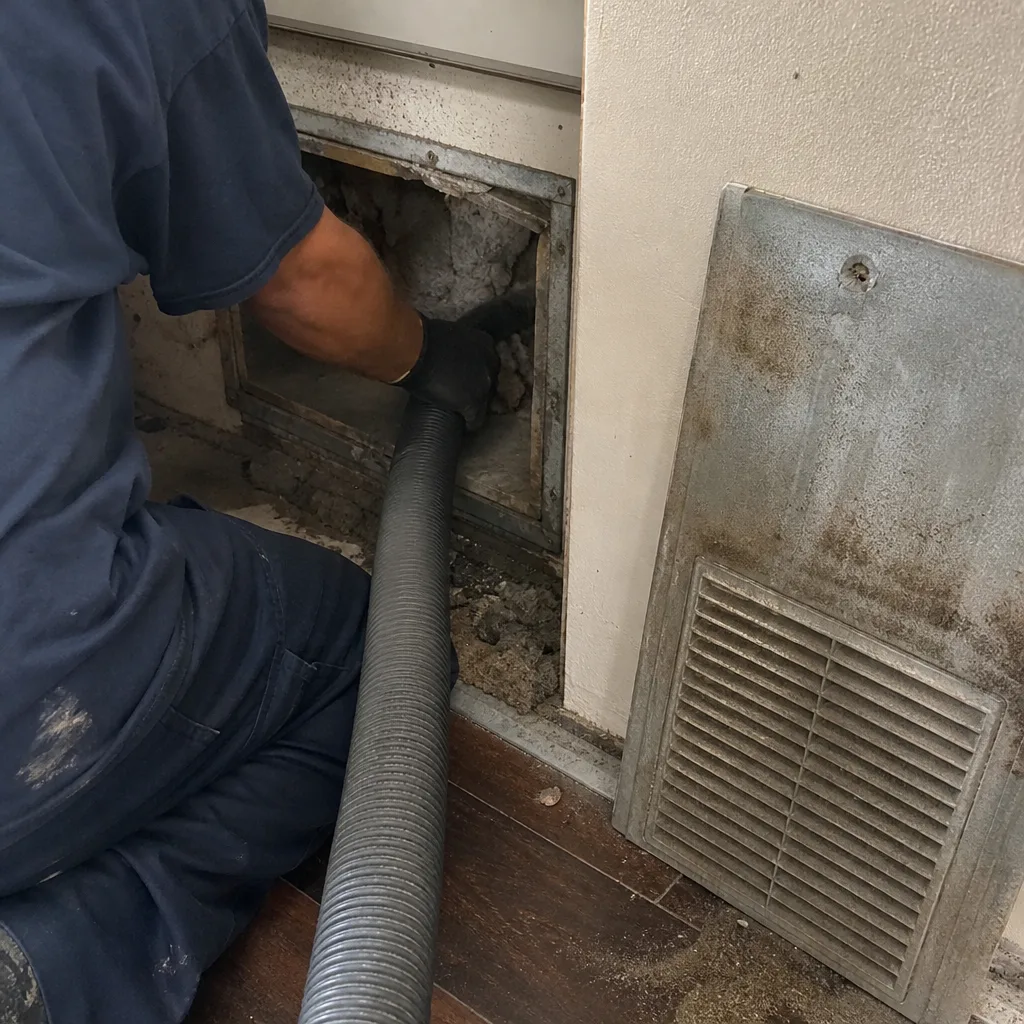 Before
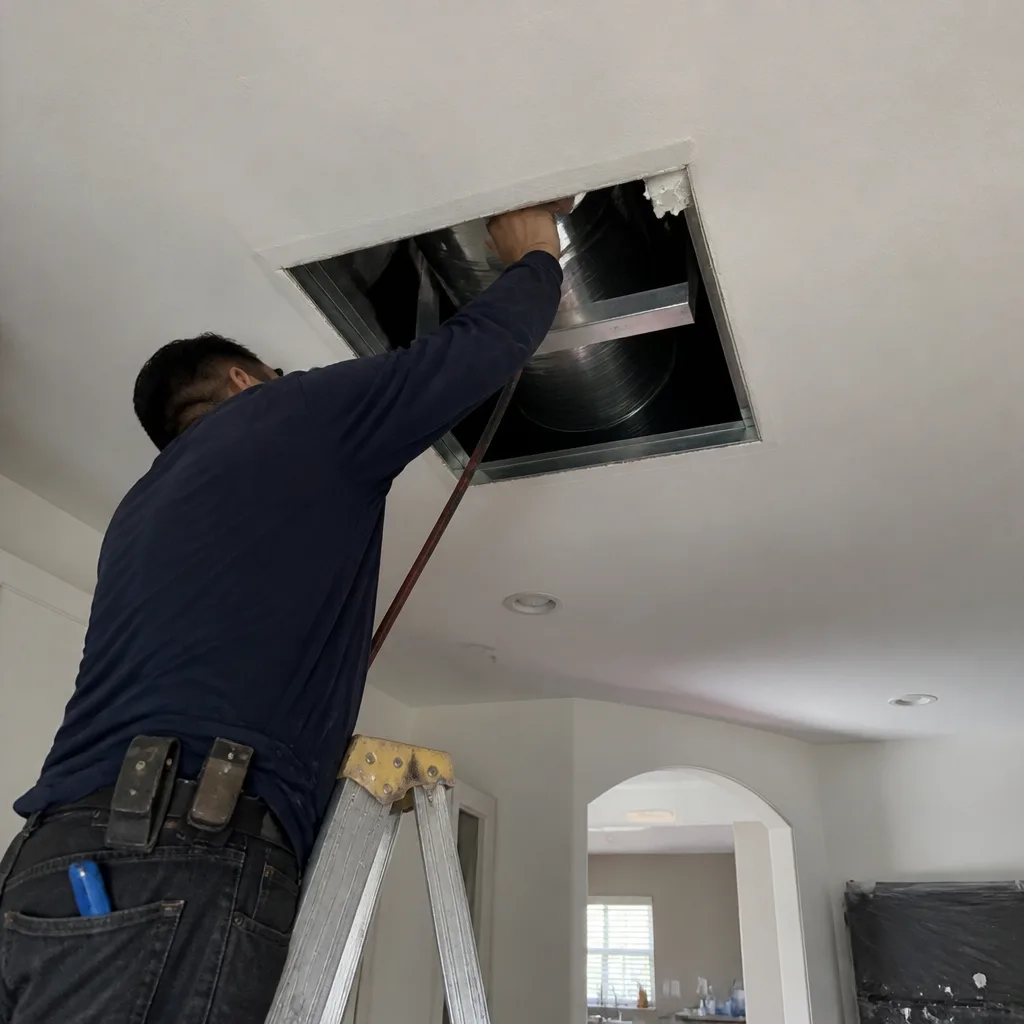 After
After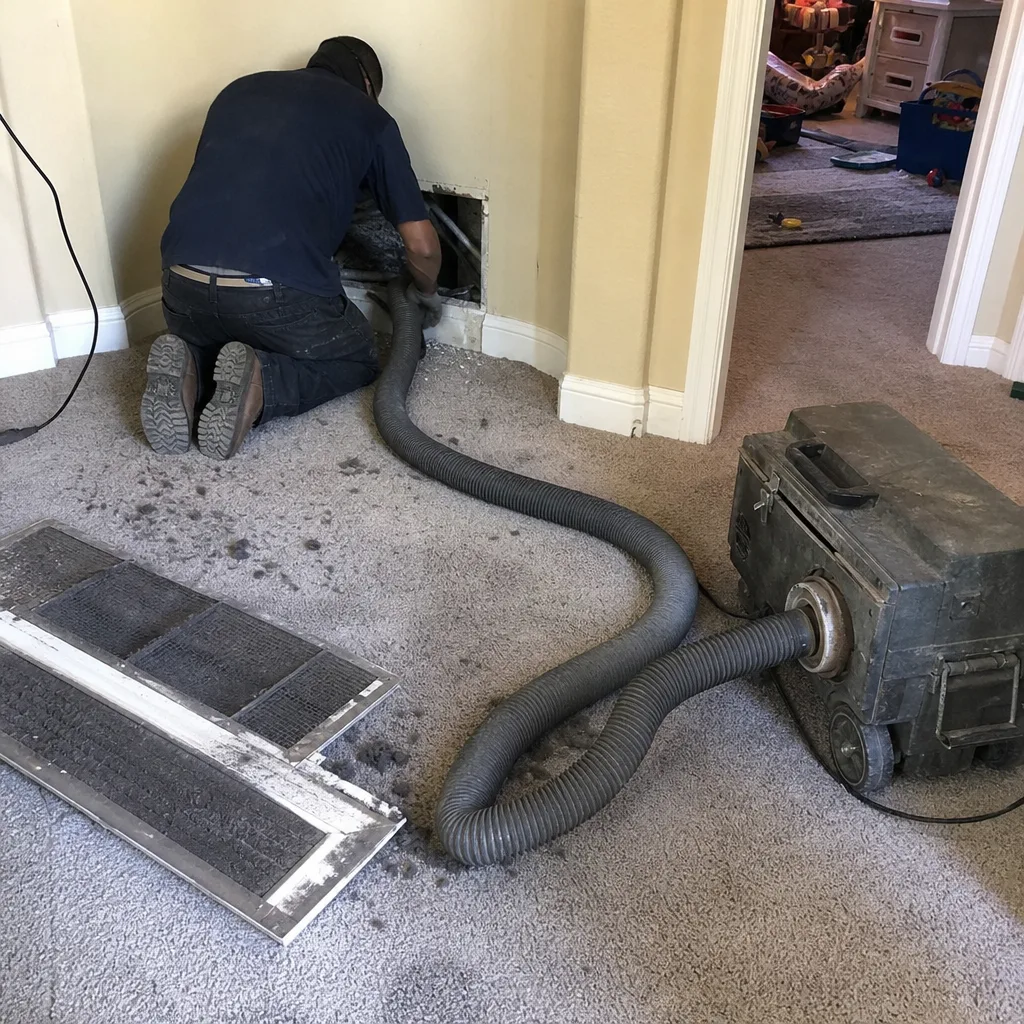 Before
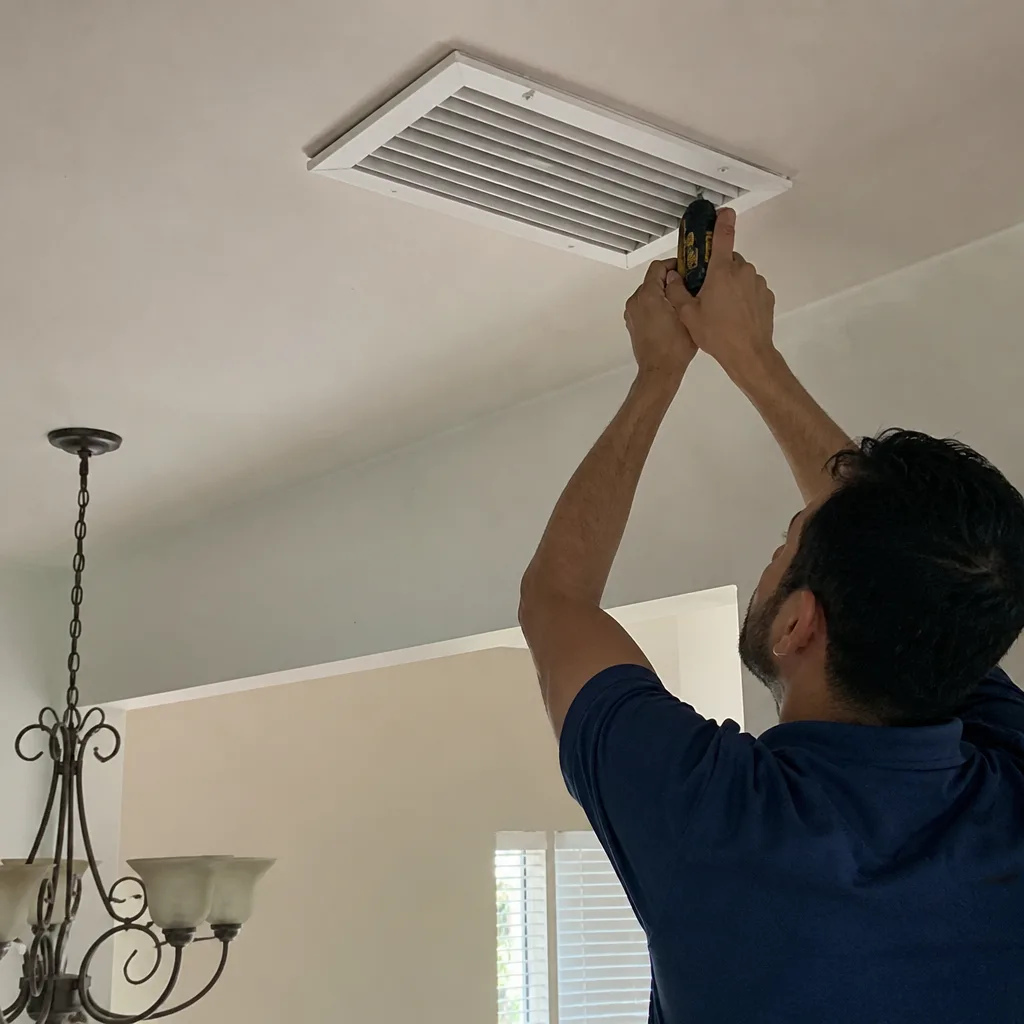 After
After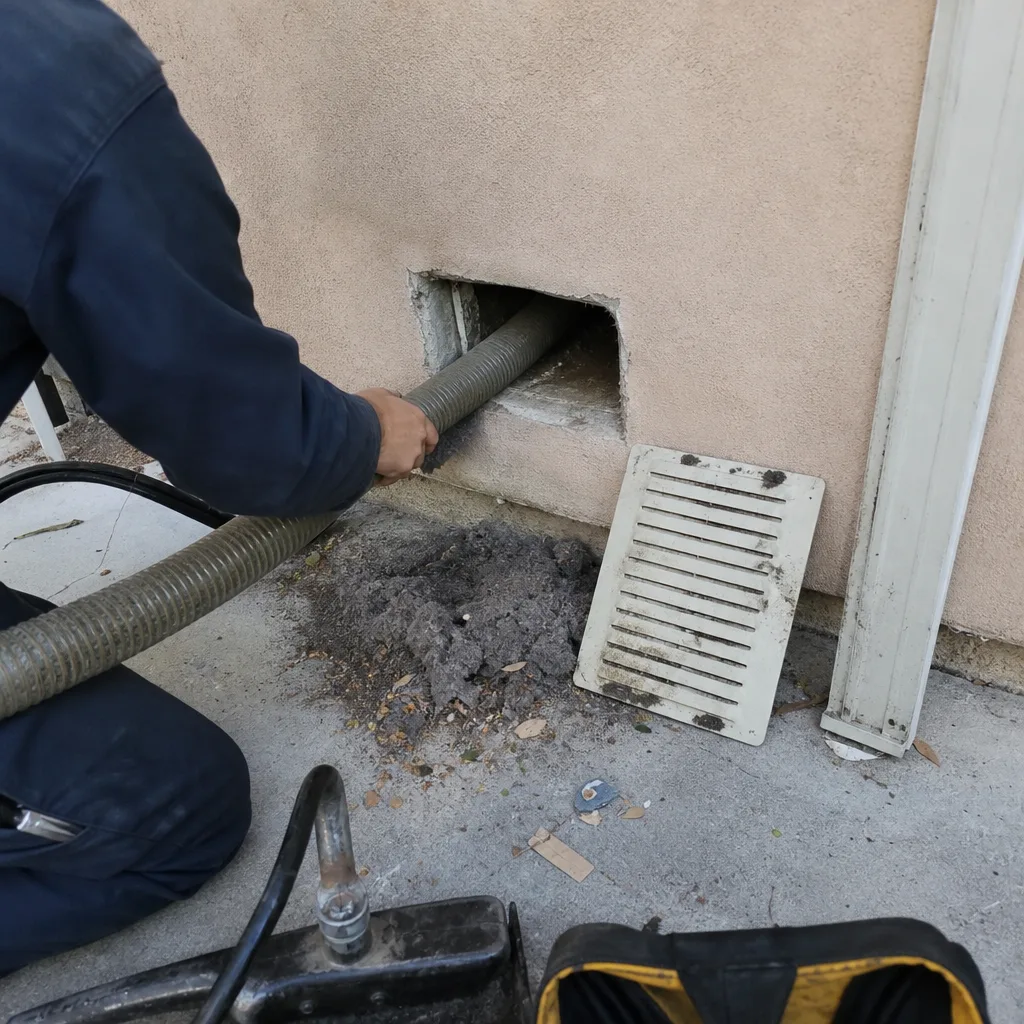 Before
 After
After