
Last updated October 15, 2026
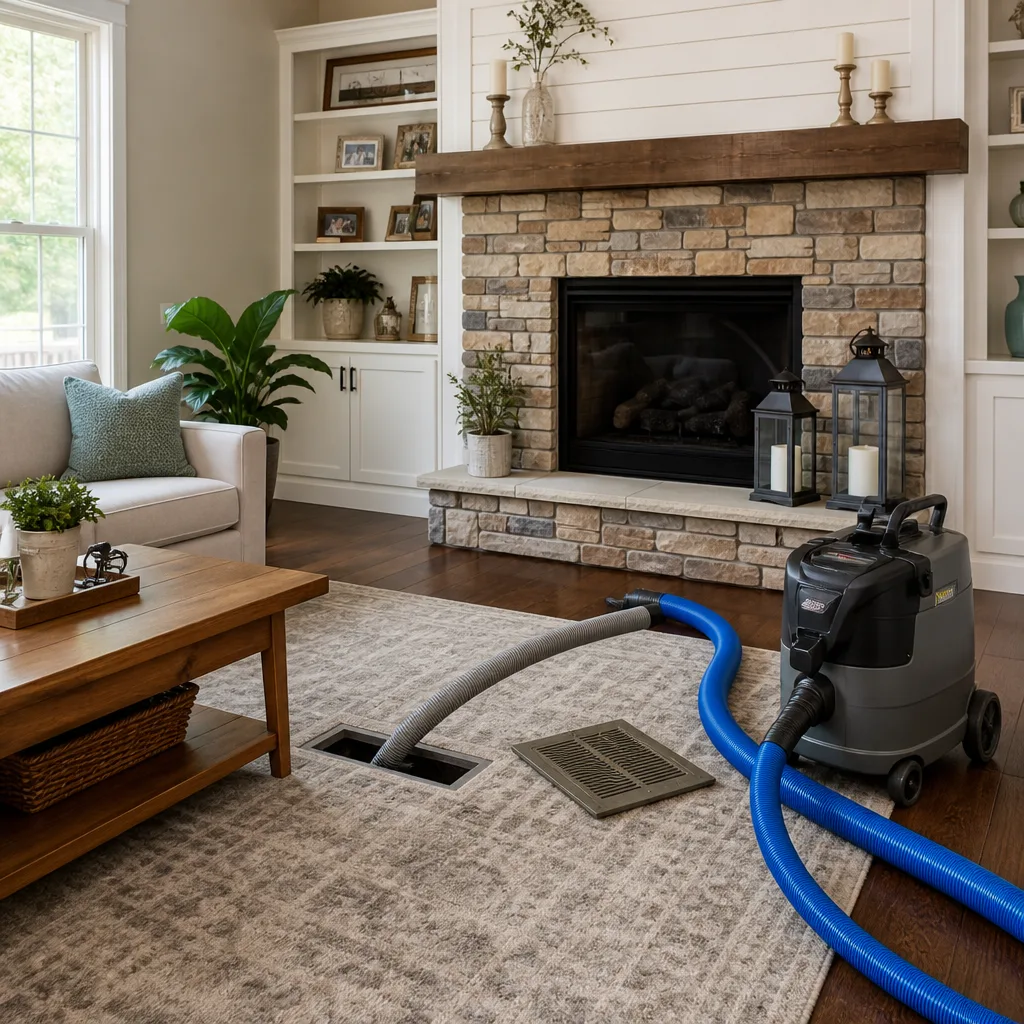 Whole-home duct cleaning
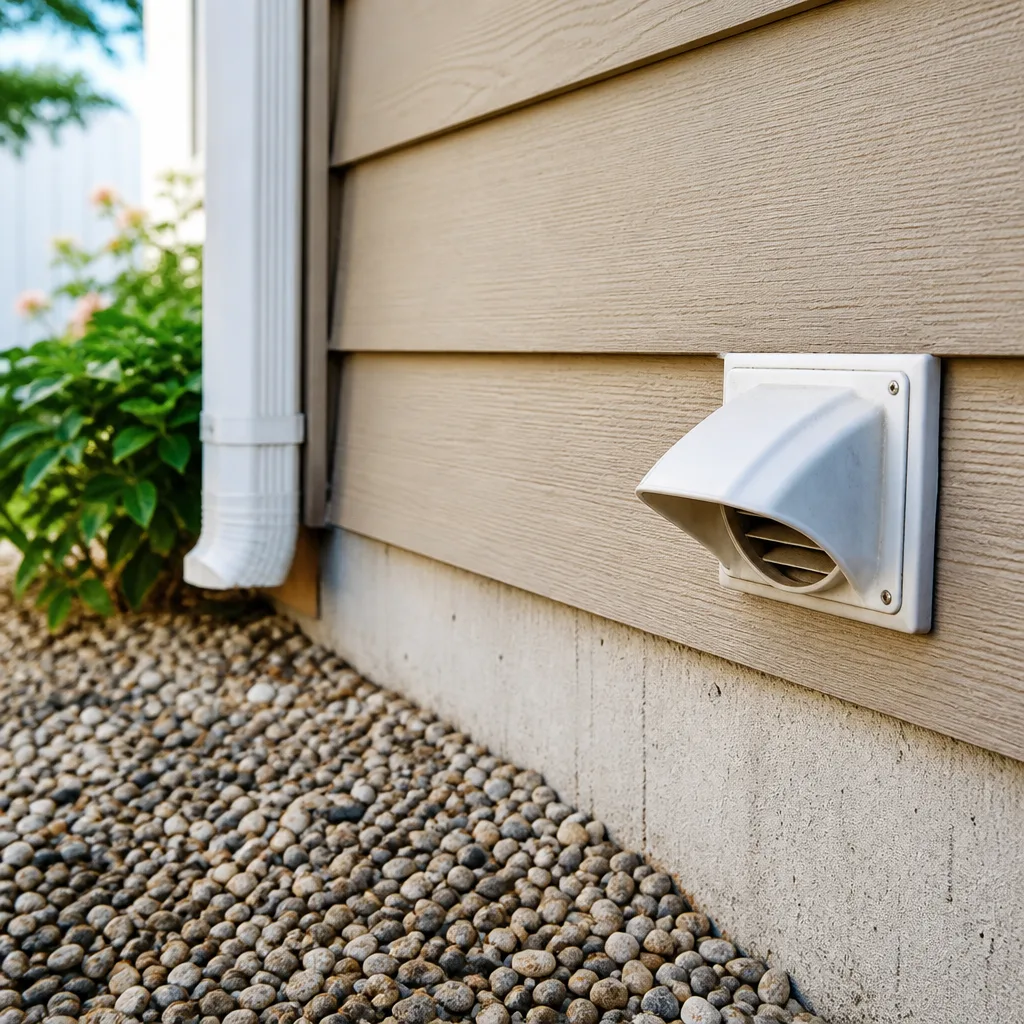 Dryer vent cleaning
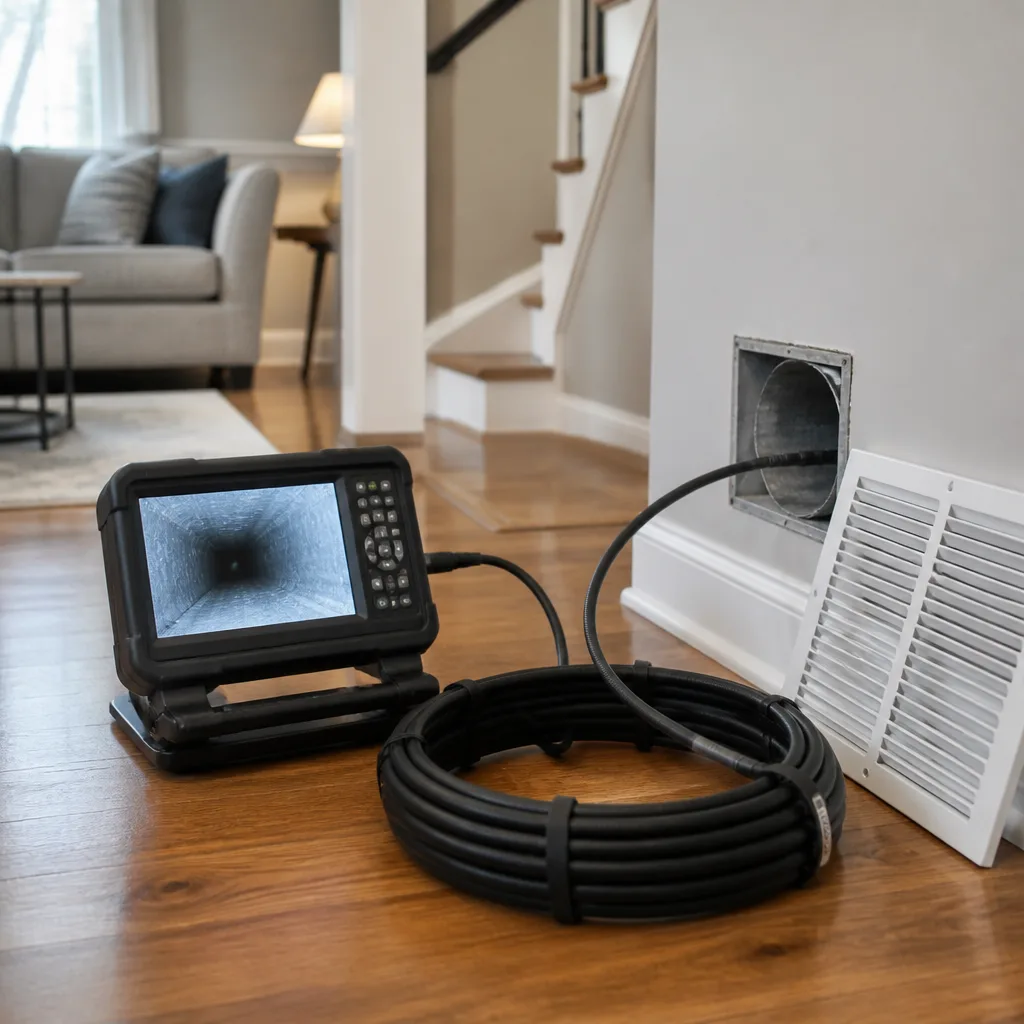 Camera inspection
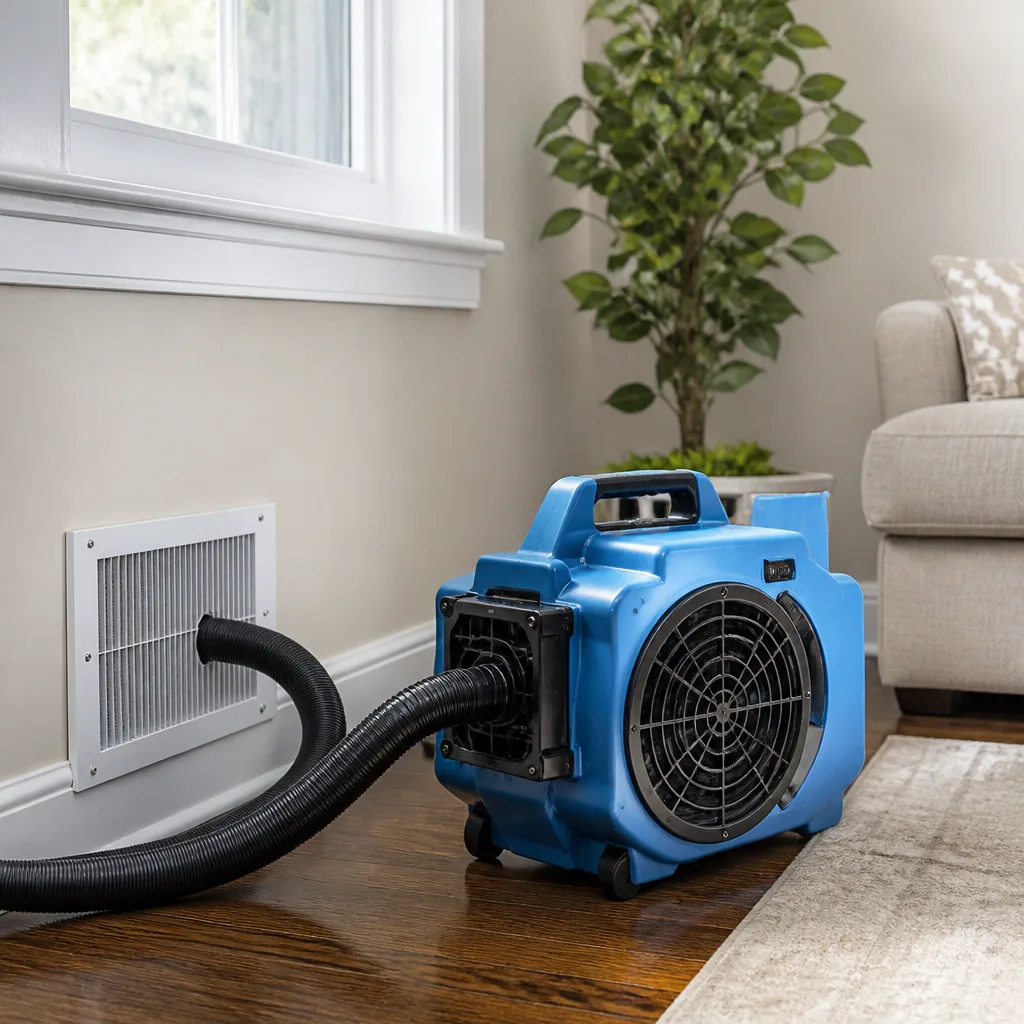 Sanitizing & deodorizing
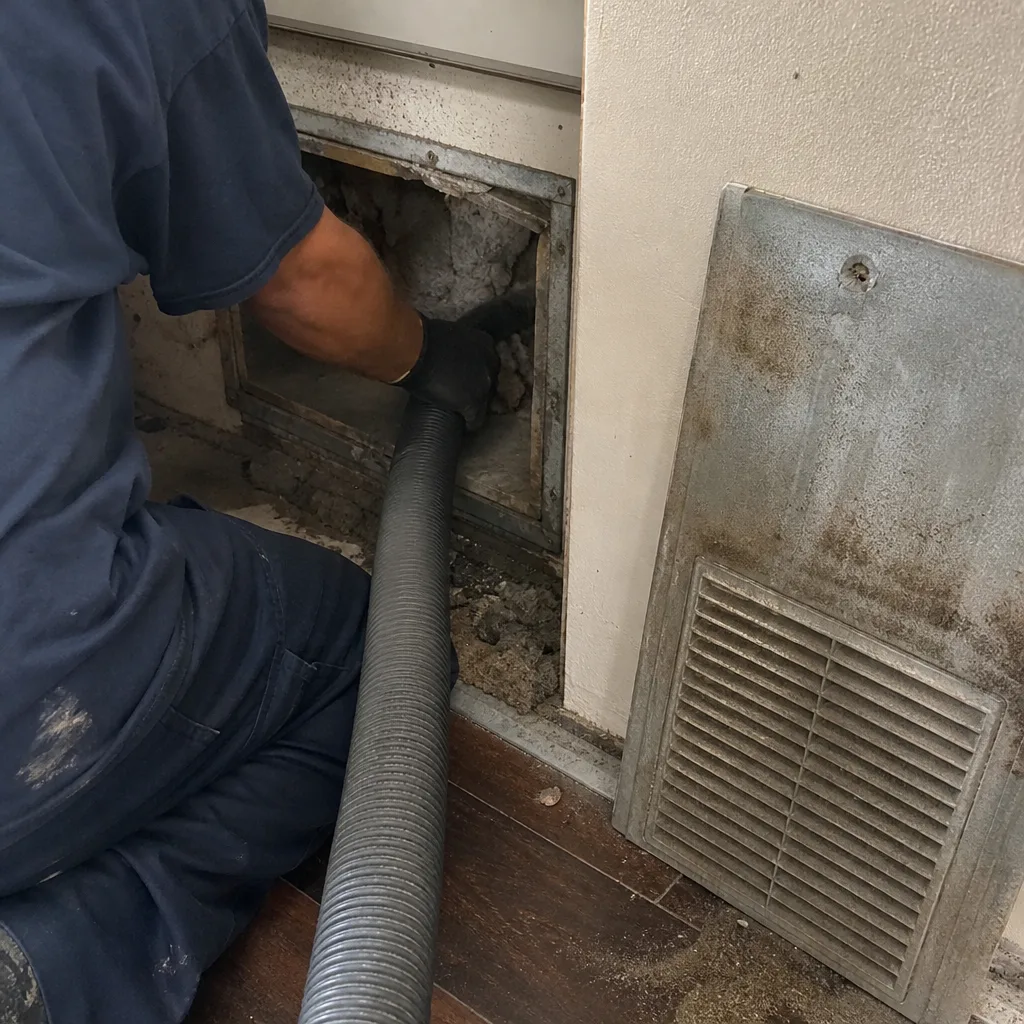
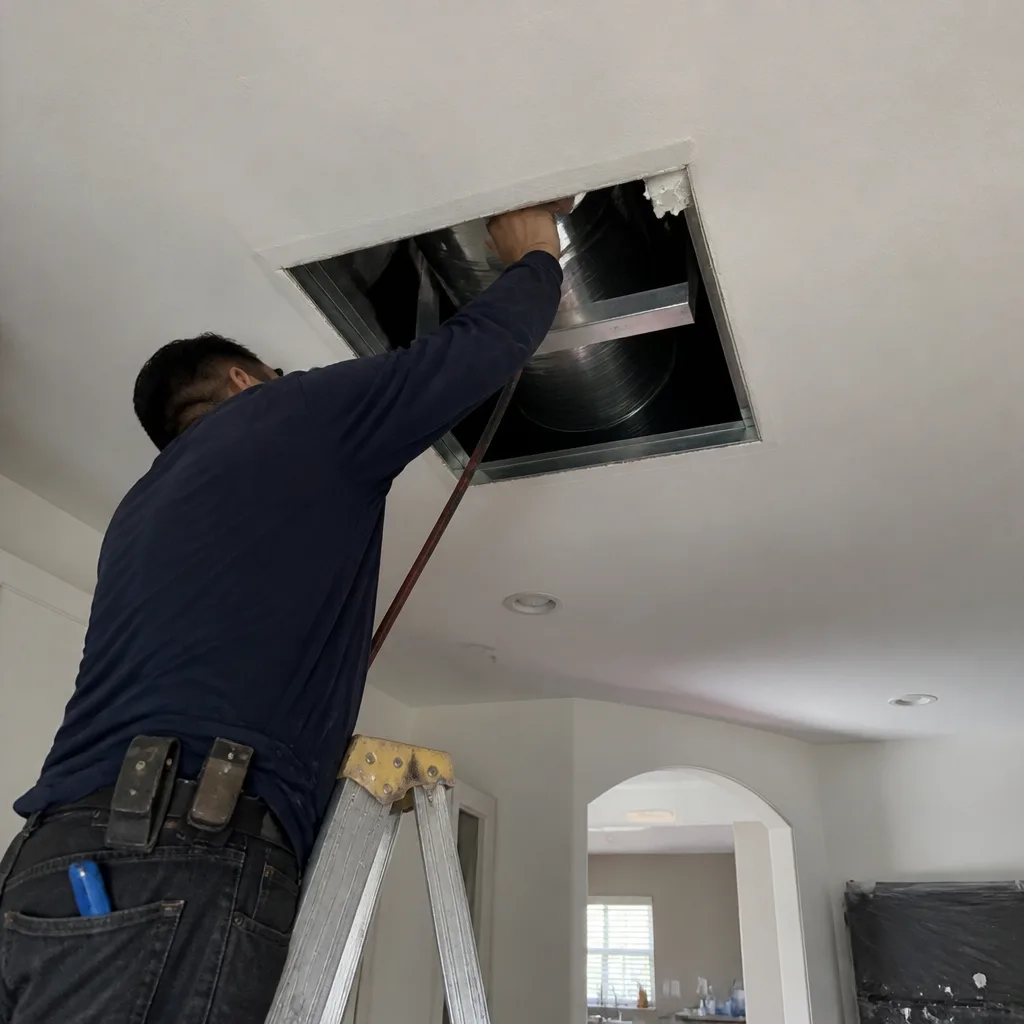
Whole-system duct and dryer vent check with before-and-after photos - you see exactly what came out of your vents
That "$99 whole-house special" is a bait ad - the real number appears once they are in your hallway, or the "clean" is a shop-vac at the register. We photograph the inside of your ducts before and after instead.
Seasonal Air Duct Cleaning Care for Los Angeles: Year-Round Homeowner’s Guide
In most of the country, summer is when you think least about your air ducts. The windows come open, the AC gets a break, and the dust bunnies settle in for a quiet few months. In Los Angeles, the rhythm runs backwards. July through September is when your central air system works its hardest, filter loading peaks, and ash from fires burning hundreds of miles away can be pulled into a system that has to move roughly 1.8 million cubic feet of air through your ducts in a single month. This guide maps actual duct maintenance to the four stress periods that Los Angeles actually experiences, not seasons imported from Chicago or Boston.
Quick Answer
Los Angeles doesn’t have four equal seasons, but it does have four distinct duct-stress periods: the June marine layer, July through September heat-dome runtime, October through December Santa Ana and wildfire season, and February through April renovation season. Each period loads your ductwork with different debris, and each calls for a different inspection or maintenance response. The practical takeaway: schedule professional Air Duct Cleaning services in late September before fire season peaks, check your filter monthly during the summer runtime, and never put off a post-renovation cleaning if you’ve had drywall work done.
Styles & brands we work with
Table of Contents
- Why LA’s Climate Demands a Different Duct Care Calendar
- June Marine Layer: Humidity and What It Does to Debris
- July-September Heat Dome: The High-Runtime Months
- October-December: Santa Ana Winds and Wildfire Ash
- February-April: Renovation Season and Drywall Dust
- The Month-by-Month Action Calendar
- Filter Choices for Each Season
- Signs Your Ducts Need Attention Right Now
Why LA’s Climate Demands a Different Duct Care Calendar
Most duct cleaning advice online is written for the Midwest or the Northeast: change your filter before heating season, inspect for condensation in summer, watch for rodent intrusions in fall. That counsel does not transfer cleanly to Los Angeles. We don’t have a heating season that runs for five months. We don’t have basements. We don’t even have the same kind of dust.
Los Angeles dust is a mix of desert fines, decomposed granite, tire particulates, and coastal salt. It’s finer and lighter than the organic dust you get in wetter climates, which means it stays suspended longer and travels further through a duct system before settling. It also responds differently to moisture. When the June marine layer pushes humidity up, that fine dust absorbs water, gains weight, and clings to duct walls instead of blowing through. A duct system that seemed fine in May can develop visible accumulation by early July, simply because the air changed.
This is why a generic “clean your ducts every three to five years” rule doesn’t serve Los Angeles homeowners well. The real answer depends on which part of LA you live in, how many hours your AC runs, whether you did construction work this year, and how close you are to burn zones. A beachfront condo in Santa Monica and a hillside house in Sylmar have different duct lives, even if both are technically Los Angeles.
We’ve been cleaning air ducts in Los Angeles since 2004, and the pattern we see repeats every single year: a spike of emergency calls in October after the first ash event, a spike of post-renovation cleanings in March, and a steady stream of summer calls from homeowners whose filters loaded up in August and stopped doing their job. Knowing the pattern lets you stay ahead of it.
June Marine Layer: Humidity and What It Does to Debris
Ask anyone who’s lived near the coast in Los Angeles about June, and they’ll describe the same thing: gray mornings, damp air, a chill that lingers until noon, then burns off. That marine layer does more than ruin beach plans. It changes the behavior of the dust already sitting in your ductwork.
Here’s the plain version of what’s happening. The air moving through your ducts carries particles. When the air is dry, those particles are dry, light, and mostly pass through to the filter. When humidity rises, moisture attaches to the particles. They get heavier. They stick. The fine desert dust that would have blown through in May now accumulates on the duct wall, in the coils, and along the interior of the return. That damp debris is also a more welcoming environment for mold spores than dry dust ever was. Mold doesn’t need a visible puddle to establish itself. It needs sustained moisture, organic material, and still air. A duct lined with damp, accumulated dust in a shaded crawlspace checks all three boxes.
What makes June tricky is that the problem develops quietly. Your AC isn’t running hard yet, so you’re not noticing restricted airflow. The musty smell that appears in early June is often misread as “the house needs airing out.” Then July arrives, the AC kicks into daily use, and the system starts circulating whatever the June humidity helped establish.
What to do in June:
- Run your system for ten minutes with the windows open on a clear afternoon. Notice any musty or earthy smell coming from the vents. That smell is data.
- Remove a register or grille and look at the first six inches of duct you can see. If you can wipe dust off the wall with your finger, the June moisture has done its work.
- Check the filter. If it’s been more than two months, replace it now, before the summer load begins. A clogged filter in June becomes a failed filter by August.
- If you have condensation visible on the outside of any ductwork in a crawlspace or attic, note the location. That’s a moisture point worth flagging for a professional.
A duct cleaning done in May or June in Los Angeles is preventative. It removes the accumulation that winter winds and spring pollen left behind, and it gives you a clean system before humidity can make that accumulation harder to remove. Debris that’s been sitting damp for weeks is stickier and more stubborn than dry, loose dust. It requires more aggressive extraction, which is why getting ahead of June beats reacting to July.
July-September Heat Dome: The High-Runtime Months
In Los Angeles, the hottest stretch of the year typically runs from early July into late September. In the inland valleys, the thermometer can sit at 100°F or above for consecutive weeks. Your central air system responds by running hard, sometimes from early afternoon until late evening. Here’s the number worth sitting with: a typical LA central AC system moving 2,000 cubic feet of air per minute runs about 1,200 cubic feet per hour if the blower’s on. Run that ten hours a day for thirty days, and you’re circulating 1.8 million cubic feet of air through your duct system in a single August. That’s the volume of about nine average-size houses. Every particle in your home that’s small enough to stay airborne gets a chance to move through the ducts and filter, again and again.
During these three months, filter loading peaks. A filter that lasted sixty days in April might be visibly dirty in twenty-five days in August. Why? Because the system is pulling more air, and because windows stay shut, which concentrates indoor particulates. Pet dander, cooking residue, candle soot, dust from shoes, and whatever leaks in through the building envelope all end up in the same air stream.
When a filter saturates, two things happen. First, the system restricts, which increases static pressure and makes the blower work harder, which raises your cooling bill. Second, air begins to bypass the filter entirely at the edges of the housing. That unfiltered air carries particles straight into the coils and the supply side of the ductwork. The filter that was supposed to protect your system becomes a bypass zone.
This is also the period when wildfire smoke becomes a factor. Fires in Northern California, Oregon, or the local mountains push fine particulate into the LA basin. That smoke is measured in microns. The particles are small enough to pass through standard fiberglass filters and deep into duct systems. Once they settle, they stay. On the next windy day, or the next time the blower kicks on, they re-entrain into your indoor air.
Summer checklist for Los Angeles homeowners:
- Check your filter every two weeks in July and August. Write the install date on the filter frame with a marker, so you’re not guessing.
- If you run a standard 1-inch filter, replace it monthly during high runtime. If you run a 4-inch media filter, check it monthly and plan for a change every sixty to ninety days during summer.
- Listen for a change in blower noise. An increase in the whoosh of air at the return grille often means the filter is loaded and the system is pulling harder.
- During a smoke event, run the fan on “auto” rather than “on.” Running it constantly pulls more smoky air across a filter that may not capture the fine particles anyway.
- After a significant smoke event passes, consider having your ducts inspected. Ash and smoke residue can coat the interior surfaces even in a system with a good filter.
We see a lot of Los Angeles homeowners schedule duct cleaning in late August, after a month of heavy AC use and a smoke event or two, often wondering about Air Duct Cleaning Cost Breakdown: The Los Angeles Homeowner’s Reference for 2026. The job is almost always the same: a layer of gray, powdery accumulation on the supply side, a loaded filter, and a coil that’s begun to look like a lint trap. None of it is dramatic, and all of it affects air quality and system efficiency. A clean system in late September handles the fall wind season much better than one that’s been running loaded all summer.
October-December: Santa Ana Winds and Wildfire Ash
Southern California’s real fire season peaks in fall, not summer. The Santa Ana winds arrive when high pressure over the Great Basin pushes dry air down through the mountain passes and toward the coast. The air warms as it descends, relative humidity drops into single digits, and wind speeds pick up to thirty or forty miles an hour in the passes and canyons. Vegetation that dried out all summer is now at its most flammable, and any ignition source becomes a serious fire.
For your duct system, Santa Ana winds mean three things. First, the dry air stirs up dust outdoors and drives it into homes through even the tightest building envelopes. Second, if a fire is burning within range, the wind carries ash and smoke across enormous distances. Ash from the 2020 Bobcat Fire in the Angeles National Forest fell on homes twenty and thirty miles away. Third, the low humidity dries out accumulated debris inside your ducts, turning it from a sticky, settled layer into a loose, re-entrainable powder that can lift into your air stream whenever the blower runs.
This is why a late-September cleaning has a specific logic to it. You’re not cleaning to make your ducts look nice. You’re removing whatever summer loaded into the system, so that when the Santa Ana winds push ash against your house, there’s a clean surface on the inside. Ash landing on clean metal and clean flex duct is an external problem you can address by changing return-air strategies. Ash landing on an already-dirty duct wall becomes a mixed-layer problem that contaminates every subsequent airstream.
The pre-Santa Ana checklist (late September):
- Upgrade your filter for the fire season. A MERV-13 filter captures fine smoke particulates better than a MERV-8, but it also restricts airflow more. Check your system’s static pressure tolerance before making the switch, or ask a technician whether your blower can handle it. Products like Aprilaire media filters give you a MERV-13 capture surface without the airflow penalty of a 1-inch high-MERV filter.
- Inspect every supply and return grille in the house. Screw them down if they’re loose. A loose grille lets unfiltered attic or wall-cavity air into the living space, and during a wind event, that air carries whatever the wind is pushing through those cavities.
- Run your system for fifteen minutes and walk the house. Note any rooms that feel stuffier than others, or any vent that’s blowing weak. Those are the first clues your ducting has sections that need attention.
- If your ducts have not been cleaned in five years or more, or if you had a summer of heavy AC use and smoke exposure, book the cleaning now, before the first major wind event. It’s easier to clean before the ash arrives than after it’s been driven deep into the system.
One thing we’ve learned from cleaning ducts in Los Angeles through fire seasons: the period after a wind event matters as much as the event itself. Once the winds die down, the airborne ash settles. Some of it settles on your roof, your car, your windowsills. Some of it settles inside your return plenum and supply runs. The longer it sits, the more it will be re-circulated. A quick inspection after a significant ash event tells you whether your ducts took on material or came through clean.
February-April: Renovation Season and Drywall Dust
Los Angeles has a renovation season, and it runs from February to April. City of LA building permits spike in late winter and early spring, as homeowners time their remodels to finish before summer. Additions, kitchen remodels, bathroom gut-renovations, flooring replacement, and ADU construction all peak in this window. And nearly every one of those projects produces dust.
Drywall dust is the worst of it. Joint compound sanded off a patch or a wall produces a powder so fine it passes through the mesh bag on a contractor’s vacuum. It hangs in the air for hours, settles on every surface, and then re-suspends the moment anyone walks through the room. If your HVAC system is running during or after the work, that dust gets pulled into the return, pushed through the air handler, and painted onto the interior surfaces of your supply ducts. A single week of drywall sanding can deposit more material into your duct system than five years of normal household dust.
We hear the same line every March: “The contractor said the work was contained.” Containment in construction means plastic sheeting and zippered doorways, and it helps, but it does not make the work clean. Fine drywall dust drifts. It moves around the edges of the plastic, through the gaps at the floor, and into the return air stream. If the contractor ran the HVAC during the job (which many do, to keep the workspace comfortable), the system actively pulled that dust through the filter, if the filter could even catch it.
Here’s a useful rule: if you can see dust on horizontal surfaces in rooms adjacent to the work area, your ducts have been exposed. The same air that carried the dust to those surfaces carried it through your returns.
Post-renovation duct cleaning, step by step:
- Wait until the construction work is completely finished, including final sanding and painting. Cleaning mid-project means recleaning later.
- Replace the HVAC filter before you do anything else. It’s loaded with the same dust you want out of the system.
- Vacuum the registers and grilles from the room side, then remove them and wipe the openings.
- Have a professional duct cleaning done with negative-air extraction. This is the process where the system is put under negative pressure while brushes dislodge debris from the duct walls. The negative pressure is what pulls the loosened dust out of the system and into a contained collection unit, rather than letting it blow into your living room. We use Nikro negative-pressure units and Rotobrush rotary brush systems for this work, because drywall dust is fine enough that a box-store vacuum won’t touch it.
- After the cleaning, let the system run for twenty minutes with a fresh filter, then do a final wipe-down of surfaces near the registers.
Skipping the post-renovation clean is one of the most common mistakes we see in Los Angeles. The homeowner spent fifty or a hundred thousand dollars on a beautiful new kitchen, and for months afterwards, every time the AC kicks on, a puff of drywall dust settles on the new countertops. The dust isn’t coming from the construction. It’s coming from the ducts that were contaminated during construction. One cleaning removes it.
The Month-by-Month Action Calendar
Los Angeles stretches across several distinct climate zones, from the fog-bound coast to the furnace of the San Fernando Valley to the mountain foothills above Glendale and Pasadena. The amount of time your AC runs, the humidity your ducts experience, and the amount of outdoor dust your system ingests all vary by zone. This calendar accounts for that spread.
January
- Coastal: Quiet month for duct stress. Check the filter, look for any new musty smells, and call it good if nothing’s changed.
- Valley: Cold mornings mean intermittent furnace use. Check the filter and listen for any burning-dust smell on the first few heating cycles; that’s the smell of accumulated dust burning off the heat exchanger, and if it persists, the ducts need a look.
- Foothill: Wind events can push dust through crawlspace vents. Check your filter more often this month if you’re in a canyon or at elevation.
February
- Renovation season begins. If you’re planning work this spring, schedule the post-construction duct cleaning now, before the contractor’s calendar fills up.
- Check for rodent activity in crawlspaces. February is when we see the most animal intrusion calls in Los Angeles, especially in hillside neighborhoods.
- Replace the filter if it’s been more than three months.
March
- Post-rain humidity lingers in crawlspaces and attics. Look for any condensation on exposed ductwork.
- If you had construction done in February, book the duct cleaning as soon as the final sanding’s done.
- Spring pollen is beginning. A higher-MERV filter may help allergy sufferers, but confirm your system can handle the airflow restriction.
April
- Renovation season peaks. If your neighbor is remodeling, your ducts are eating their drywall dust through the shared air. Watch your filter.
- Pre-summer tune-up window opens. Have your system inspected before the heat arrives and the schedule tightens.
- Filters should be changed if they went in during January.
May
- The last comfortable month before high runtime. If you’ve been putting off a duct cleaning, this is a low-stress time to do it.
- Valley homeowners: the first triple-digit days may arrive late in the month. Check the filter now, not in July.
- Coastal homeowners: prepare for June gloom by confirming your system doesn’t have any standing moisture issues.
June
- Marine layer month. Watch for musty smells at the registers on damp mornings. They indicate moisture interaction with accumulated dust.
- Run the system briefly and sniff the first air out of each vent. Any earthiness is worth investigating.
- Coastal homeowners especially: this is the month your ducts are most likely to hold damp debris.
July
- High runtime begins in earnest across all LA climate zones. Check your filter every two weeks.
- In the Valley, AC systems can run ten hours a day. Understand the 1.8 million cubic feet number and what it means for filter loading.
- If you haven’t had a cleaning in three to five years, this month is when the consequences of that deferral become noticeable: weak airflow, longer cooling cycles, higher bills.
August
- Peak filter-loading month. A filter that was white on July 1 will be gray by August 15 if you have pets, live near a freeway, or run the AC heavily.
- Smoke season can begin early. Watch air quality reports and adjust your system accordingly.
- Systems that are struggling in August are usually systems that needed a cleaning in June. Make a note for next year.
September
- The month to get ahead of fire season. Book a duct cleaning in late September if you haven’t had one this year and you’re in a high-ash zone.
- Upgrade to a fire-season-appropriate filter. Aprilaire media filters are a solid choice for homes that need MERV-13 capture without choking the blower.
- Do the grille inspection: every register, every return, tightening any that are loose.
October
- Santa Ana season begins. Expect wind-driven dust, low humidity, and the possibility of ash.
- Close windows before wind events. Open windows during high wind pulls grit directly into the house, and the system picks it up from there.
- After a wind event, check the filter. If it’s visibly darkened with fine material, replace it.
November
- Fire season often peaks this month in Southern California. If a fire burns nearby, do a visual check of your registers and filter within a week.
- Thanksgiving cooking produces particulate that loads the filter. After heavy cooking days, check it.
- Coastal zones: fall mornings can be damp. The same June-glare moisture patterns repeat in November for beach areas.
December
- Indoor air becomes more concentrated as windows stay shut. This is a good month for an air-quality audit: does the house smell stale, are allergy symptoms worse, is dust accumulating faster than usual?
- Guests and holidays mean more cooking, more candles, more dust input. A clean filter going into the season helps.
- End the year with a note on when your last duct cleaning was, so you’re not guessing in the spring.
Filter Choices for Each Season
Your filter is the front line of your duct system’s defense. It’s also the most misunderstood component in the house. Here’s a plain breakdown of what to use when, for Los Angeles conditions, with more guides & resources linked throughout.
- Spring (March-May): MERV-8 to MERV-11. Enough to catch pollen, light enough that your system breathes. If allergy season hits you hard, MERV-11 is the sweet spot.
- Summer (June-September): MERV-8 is acceptable for heavy runtime, because you’ll be changing it often and the system works hard. A 4-inch media filter at MERV-11 gives you better capture with lower airflow penalty than a 1-inch filter at the same rating. Brands like Honeywell and Aprilaire make good media options.
- Fire season (October-December): MERV-13 if your blower can handle the restriction. Captures smoke particles. Confirm with a technician that your static pressure stays within the manufacturer’s range before you make the jump. A Guardsman or Aprilaire media filter at MERV-13 is easier on airflow than a 1-inch equivalent.
- Winter (January-February): MERV-8 to MERV-11, back to normal. If you did a fire-season upgrade, come back down now unless fires are actively burning near you.
A note on filter maintenance, because it saves more money than any duct cleaning ever will. Write the install date on the filter frame. Set a phone reminder. Check it more often than you think you need to. The filter you forget is the filter that fails. And when a filter fails, the dust doesn’t stop at the filter; it moves through, into your coils and your supply ducts, and becomes a cleaning job instead of a filter swap.
Signs Your Ducts Need Attention Right Now
Some duct problems announce themselves loudly. Others creep. Here’s what to look for, season to season, in a Los Angeles home.
- Dust accumulates fast after cleaning surfaces. You dust the shelf on Saturday, and by Wednesday there’s a visible layer again. That’s not normal settling; that’s your system blowing accumulated duct dust back into the room.
- Airflow from one or more vents is noticeably weaker than the rest. This points to a blockage or a disconnected section somewhere in the system. The longer you run it, the harder the blower works and the more energy you waste.
- A musty smell when the system starts. In Los Angeles, this appears most often during the marine layer months and after rains. It means moisture has met organic accumulation inside the ducts. The fix is removal, not just airing out the house.
- Visible dust or debris at the register. If you can see material caked around the vent opening or on the register vanes, the inside of the duct is worse. That’s the visible edge of a larger deposit.
- Your cooling bill rises without a matching change in usage. Restricted airflow forces the system to run longer to hit the same temperature. Dirty coils and dirty ducts both contribute. Cleaning restores airflow and drops runtime.
- You completed a renovation and never cleaned the ducts. This one isn’t a sign; it’s a known condition. Drywall dust in the ducts is a certainty after major work, not a possibility.
If you’re seeing more than one of these signs, don’t wait for the next seasonal trigger. An inspection takes less than an hour and gives you a clear picture of what’s inside the system. You can’t see most of your ductwork, but a trained person with the right equipment can.
Common Mistakes to Avoid
- Changing the filter once a year in August’s heat is a mistake. In Los Angeles, summer filters need checking every two weeks and changing monthly during high runtime. The filter that worked in April is not working in August.
- The “I’ll clean when it smells bad” mistake. By the time a duct system produces enough odor for you to notice, the accumulation is significant and may have progressed to microbial growth. The smell is the late signal, not the early one.
- Cheaping out on the filter during fire season. A MERV-8 fiberglass filter captures the big stuff and lets the fine smoke particles through. When ash is falling in the LA basin, you need MERV-13 or better on a media filter that doesn’t strangle your blower.
- Skipping the post-construction clean because “it’ll work itself out.” It won’t. Drywall dust in the ducts stays there until someone removes it. Every system cycle stirs a little of it back into the air. The new kitchen will have dust on the counters for a year.
- Using a box-store vacuum to clean a vent and calling it a duct cleaning. The duct system runs forty feet from the register to the plenum. Cleaning the first two inches with a shop vac leaves the other thirty-nine feet loaded. Professional-grade equipment like Rotobrush rotary brush systems and Nikro negative-pressure units work the entire length of the run, not just the visible opening.
- Ignoring condensation because “it’s just LA damp.” Visible moisture on the outside of ductwork in a crawlspace or attic is a problem waiting to become a bigger one. In our experience, homeowners who address it early save themselves a mold remediation down the line.
See the difference
 Before
 After
After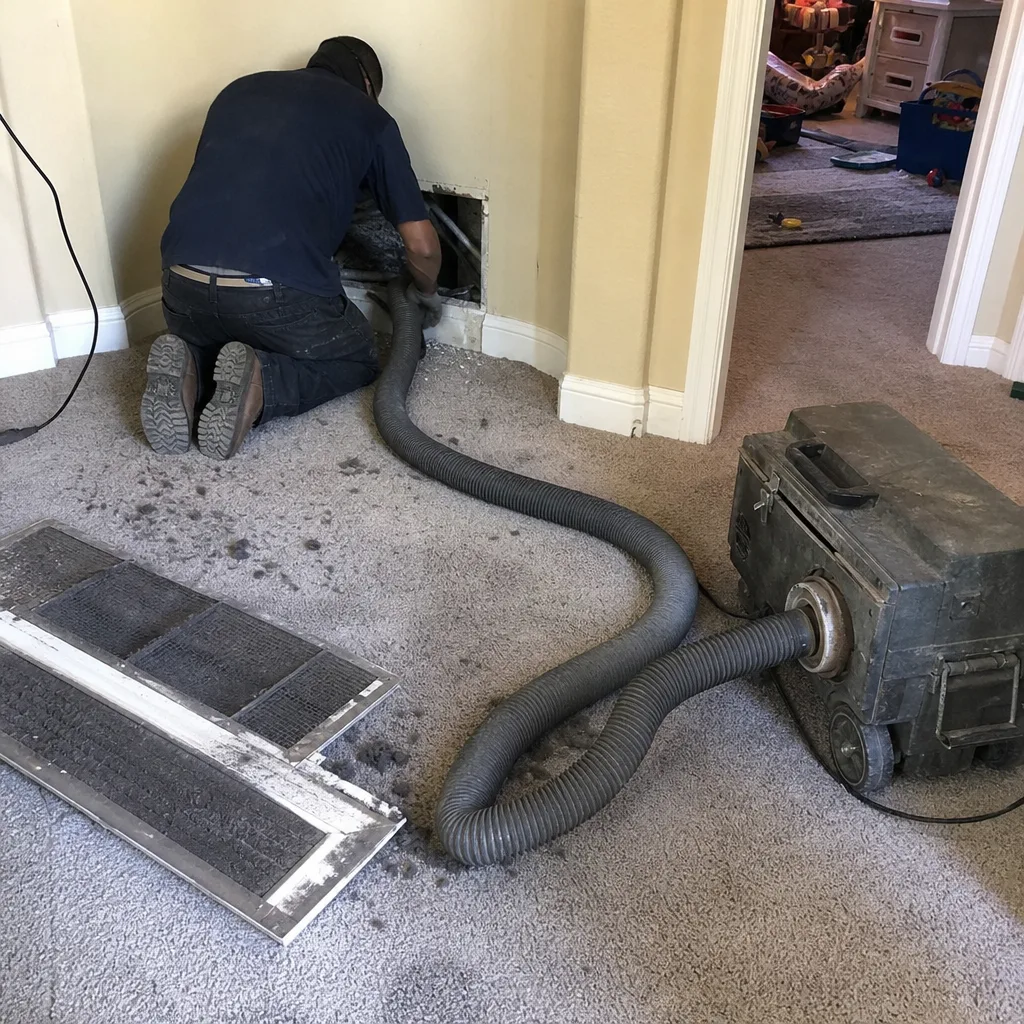 Before
 After
After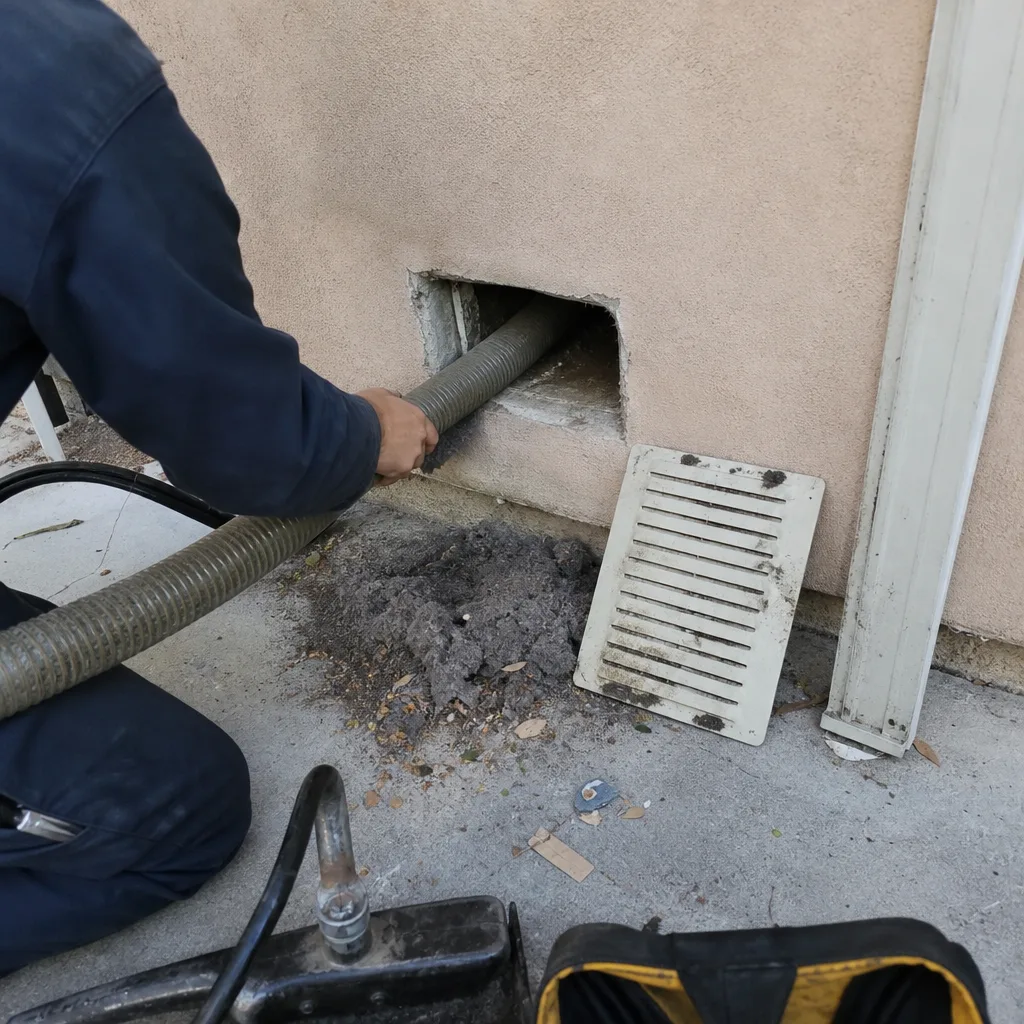 Before
 After
AfterWhen to Call a Professional
Some maintenance is yours to do: checking filters, wiping registers, running the system and listening. But a full duct cleaning is not a DIY job, and the longer you defer it, the more material accumulates. Call for a professional inspection if you’ve had a renovation and never cleaned the ducts, if you can see debris inside the register openings, if the house gets dusty within days of cleaning, if there’s a persistent musty smell at the vents, or if you’re in a high-ash zone and have never cleaned the system after a fire season. These are all signs of accumulation that a filter change won’t fix. Air duct cleaning in Los Angeles done right removes the accumulated debris from the full length of the system, not just the visible edges. Kestrel Air Duct Los Angeles offers free estimates in Los Angeles. Call (213) 733-0665 and we’ll tell you exactly what the work costs before anyone sets foot in your home.
Frequently Asked Questions
In Los Angeles, most homes need air duct cleaning every three to five years, but the real answer depends on four local factors: how many hours your AC runs each summer, whether you’ve done renovation work, how close you live to freeways or burn zones, and whether you have pets that shed heavily. Homes in the San Fernando Valley with heavy summer runtime may need cleaning every three years, while a mild coastal home without pets could go five. The best way to know is to look at the filter, the registers, and the dust accumulation rate, or to have an inspection. If you’re not sure where your system stands, call (213) 733-0665 and we’ll walk through what to check.
Air duct cleaning in Los Angeles typically runs between $350 and $800 for a standard single-system home, depending on the size of the home, the number of vents, the amount of accumulation, and whether the system includes multiple zones or has accessibility challenges. Homes with extensive construction debris or long-deferred maintenance can run higher. We give a written price before any work starts, so you know the number before a tool comes off the truck. Call (213) 733-0665 for an exact quote, free of charge.
That musty smell on startup is usually damp, accumulated dust inside the ductwork reacting with the first rush of air. In Los Angeles, it appears most often in June when the marine layer keeps humidity high, and again in fall near the coast. The smell is the signal that moisture has been combining with organic accumulation in the system, which is the condition under which mold can develop. Replacing the filter helps temporarily. Cleaning the ducts removes the reservoir the smell comes from. If you’re noticing it repeatedly, call (213) 733-0665 for an inspection.
Yes. Wildfire ash and smoke particles are fine enough to pass through standard filters and into the duct system, where they settle on the interior surfaces. Once inside, they’re re-entrained into the living space every time the blower runs. In Los Angeles, homes in the foothills, the Valley, and anywhere within range of a burn zone should have a post-fire-season duct inspection. The same goes for homes that ran the AC during a smoke event. If the ash got past the filter, it’s sitting in the ducts. Call (213) 733-0665 for a free estimate on a cleaning.
Yes, if there was any drywall sanding, flooring installation, or demolition. Drywall dust is fine enough to pass through the filter, and it will coat the entire interior of your supply ducts if the system ran during the work. “Containment” from the contractor reduces the spread but does not prevent it. The dust you’ve been wiping off your new countertops is coming from the ducts, and it will keep coming until the system is cleaned. Call (213) 733-0665 and mention the remodel, and we’ll give you a straight answer on what’s needed.
You can inspect your registers, replace your filters, and vacuum the visible openings. You cannot clean the full length of a duct system with household tools. Professional cleaning uses negative-air extraction, where the system is put under negative pressure while rotating brushes dislodge debris from the duct walls and a HEPA-filtered vacuum pulls it into a contained unit. We use Rotobrush rotary brush systems to loosen debris at the wall, Nikro negative-pressure units to pull it out, and Abatement Technologies HEPA filtration to keep loosened particles from entering the living space. That equipment reaches what a shop vac can’t. If you want to talk through whether your system needs it, call (213) 733-0665 and we’ll help you decide.
The Bottom Line
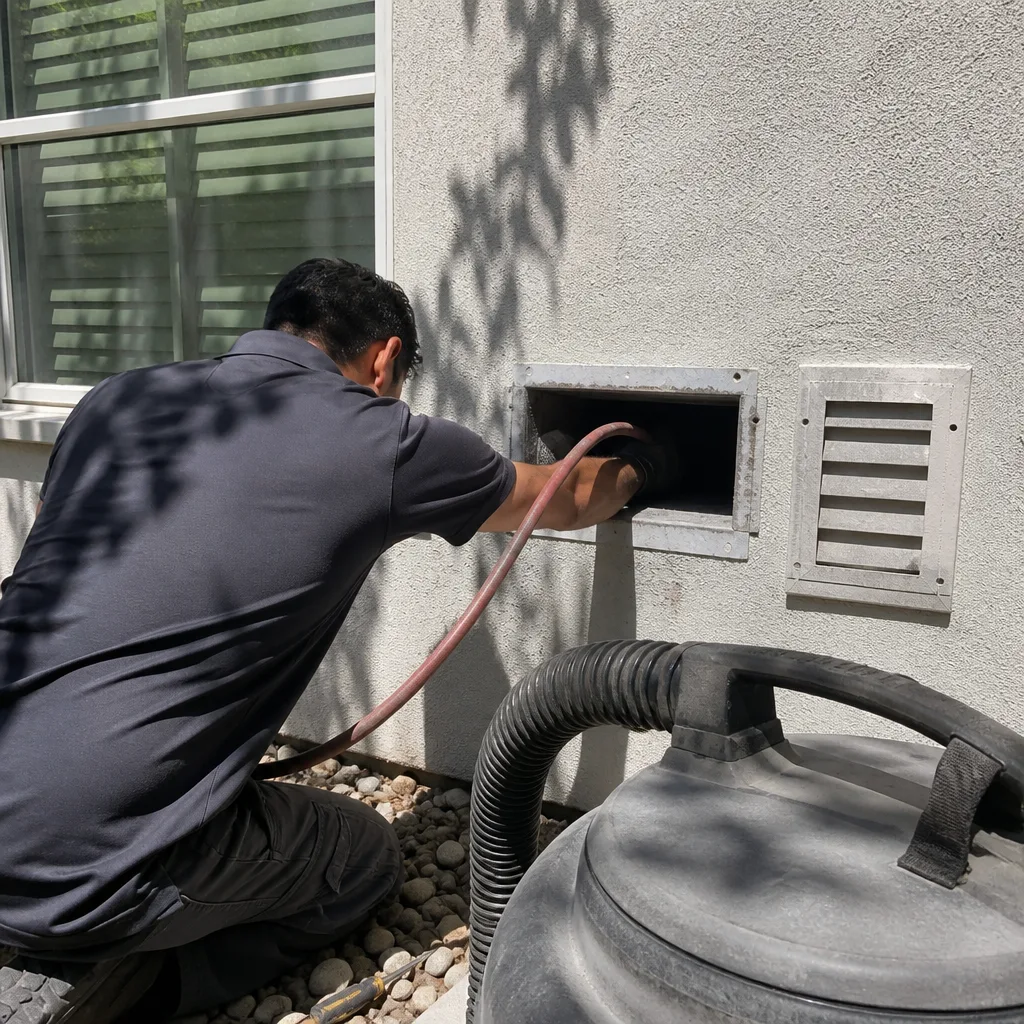
Los Angeles duct care follows the city’s real weather, not a generic seasonal template. June’s marine layer makes dust sticky. July through September loads your filter with a volume of air circulation that would fill nine houses. October’s Santa Ana winds push ash against your home just when your ducts may have had a summer’s worth of wear. And renovation season, which peaks from February to April, fills your system with drywall dust that won’t leave on its own. The fix for all four periods is the same: pay attention, change your filters on a schedule that matches the season, and clean the system when the season demands it, not just when it starts to smell. Kestrel Air Duct Los Angeles home knowledge starts with a free conversation about what’s actually inside your system. Call (213) 733-0665 and we’ll help you set a maintenance rhythm that matches the city you live in. If you also need dryer vent cleaning in Los Angeles, we handle that too, and the same upfront pricing and written guarantee apply.
Written by Dale Whitmore, Owner at Kestrel Air Duct Los Angeles, serving Los Angeles since 2004.