
Last updated October 15, 2026
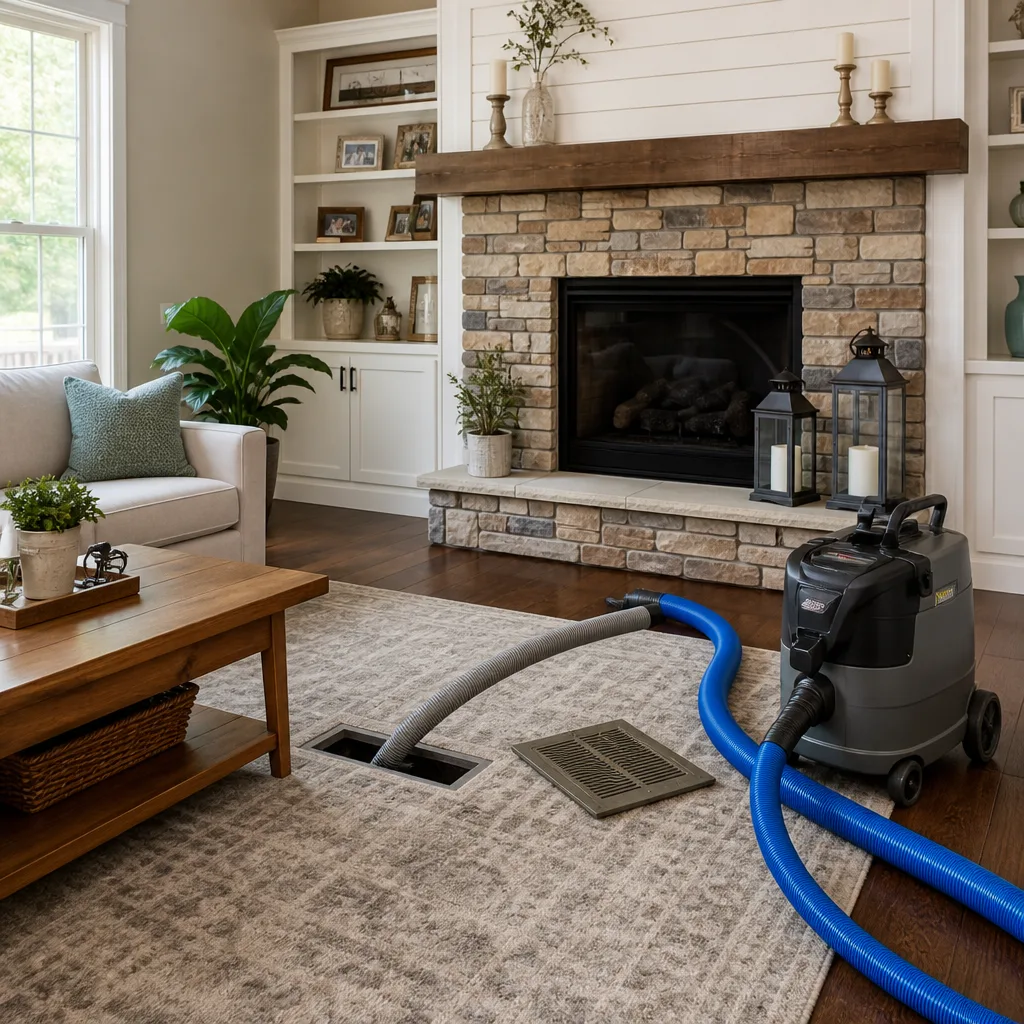 Whole-home duct cleaning
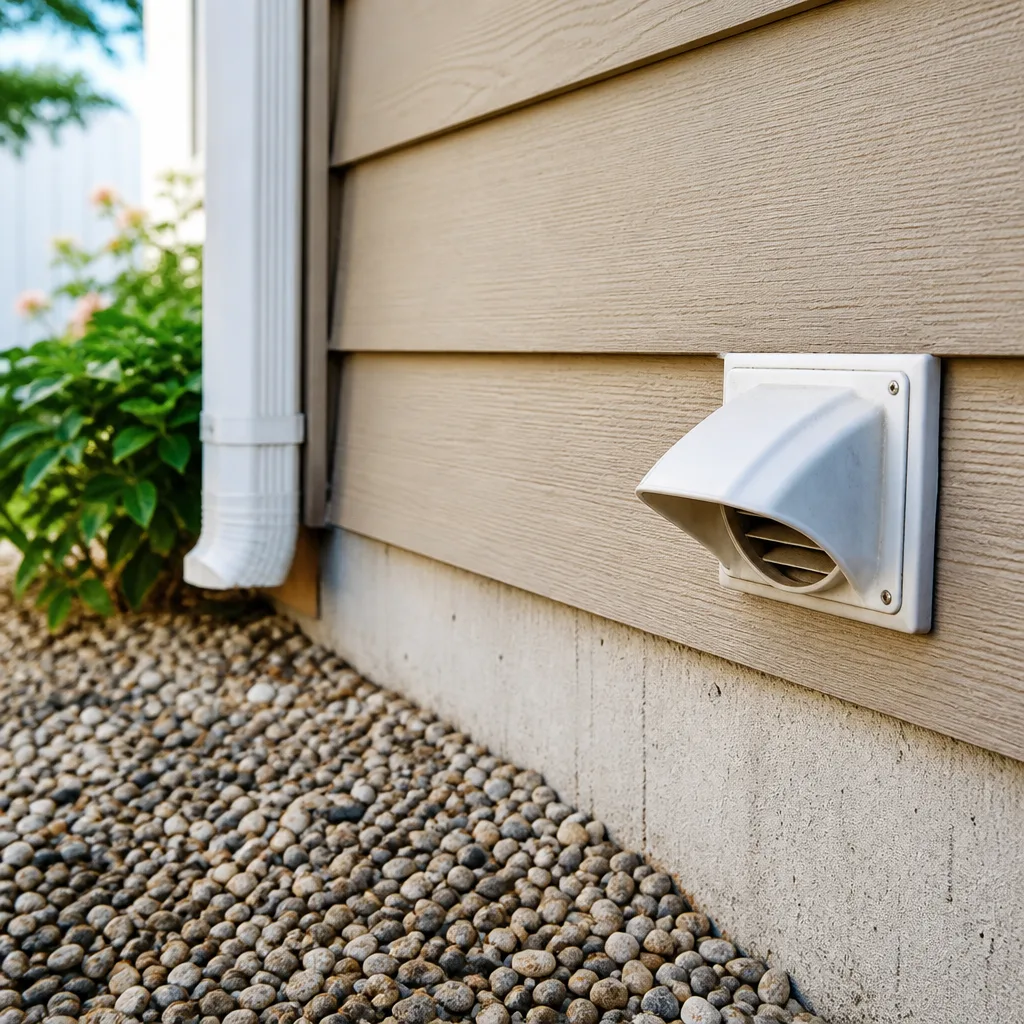 Dryer vent cleaning
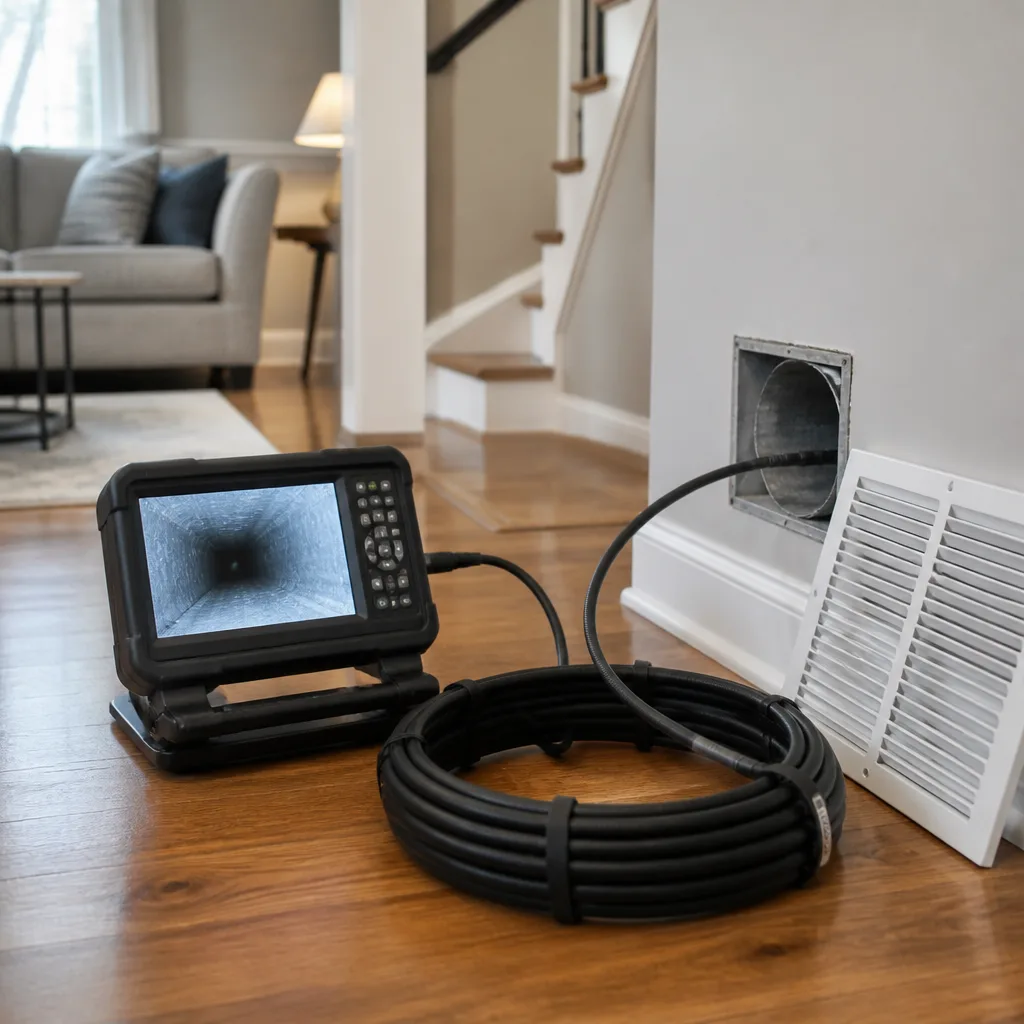 Camera inspection
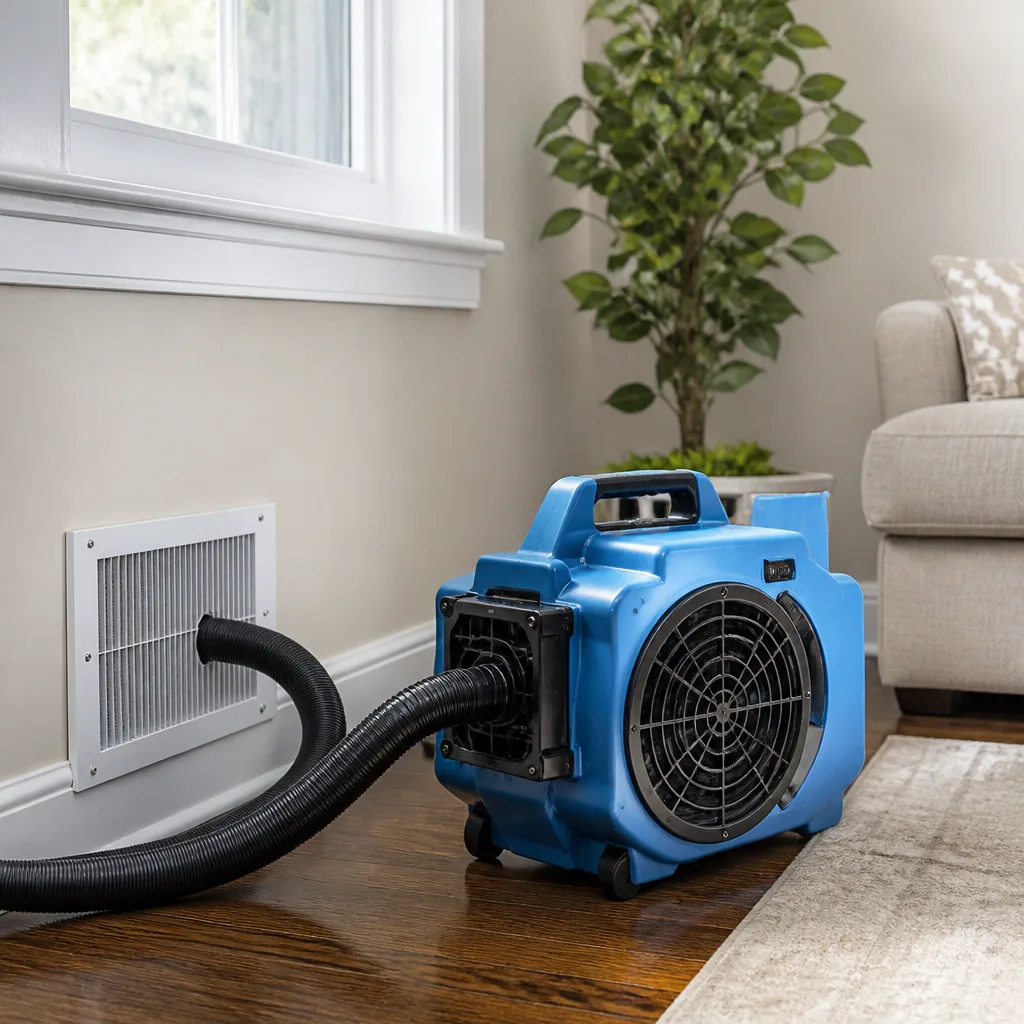 Sanitizing & deodorizing
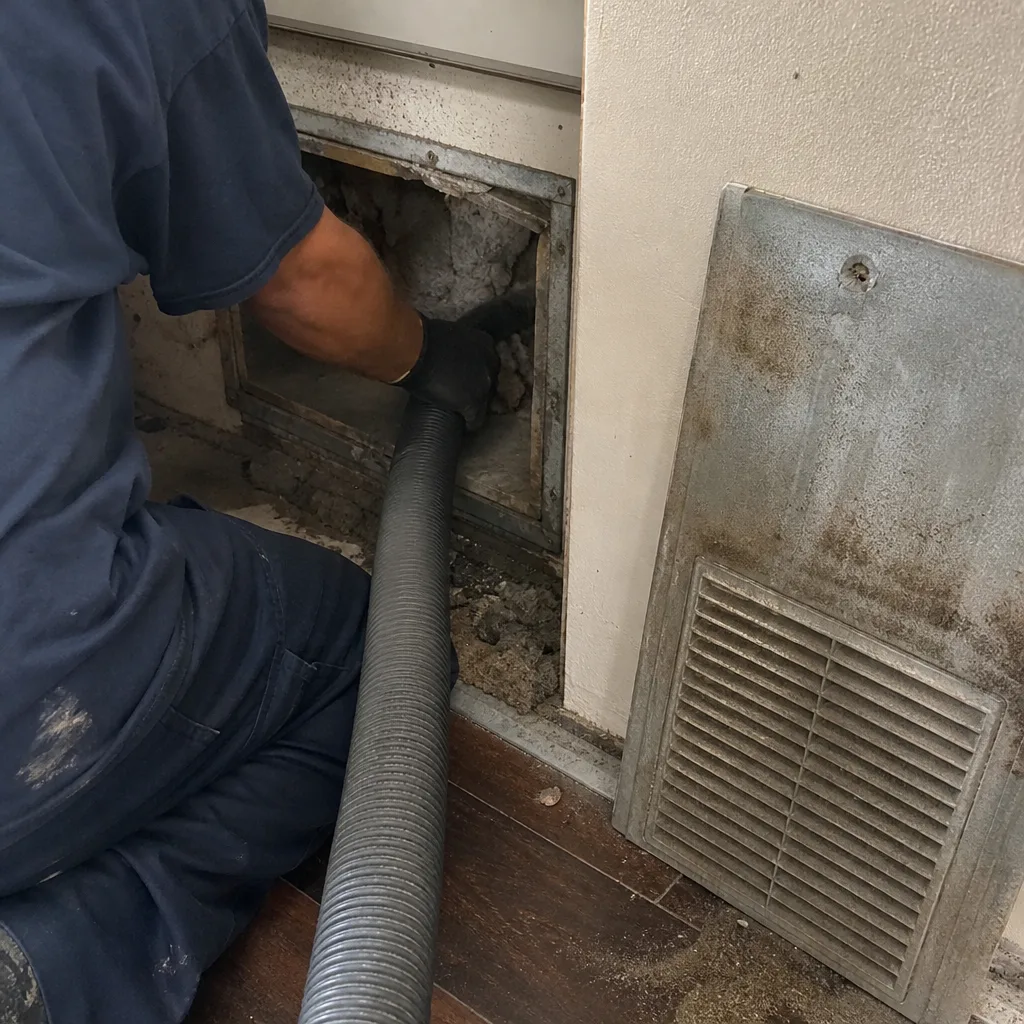
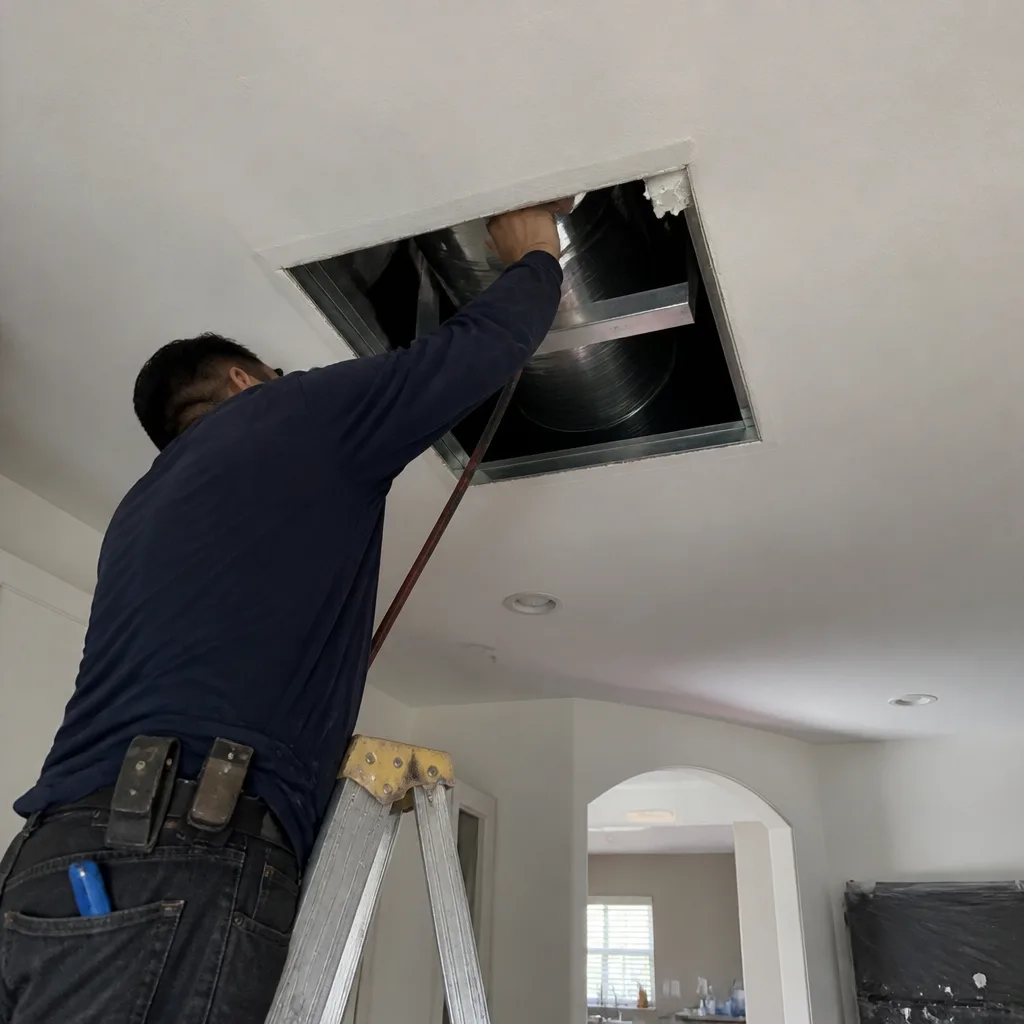
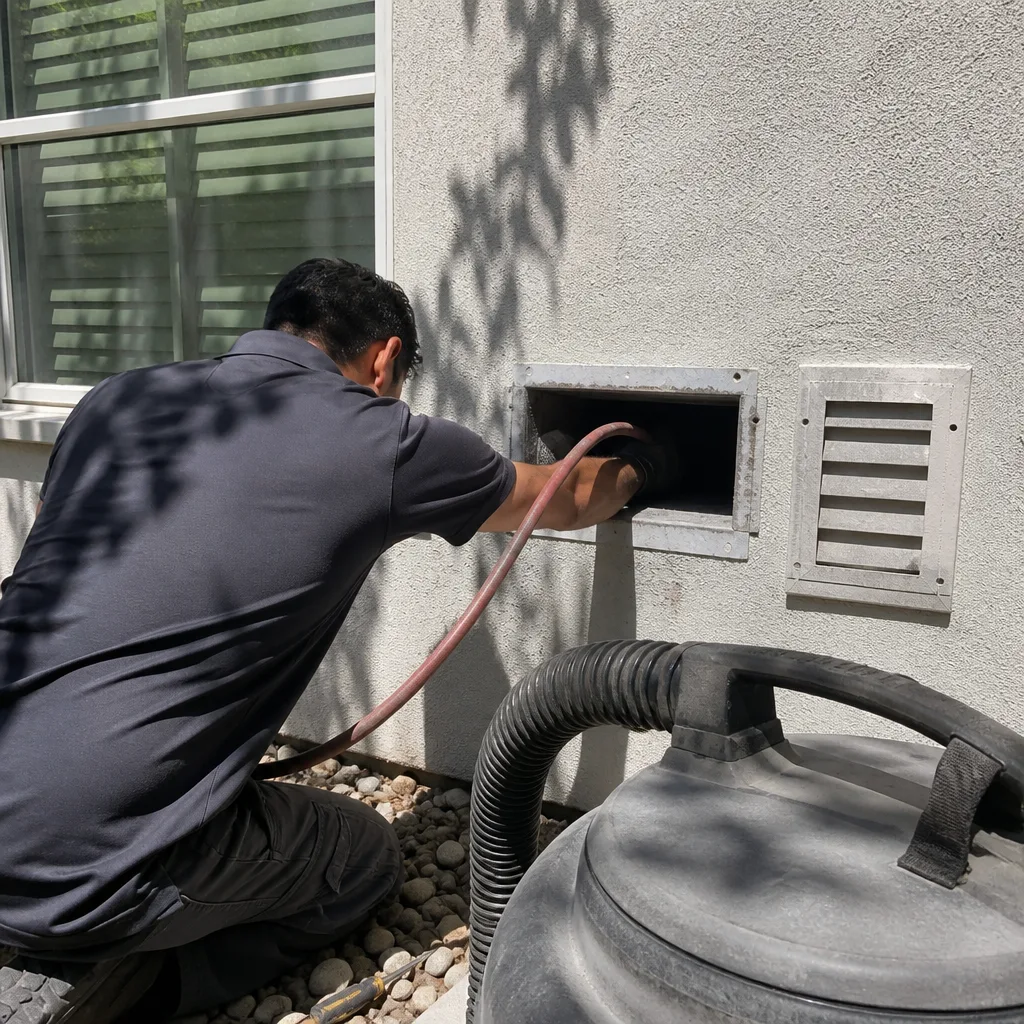
Whole-system duct and dryer vent check with before-and-after photos - you see exactly what came out of your vents
That "$99 whole-house special" is a bait ad - the real number appears once they are in your hallway, or the "clean" is a shop-vac at the register. We photograph the inside of your ducts before and after instead.
The Complete Guide to Air Duct Cleaning in Los Angeles
After the 2023 Smokehouse Fire, air quality monitors in Burbank recorded particulate levels 40 times the EPA daily limit, and every duct in the downwind zip codes was pulling that air through a filter rated for ordinary dust. If you own a home in Los Angeles, your ducts are not facing the same conditions as a house in Minneapolis or Atlanta. They’re facing a specific combination of coastal humidity, wildfire ash, and nearly year-round HVAC runtime, and that changes everything about how often you should clean, what method you should demand, and what it should cost. This Air Duct Cleaning guide explains what LA air actually deposits in your ductwork, why the national advice doesn’t apply here, and how to get a cleaning that’s worth the money instead of a blow-and-go job that’s not. By the end, you’ll know exactly what to ask for, what to pay, and how to spot the difference between real source-removal cleaning and the door-to-door specials still sold across the Valley.
Styles & brands we work with
Quick Answer
Air duct cleaning in Los Angeles typically costs between $450 and $1,100 for a full system, depending on home size, duct configuration, and contamination level. LA homes should be cleaned every 2 to 4 years rather than the national 3-to-5-year guideline because wildfire ash and near-continuous HVAC use accelerate debris buildup. Demand source-removal cleaning with negative-air extraction, get the price in writing before work starts, and confirm a written warranty before you book.
Table of Contents
- Why Los Angeles Ducts Are Different From the Rest of the Country
- What LA Air Actually Deposits in Your Ducts
- How Often Should You Clean Air Ducts in Los Angeles?
- Source-Removal Cleaning vs. Blow-and-Go: What the Difference Means for Your Home
- The Equipment That Actually Matters: Rotobrush, Nikro, and Abatement Technologies
- How Much Does Air Duct Cleaning Cost in Los Angeles?
- Why a Written Price Lock and a 365-Day Warranty Matter More in LA
- How Your LA Neighborhood Changes What Your Ducts Need
- Common Mistakes to Avoid
- When to Call a Professional
- Frequently Asked Questions
- The Bottom Line
Why Los Angeles Ducts Are Different From the Rest of the Country
Most air duct cleaning advice online is written for a national audience, and that’s a problem because Los Angeles does not behave like the national average. The EPA’s guidance assumes a house where the HVAC system runs seasonally, where outdoor air is mostly pollen and dust, and where humidity stays moderate. None of that describes a typical LA home.
In Los Angeles, your heating and cooling system can run 9 or 10 months out of the year. That means your ducts are moving air almost constantly, and every hour of runtime pulls whatever is outside through your return vents and into the system. In a place like Chicago, the system might sit idle for months and give debris a chance to settle. Here, the system is always working, which means particles are always moving, and the duct walls are collecting a mix of whatever the last Santa Ana event blew through your neighborhood.
The other factor is what’s in the air itself. Los Angeles has a particulate profile that most of the country doesn’t deal with: fine wildfire ash, brake dust from freeway traffic, marine layer salt near the coast, and dry canyon dust further inland. None of these behave like ordinary household lint. Ash is finer and stickier. Brake dust is heavier and tends to clump. Salt air accelerates corrosion on metal duct components. The result is a debris profile that requires more aggressive extraction and more frequent attention.
We say this not to scare you but to give you a frame for the rest of this guide and our more guides & resources. The advice you read elsewhere might say “clean every 3 to 5 years” and “dust is dust.” In Los Angeles, those statements are both wrong, and acting on them means living with dirtier air than you have to.
What LA Air Actually Deposits in Your Ducts
If you’ve never looked inside your ducts after a wildfire season, the picture might surprise you. The fine ash that blows across Los Angeles during fire events does not just sit on surfaces. It gets pulled into return vents, passes through filters that are not designed to catch particles that small, and deposits as a thin, dark film along the interior duct walls. That film builds up over time, and it behaves differently than ordinary household dust under extraction.
Here’s what we see in Los Angeles homes, depending on where in the metro area you live:
- Wildfire ash and carbon: After fire events, ducts carry a fine black or gray residue that clings to metal and flex duct alike. It’s lighter than household dust but stickier, and it requires more agitation to break loose. A standard vacuum pass won’t get it; you need brush agitation at the duct wall followed by negative-air removal.
- Brake dust and traffic particulates: Homes near the 405, the 101, the 110, or any major corridor accumulate heavier black particles. This stuff settles and packs, especially in the return side, and it can smell faintly of exhaust when the system first kicks on.
- Marine layer salt: In beach-zone neighborhoods, salt air moves through the system and accelerates corrosion on metal plenums, joints, and registers. The ductwork itself might be intact, but the salt film attracts and holds moisture, which then holds dust, which then feeds the kind of buildup you can smell.
- Dry canyon dust: In Glendale, Pasadena, and the foothill neighborhoods, wind-blown dust from canyons and construction sites is the dominant contaminant. It’s coarse by comparison, which means it settles quickly in low spots and around bends, where it can restrict airflow.
What matters here is that these contaminants are not the same material, and a cleaning method that handles one won’t handle the others. A crew using a shop vac and a brush attachment is not doing the same job as a crew running a negative-pressure machine with proper filtration. In LA, the difference is visible the first time you look at the extraction chamber after a real cleaning.
How Often Should You Clean Air Ducts in Los Angeles?
The standard national guideline says every 3 to 5 years, but that number assumes a house where the system runs part of the year and where the biggest contaminant is ordinary dust and pet hair. In Los Angeles, we recommend every 2 to 4 years for most homes, and more often if you fall into certain categories.
Here’s a practical schedule by household type:
- Most LA homes: Every 2 to 4 years, depending on runtime and proximity to pollution sources.
- Homes within 5 miles of a freeway or major boulevard: Every 2 to 3 years. Brake dust and diesel particulates accumulate quickly, and the air coming through your vents is carrying more than you want to breathe daily.
- Homes in wildfire-prone corridors or downwind of recent burn areas: Clean after any significant fire event that dropped ash on your property, regardless of your last cleaning date. Even if you cleaned six months ago, a bad fire season changes the condition of your ducts.
- Homes with pets, kids, or allergy sufferers: Every 2 years. Pet dander embeds in duct lining and recirculates. It doesn’t take long for a system to become an allergen delivery mechanism.
- Homes with recent renovation or construction: Clean after the project is finished. Drywall dust, sawdust, and paint particles get pulled into returns and coat the entire system. This is one of the most common calls we get, and the debris is always worse than the homeowner expects.
The runtime factor matters more than most people realize. A house in Los Angeles that runs the AC from April through October and the heat on cool nights through the winter is moving air nearly constantly. More air movement means more total volume of particles passing through the ducts, which means the accumulation curve is steeper than a comparable house in a four-season climate.
Source-Removal Cleaning vs. Blow-and-Go: What the Difference Means for Your Home
The EPA and the National Air Duct Cleaners Association recommend source-removal cleaning as the standard. The term sounds technical, but the concept is simple: get the debris out of the ducts entirely, not just knock some of it loose and hope for the best.
Source-removal has two components working together:
- Agitation: A rotary brush system physically breaks debris free from the duct walls. In LA, where wildfire ash forms an adherent film, agitation is essential. Without it, the ash stays put no matter how much suction you apply.
- Negative-air extraction: A powerful vacuum unit creates constant negative pressure in the duct system, pulling loosened debris out of the ducts and into a sealed containment chamber. The key is that the extraction happens at the same time as the agitation, so contaminants don’t get blown back into the living space.
A blow-and-go job looks different. The crew arrives, sets up a smaller vacuum at one register, and runs a brush or compressed air through the vents. It loosens some dust near the registers, but it doesn’t pull from the full system, and whatever it doesn’t capture stays in the ducts or gets pushed into the house. Worse, some of these crews pop a register off, show you the dust inside, and use that as the sales pitch, then leave most of it in place.
In the Valley, door-to-door duct cleaning offers are still common, and they frequently come in at $99 or $149 for the whole house. That price doesn’t cover the labor or equipment for source-removal cleaning. It covers the cost of getting a crew to your door, after which the invoice grows. We’ve had homeowners show us quotes that started at $99 and ended over $800 for a job that left the deeper duct walls untouched. The way to avoid that is to know what source-removal actually involves-our DIY vs Professional Air Duct Cleaning: The Los Angeles Homeowner’s Decision Guide breaks this down-and to ask before you book whether the crew uses a negative-air machine with HEPA filtration and a rotary agitation system.
The Equipment That Actually Matters: Rotobrush, Nikro, and Abatement Technologies
If you’re comparing duct cleaning companies in Los Angeles, the equipment they run tells you a lot about what you’re paying for. Real source-removal cleaning uses professional-grade tools, and the names come up often.
- Rotobrush rotary brush systems: A motorized brush head that feeds through the ductwork and spins against the interior walls. The rotation dislodges the adhered debris, including the fine ash film that a vacuum alone can’t remove. A Rotobrush system reaches the duct wall itself, not just the loose dust floating in the air stream.
- Nikro negative-pressure units: A high-power vacuum system that creates continuous negative pressure in the ductwork while the crew works. The Nikro unit pulls loosened contaminants out of the system and into a sealed chamber, which is what keeps the debris from recirculating through your house.
- Abatement Technologies HEPA filtration: HEPA-rated filters on the extraction side capture the fine particles that would otherwise pass through a standard filter. After a wildfire event, the airborne ash is small enough to slip through ordinary filtration. HEPA filtration catches it before it can leave the extraction unit and re-enter your living space.
You don’t need to be an equipment expert to ask the right question. Before booking, ask the company what agitation method and what extraction method they use. If they can’t answer with specific equipment names or they dodge the question, that’s information. If they say they use a “special vacuum,” that’s a red flag.
How Much Does Air Duct Cleaning Cost in Los Angeles?
You should expect to pay between $450 and $1,100 for a full air duct cleaning in Los Angeles. The range depends on the size of the home, the number of ducts, the accessibility of the system, and the level of contamination. Prices here run slightly higher than the national average because LA homes often have longer duct runs in attics, and wildfire season adds contamination that takes longer to remove properly.
| Home Size | Typical Price Range | What It Includes |
|---|---|---|
| 1,000 – 1,500 sq ft | $450 – $650 | All supply and return ducts, main trunk line, blower compartment |
| 1,500 – 2,500 sq ft | $550 – $850 | Full system plus registers, grilles, and plenum inspection |
| 2,500 – 4,000 sq ft | $750 – $1,100 | Full system, longer duct runs, often multiple zones |
| 4,000+ sq ft or multiple systems | $1,000 – $1,400+ | Larger systems, multiple returns, longer labor time |
Those numbers assume a straightforward cleaning. If your ducts haven’t been cleaned in 10 years, or if you have visible mold growth, or if pests have gotten into the system, the price will be higher because the work takes longer and requires additional steps. A written quote should spell out what’s included and what isn’t before the crew starts.
One more note on price: be suspicious of any quote below about $400 for a whole-house cleaning in LA. At that number, the company is either cutting serious corners or planning to upsell you at the door. The math doesn’t work any other way. A crew of two technicians, professional equipment, insurance, and vehicle costs don’t fit into a $150 job. If you see that price, you’re looking at a teaser, not a quote.
Why a Written Price Lock and a 365-Day Warranty Matter More in LA
Los Angeles has a contractor problem, and duct cleaning sits right in the middle of it. The city is big enough and the market competitive enough that unlicensed and under-equipped crews can run the same neighborhoods for years, cycling through business names and phone numbers faster than enforcement can keep up. That’s why the two things we tell every homeowner to demand are a written price and a written guarantee.
Here’s what each one actually protects you from:
A written price before work starts protects you from door-step revisions. The verbal quote is worth nothing when the crew arrives and suddenly “finds” extra returns, longer runs, or “contamination” that wasn’t in the original estimate. A company that puts the price in writing before a single vent is touched is agreeing to do the job for that amount. At Kestrel Air Duct Los Angeles home, every job operates under the Kingswell Guarantee, which includes a written price in the customer’s hands before work begins, no exceptions.
A written 365-day guarantee protects you from work that fails. If the cleaning doesn’t hold up, if the problem comes back, or if the crew didn’t actually do what they said they did, the guarantee gives you recourse. Kestrel’s 365-Day Done Right Promise is documented on every job: if the work falls short within the guarantee period, we return and make it right at no charge. That means a free second visit if the repair fails, in writing, not as a courtesy extended at the company’s discretion.
When you’re comparing companies in Los Angeles, ask for both of these in writing before you book. A company that hesitates is telling you something important.
How Your LA Neighborhood Changes What Your Ducts Need
Not all Los Angeles air is the same air. The metro area spans 500 square miles, and the microclimates within it range from salt-spray beach zones to dry inland canyons. What collects in a Santa Monica duct is not what collects in a Glendale duct, and the cleaning approach should account for that.
- Beach zones (Santa Monica, Venice, Playa del Rey): Salt air is the defining factor. Salt accelerates corrosion on metal duct components, registers, and plenum seams, and it attracts and holds moisture, which then traps dust and creates a clumping residue. Beach-zone homeowners should ask about corrosion inspection as part of the cleaning, and they may need to replace registers more often than inland homes.
- Valley communities (Sherman Oaks, Encino, Woodland Hills): The Valley runs hot in the summer, which means longer AC seasons and more total runtime. Dust and pollen from the surrounding hillsides enter through open windows and doors, then get pulled through the return system. The accumulation rate here is high, and it compounds with the extended runtime.
- Foothill and canyon areas (Glendale, Pasadena, La Cañada): Dry-canyon debris is the dominant contaminant: fine dust, leaf litter, and construction particulate carried by Santa Ana winds. The debris is abrasive and settles in low spots and bends, where it can restrict airflow and reduce system efficiency.
- Central LA and freeway-adjacent neighborhoods: Brake dust, diesel particulate, and tire-wear particles are the constant. These are heavier black particles that pack into the return plenum and coat the blower assembly. Homes near the 110, the 101, the 10, or the 405 deal with this every day.
The neighborhood factor is one reason we don’t give a single blanket recommendation for all of Los Angeles. A home in Brentwood and a home in Glassell Park may need the same core service, but the condition of the ducts and the cleaning demands are not identical. A company that asks where you are and adjusts its approach accordingly is doing the job right. For a deeper look at the service, see our complete page on Air Duct Cleaning in Los Angeles.
Common Mistakes to Avoid
- Waiting 5 years because the national guideline says so. LA’s runtime and particulate load don’t match the national average, and that guideline doesn’t account for wildfire season. Clean every 2 to 4 years instead.
- Booking the $99 special without asking what it includes. The price is a teaser. Source-removal cleaning with professional equipment cannot be done for that amount, so you’re either getting a superficial job or a bait-and-switch.
- Not asking about negative-air extraction. If the company can’t explain what creates the negative pressure in the system and how contamination is captured, they’re likely not doing source-removal cleaning.
- Skipping the written quote. A verbal quote gives the crew room to change the number at the door. Get it in writing, and confirm the total price before anyone touches a vent.
- Ignoring the dryer vent while you’re at it. A clogged dryer vent is a fire hazard, and LA homes with long vent runs are at higher risk. Clean both at the same visit if you can.
- Choosing the cheapest filter you can find afterward. Filtration matters between cleanings. After a professional cleaning, run a quality filter, and consider an Aprilaire or Guardsman filtration upgrade if anyone in the house has allergies or asthma.
- Assuming all duct cleaning is the same. Method matters, and so does equipment. Rotobrush utility and Nikro extraction are not interchangeable with a shop vac and a brush.
When to Call a Professional
Call a professional when you see visible dust blowing from registers, when the house smells musty when the system runs, or when a wildfire event has dropped ash on your property. Call if you’ve had renovation work, if someone in the home has unexplained allergy or respiratory symptoms, or if you bought the house and don’t know when the ducts were last cleaned. Call if your system is running harder than it used to, or if you can see dust caked on the return grilles. None of these are do-it-yourself situations; duct cleaning requires equipment and training that a homeowner simply doesn’t have. Kestrel Air Duct Cleaning offers free estimates in Los Angeles, and you can call (213) 733-0665 to talk to a live person about scheduling.
Frequently Asked Questions
Most Los Angeles homes pay between $450 and $1,100 for a full air duct cleaning, depending on home size, duct count, and contamination level. Smaller homes under 1,500 square feet typically run $450 to $650, while larger homes with multiple zones can run $1,000 or more. Any quote below about $400 should be considered a teaser rather than a real price. Call (213) 733-0665 for an exact quote, and you’ll get the number in writing before any work begins.
Cheap quotes usually mean one of two things: a superficial cleaning that only addresses the first few feet of duct near each register, or a teaser price that will grow once the crew is on site. Source-removal cleaning with professional equipment costs real money to run, and that cost is reflected in honest pricing. A company offering the whole house for $99 is not doing source-removal cleaning, and in Los Angeles, the door-to-door crews in the Valley are notorious for starting low and finishing high.
Ask for before-and-after photos of your own ducts, not stock photos. A legitimate company will show you the interior condition before the work starts and the same sections after cleaning is complete. The 365-Day Done Right Promise gives you recourse if the work falls short within the guarantee period: if it’s not done right, Kestrel returns and makes it right at no charge. For more detail on what a full cleaning includes, see our complete air duct cleaning service page.
In Los Angeles, every 2 to 4 years for most homes, and more often after wildfire events or major renovations. The national 3-to-5-year guideline assumes seasonal HVAC use and ordinary dust, neither of which applies to most LA homes, where systems run most of the year and wildfire ash adds a fine, adherent contaminant layer.
It can, particularly if the ducts carry embedded pollen, pet dander, or wildfire ash that recirculates every time the system runs. The cleaning removes the source material from the ducts, but it doesn’t replace ongoing filtration. Homes with allergy sufferers benefit from a quality filter, and we recommend Honeywell or Aprilaire filtration products for homeowners who want to maintain cleaner air between cleanings.
Air duct cleaning addresses the HVAC system: supply and return ducts, the main trunk line, the plenum, and the blower compartment. Dryer vent cleaning addresses the exhaust line from your dryer to the exterior, where lint accumulates and creates a fire hazard. The two services use different tools and address different systems, but we recommend doing both at the same visit when possible. Learn more on our Dryer Vent Cleaning in Los Angeles page.
The Bottom Line
Air duct cleaning in Los Angeles is not a generic service, and the advice that works for the rest of the country doesn’t apply here. Wildfire ash, coastal humidity, brake dust, and near-year-round HVAC runtime all deposit a specific mix of contaminants that requires source-removal cleaning with real equipment and more frequent attention than national guidelines recommend. The right company will give you a written price before work starts, a written 365-day guarantee, before-and-after photos of your own ducts, and equipment you can verify by name. If you’re ready to get your ducts cleaned by a team that stands behind the work in writing, call (213) 733-0665 for a free estimate from Kestrel Air Duct Los Angeles. We answer with a live person, 24/7.
Written by Dale Whitmore, Owner at Kestrel Air Duct Los Angeles, serving Los Angeles since 2004.
See the difference
 Before
 After
After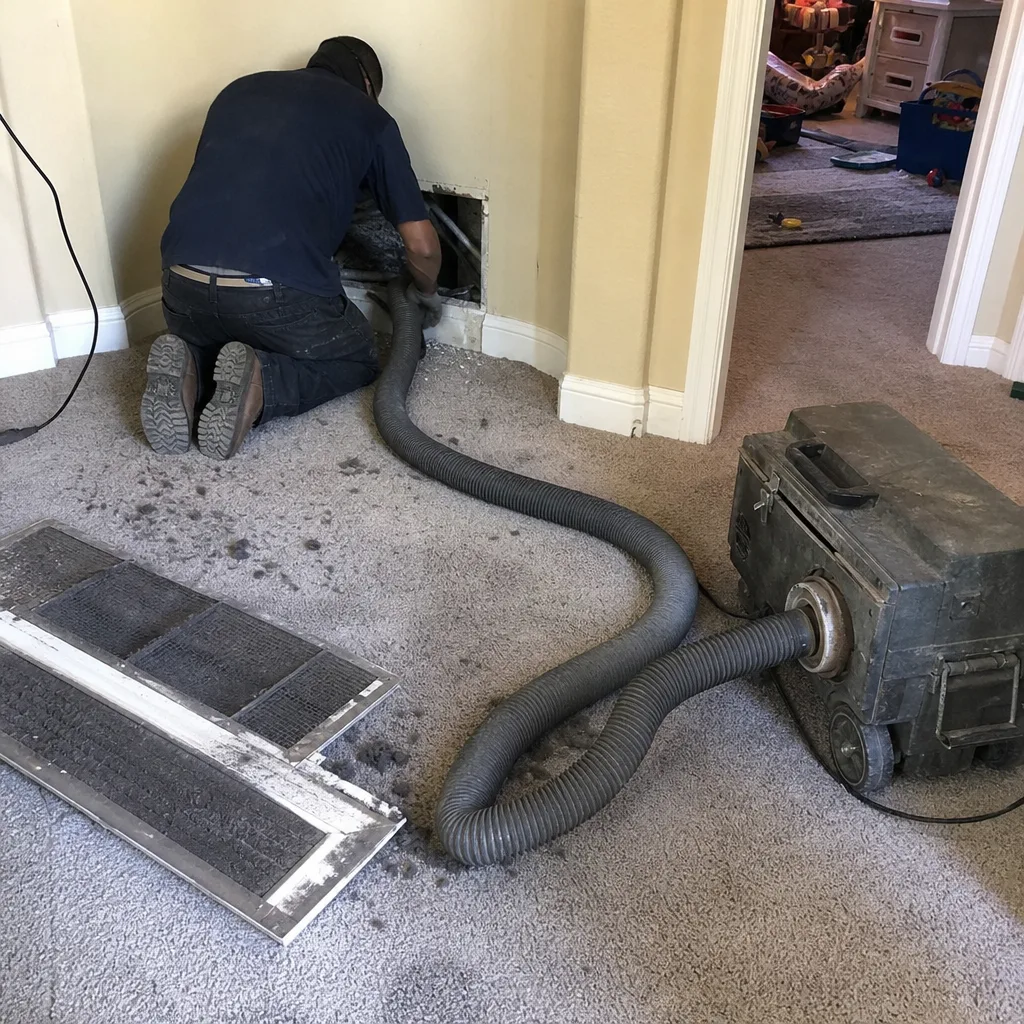 Before
 After
After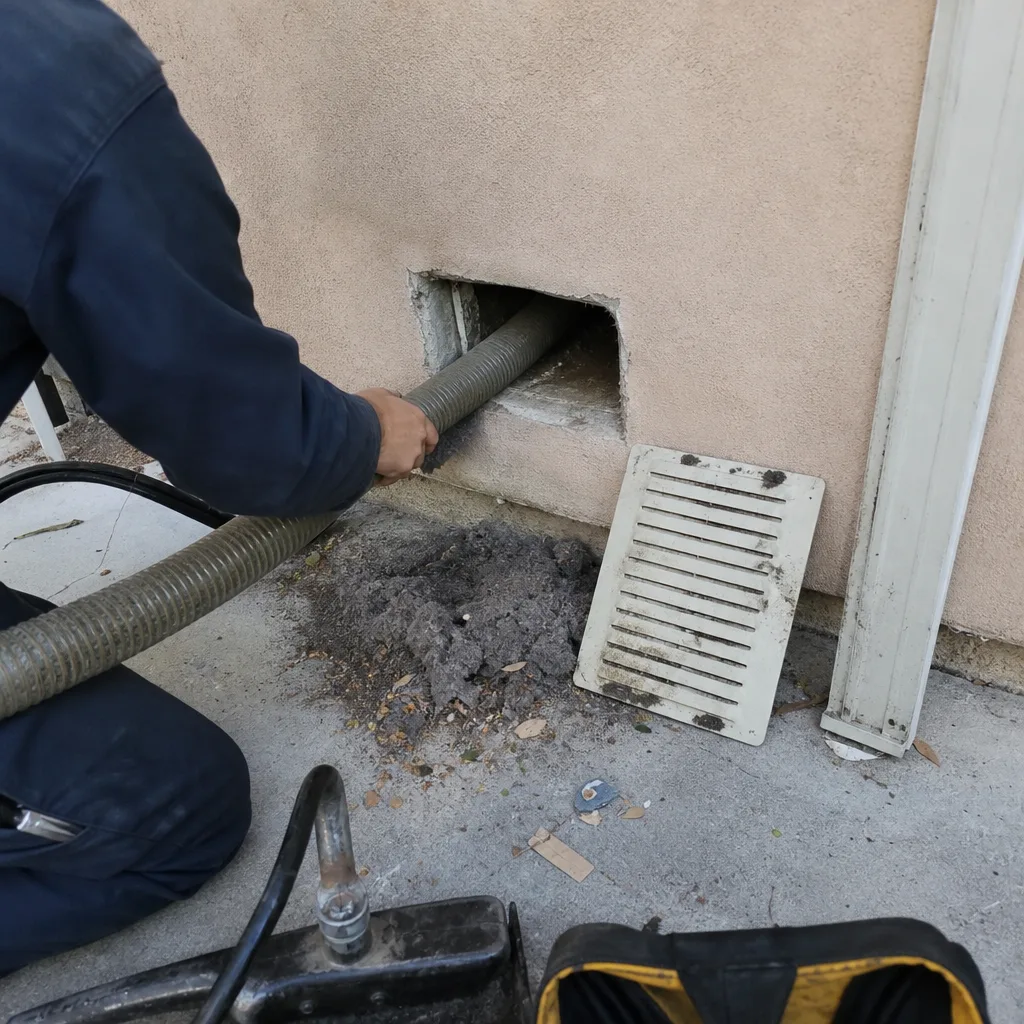 Before
 After
After