
Last updated October 15, 2026
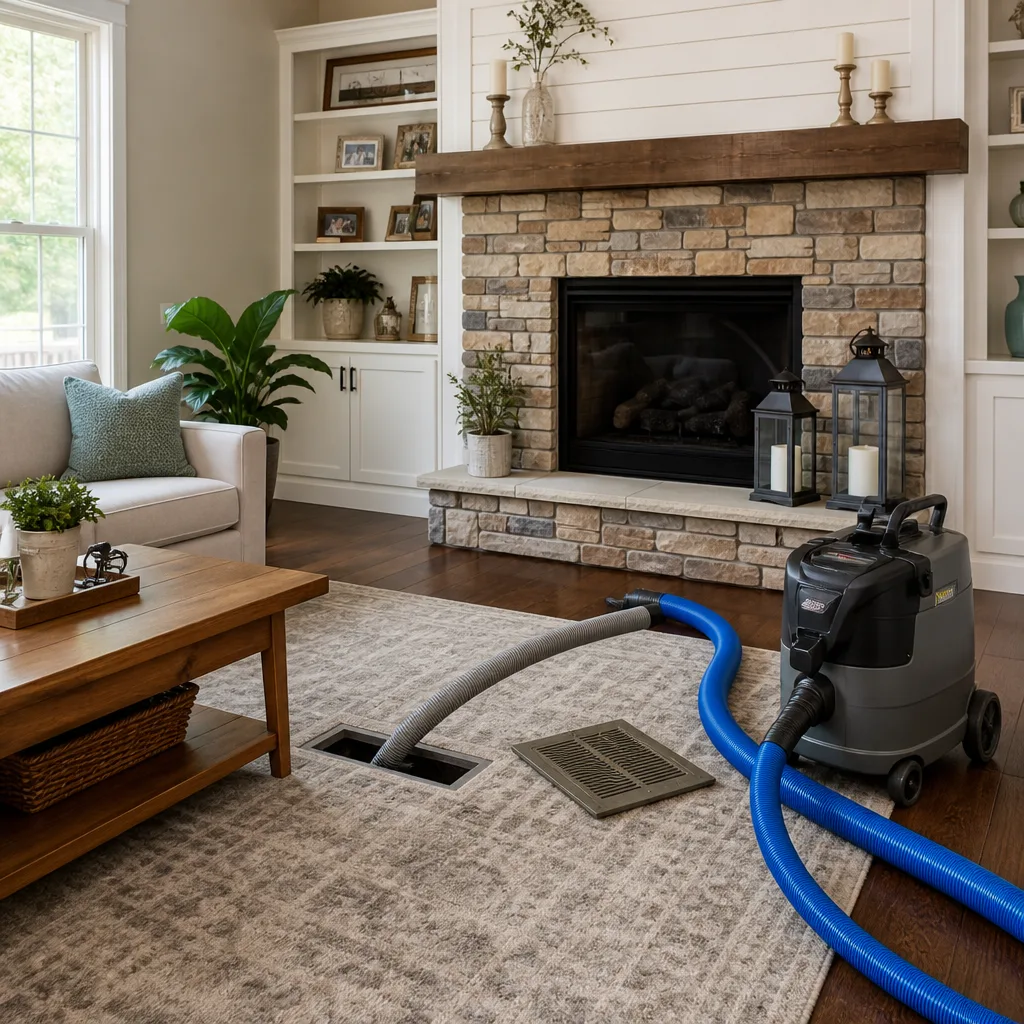 Whole-home duct cleaning
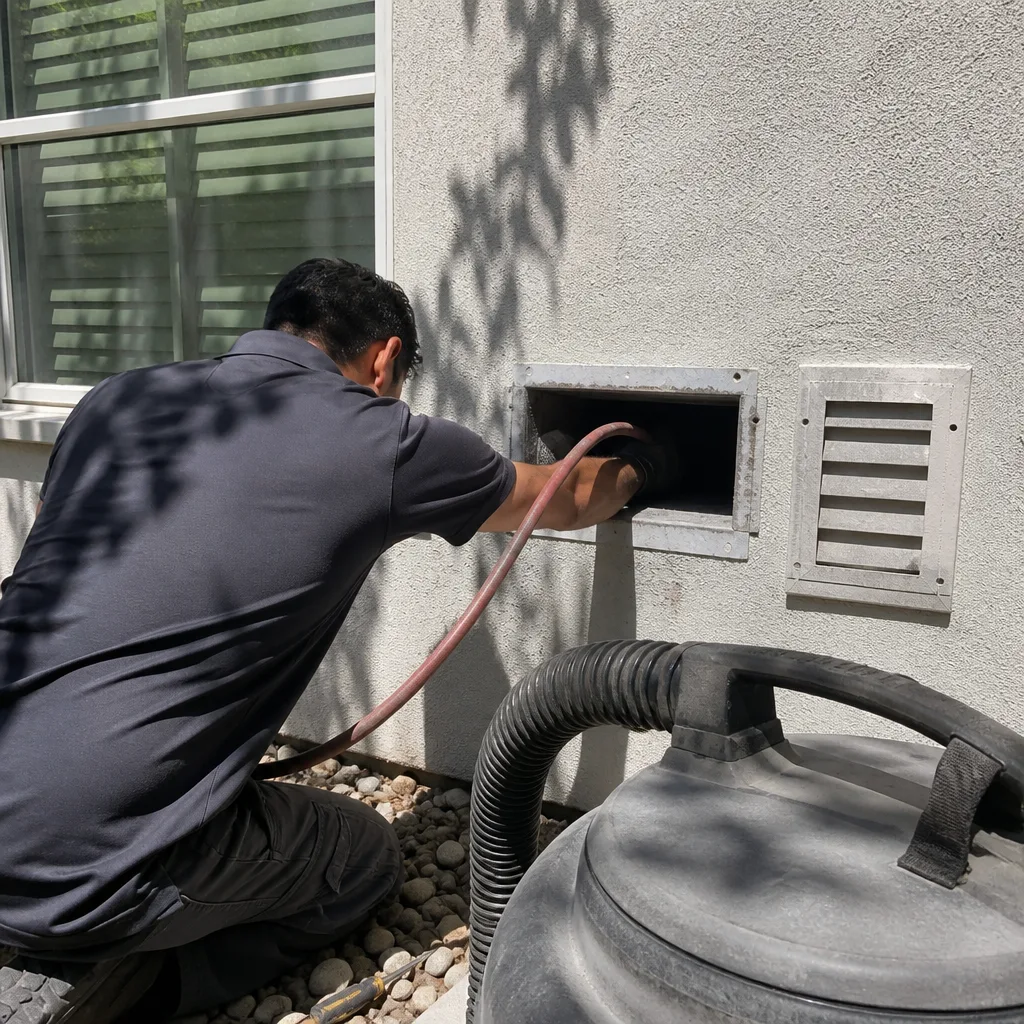
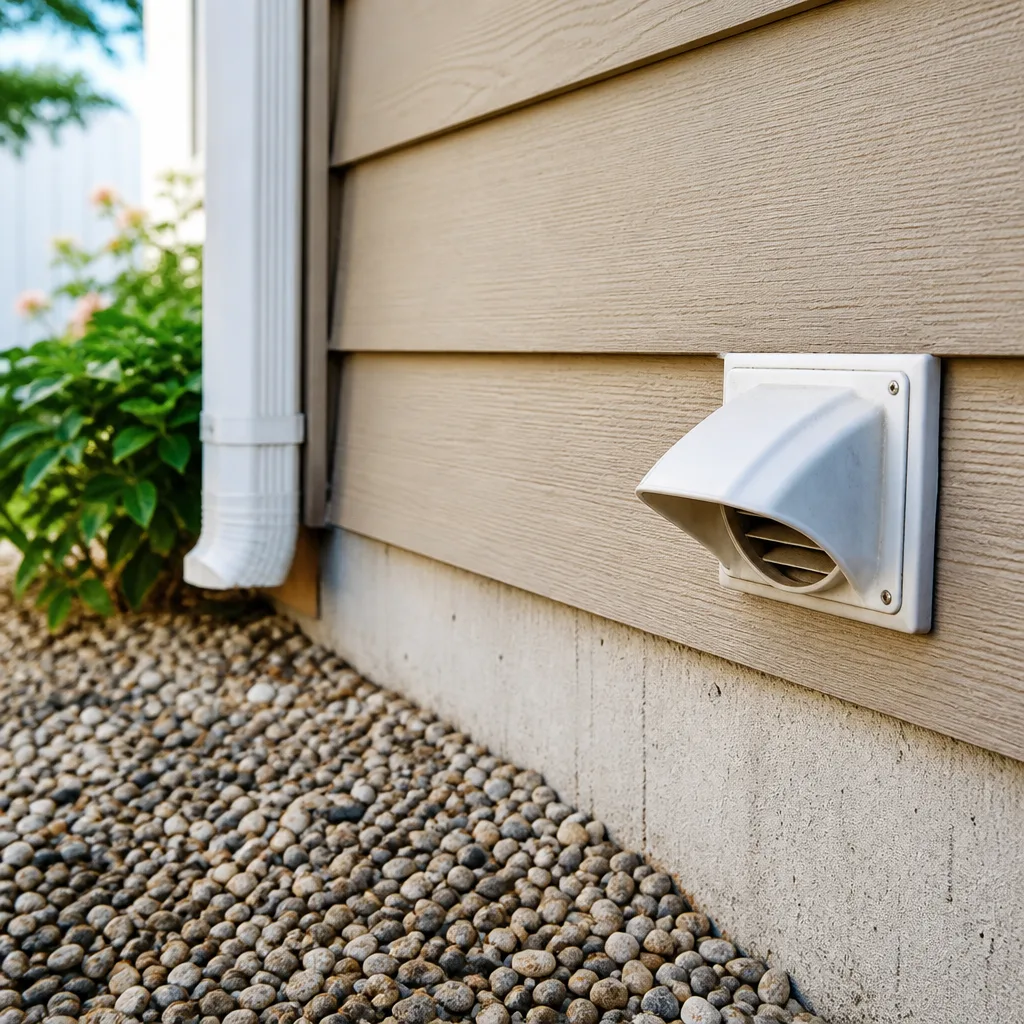 Dryer vent cleaning
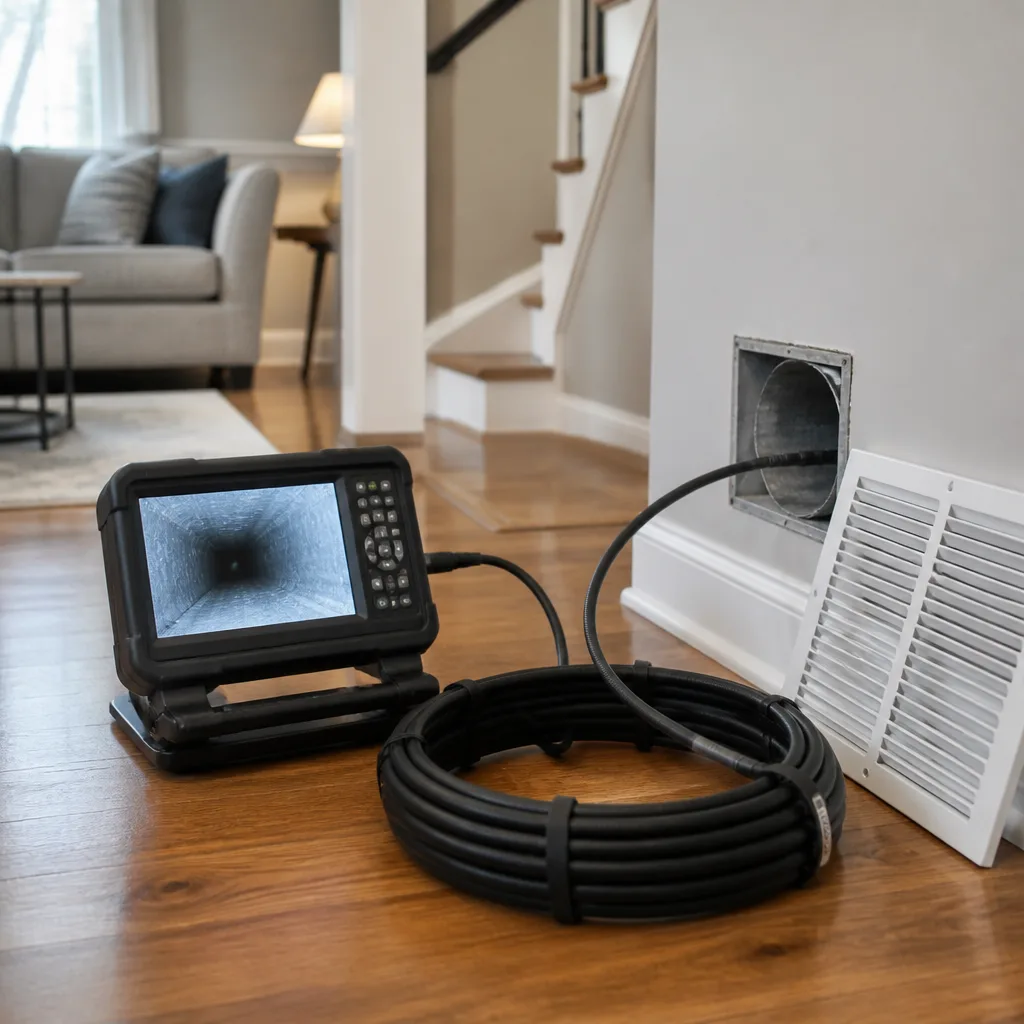 Camera inspection
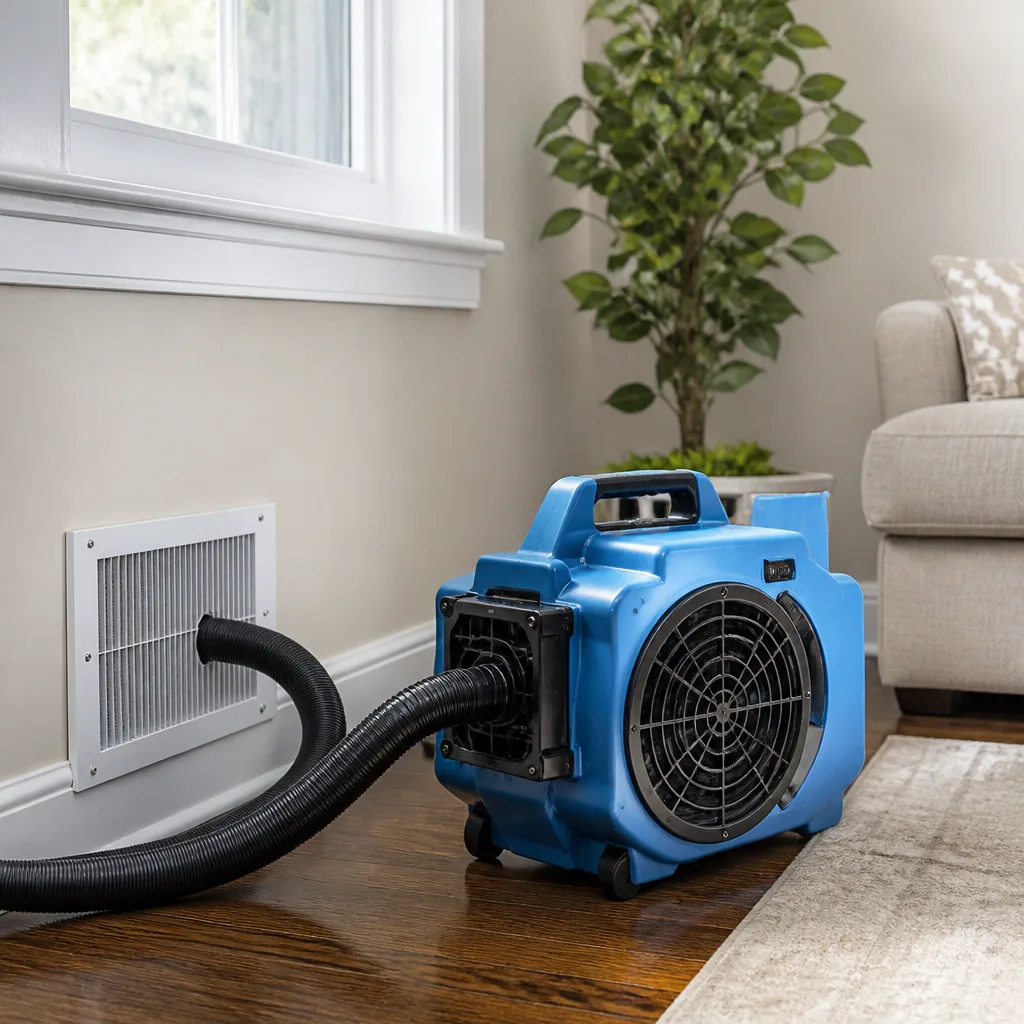 Sanitizing & deodorizing
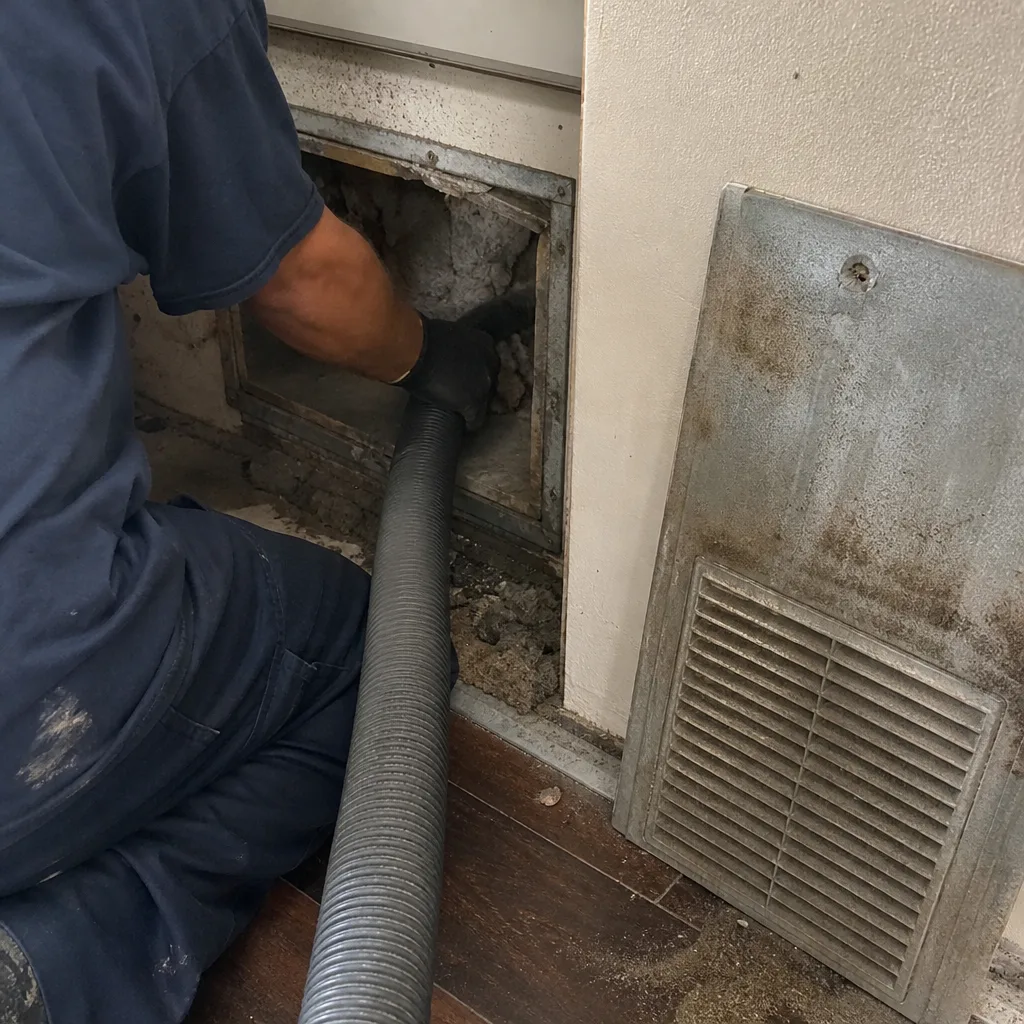
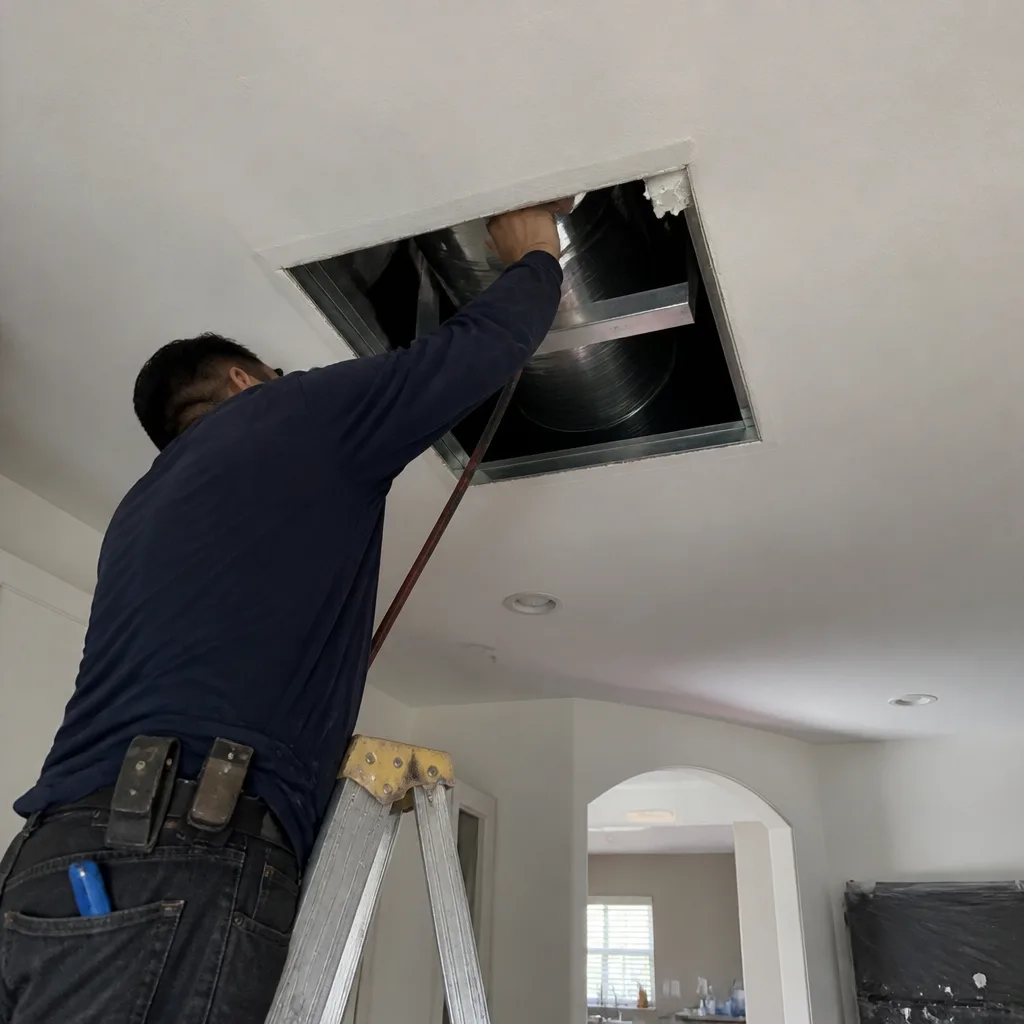
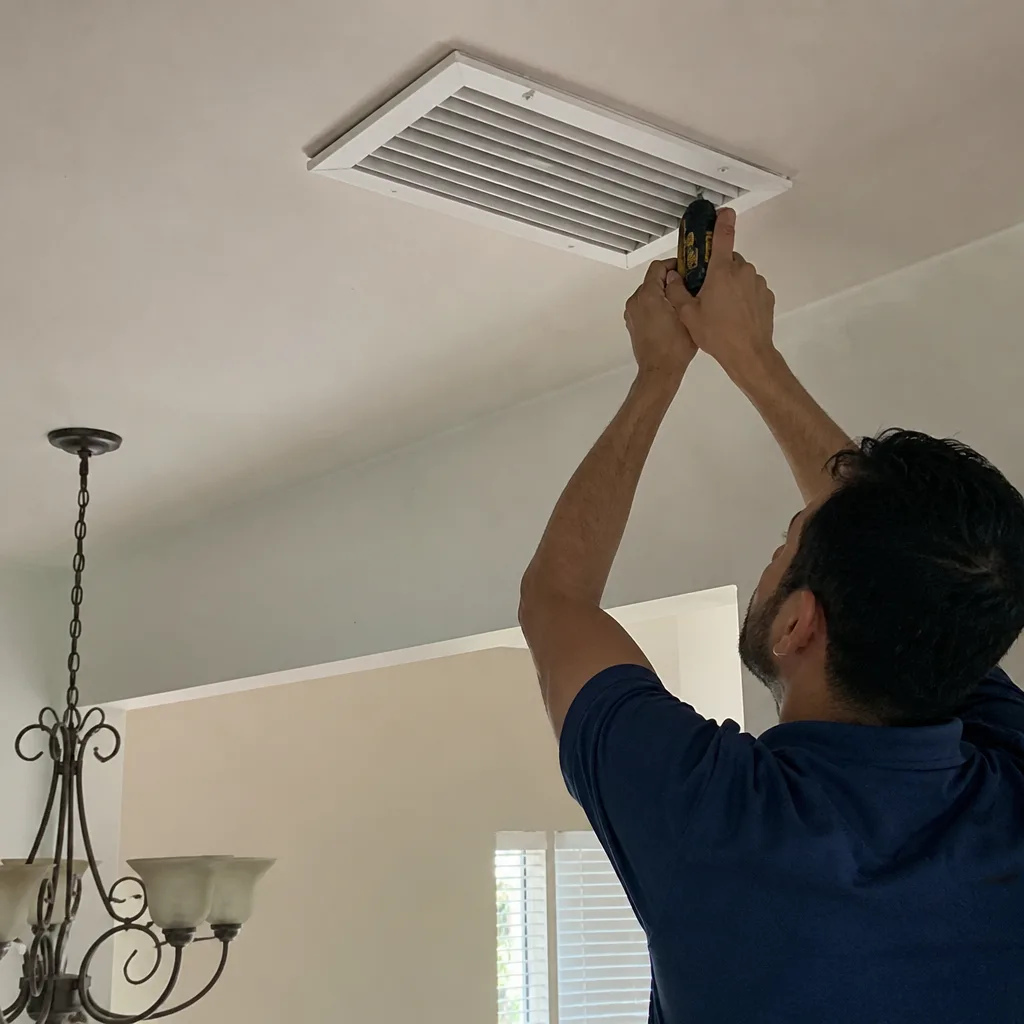
Whole-system duct and dryer vent check with before-and-after photos - you see exactly what came out of your vents
That "$99 whole-house special" is a bait ad - the real number appears once they are in your hallway, or the "clean" is a shop-vac at the register. We photograph the inside of your ducts before and after instead.
Air Duct Cleaning Cost Breakdown: The Los Angeles Homeowner’s Reference for 2026
That $49 whole-house duct cleaning postcard sitting in your recycling bin cost the company that mailed it roughly $180 in truck, labor, and fuel just to ring your doorbell. Do the math and you’ll see the gap: someone has to make up that difference, and the most common place it gets made up is inside your home, usually about twenty minutes after a technician has poked his head into your attic and come down with a somber look and a clipboard. This guide will show you exactly what a legitimate air duct cleaning in Los Angeles costs in 2026, what drives the price up or down, and how to read any quote you receive so you know whether it’s honest before you ever sign it. We’ve served Los Angeles homeowners since 2004, and we’ve seen every pricing trick in the book.
Styles & brands we work with
Quick Answer
For a standard single-family home in Los Angeles in 2026, a legitimate Air Duct Cleaning runs between $350 and $900, with most homes falling in the $400 to $600 range. Anything below $250 for a 2,000 square foot house deserves serious scrutiny, because it almost always signals a bait-and-switch where the technician will “discover” problems once inside. Anything above $900 should come with a detailed explanation, usually involving significant contamination, a very large home, or legitimate add-on services like antimicrobial treatment.
Table of Contents
- The Real Price Range for Los Angeles in 2026
- What Actually Drives the Cost Up or Down
- Flat-Rate Pricing vs. Per-Register Pricing: Why It Matters
- Legitimate Add-Ons: What’s Worth It and What’s Almost Always Unnecessary
- Why Los Angeles Labor Rates Run 18 to 25 Percent Above National Benchmarks
- The Written Price-Lock: What It Means and How to Get It
- A Sample Cost Worksheet: A Real 1,600 Sq Ft Valley Home
- Common Mistakes to Avoid
- When to Call a Professional
- Frequently Asked Questions
- The Bottom Line
The Real Price Range for Los Angeles in 2026
Here’s the number you came for: in Los Angeles, a standard single-family home with 10 to 14 registers will cost between $350 and $900 for a full air duct cleaning in 2026. Most jobs land between $400 and $600. That’s the honest range. If you live in a condo or a smaller home under 1,200 square feet, you might pay $300 to $400. If you’re in a large two-story house in Brentwood or Pacific Palisades with 20 or more registers, a zoned HVAC system, and ducts that haven’t been touched in fifteen years, you could reasonably see $800 to $900 or slightly more.
The key thing to understand is that the price should be tied to the actual work involved: the size of the home, the number of supply and return registers, the accessibility of the ductwork, and the level of contamination. In our experience serving Los Angeles for over twenty years, and as outlined in our Air Duct Cleaning Maintenance Checklist for Los Angeles Homeowners, homes near the coast in Santa Monica and Venice tend to have different contamination profiles than homes in the Valley. Coastal air carries more moisture, which means more microbial growth potential. Valley homes in Encino, Sherman Oaks, and Northridge deal with more fine dust and particulate matter, especially during Santa Ana wind season when dry air pulls dust from the desert into the basin. None of this changes the base price range, but it does affect what a technician will find and what additional work might be recommended.
What Actually Drives the Cost Up or Down
A price breakdown is only useful if it’s tied to real Los Angeles labor rates, not national averages that were calculated in a spreadsheet somewhere in Ohio. Here’s what moves the number in LA specifically.
Size of the Home and Number of Registers
The single biggest factor is square footage and register count. A 900 square foot bungalow in Highland Park with 6 registers is a straightforward morning job. A 3,200 square foot home in Tarzana with 22 registers, two furnaces, and returns on every floor is a full-day job for two technicians. More registers means more access points, more time, and more labor. Most companies in Los Angeles price by the system or by square footage, but register count tracks closely with size, so the two are really measuring the same thing.
Accessibility of the Ductwork
Some homes in Los Angeles were built before central air conditioning was standard. Retrofitted systems often have ductwork in tight crawl spaces, tight attic corners with low clearance, or runs that twist through awkward framing. If your home was built in the 1940s or 1950s and the ducts were added later, expect the job to take longer. Technicians may need to cut additional access points, which brings us to a legitimate add-on cost we’ll cover below. Homes in neighborhoods like Mid-City and West Adams, where many houses date from that era, frequently fall into this category.
Level of Contamination
If your ducts have not been cleaned in a decade and you have pets, smokers in the home, or you’ve recently completed a renovation, the buildup will be heavier. Renovation dust is a persistent problem in Los Angeles, where tear-down and remodel activity is constant. Drywall dust, sawdust, and construction debris get pulled into the return side of the system and settle throughout the ductwork. Heavier contamination means more aggressive brush agitation, more passes with the extraction equipment, and occasionally the need for a second cleaning pass on badly loaded sections. We’ve seen renovation dust so thick in some Echo Park and Silver Lake remodels that the first pass of the rotary brush produced visible piles of debris at the return opening.
Number of HVAC Systems
A single system is the norm for most homes under 2,500 square feet. Larger homes, particularly two-story layouts in neighborhoods like Hancock Park or Cheviot Hills, may have separate systems for upstairs and downstairs or a zoned system with multiple air handlers. Each system is a separate cleaning job. This is a legitimate reason for a higher quote, and any reputable company will explain this clearly on the estimate rather than burying it in a line item.
Flat-Rate Pricing vs. Per-Register Pricing: Why It Matters
Here’s a question most homeowners never think to ask: how is the price actually being calculated? There are two common models, and they produce very different incentives on the technician’s side.
Per-Register Pricing
Some companies quote a low base price and then add a charge for each register. You’ll see ads like “whole home cleaning from $79” with fine print noting that the price includes a certain number of registers. The problem is that most homes have more registers than the advertised number, and the per-register charge after that is where the invoice starts to climb. More importantly, per-register pricing creates an incentive for the technician to rush through registers. If you’re being paid per register, you want to get through as many as possible in the shortest time. The technician’s interest and the homeowner’s interest are directly opposed.
Flat-Rate Pricing
A flat-rate price is one number for the entire system, agreed before work begins, based on the home’s size and the scope of the job. The incentive flips: the technician’s goal is to do the job thoroughly, because the price doesn’t change whether it takes three hours or five. This is the model we use, and it’s the model we recommend homeowners look for. The phrase to listen for is “one flat price per system.” If a company won’t give you a firm number before sending a truck, that’s not a coincidence.
Legitimate Add-Ons: What’s Worth It and What’s Almost Always Unnecessary
During an air duct cleaning, the technician may recommend additional services. Some are legitimate and worth considering. Others are revenue generators dressed up in technical language. Here’s how to tell the difference.
Legitimate Add-Ons with Real Price Ranges
- Dryer vent cleaning: $89 to $149. This is a genuinely useful service that we recommend to most customers. A clogged dryer vent is a fire hazard, and Los Angeles homes with long vent runs from the laundry room to an exterior wall are particularly susceptible to lint buildup. This is usually done as a separate service or added on at a discount during an air duct cleaning visit. For more detail, see our guide to dryer vent cleaning in Los Angeles.
- Antimicrobial treatment: $75 to $150. This involves applying an EPA-registered antimicrobial agent to the interior surfaces of the ductwork to inhibit mold and bacterial growth. It’s worth considering if the technician finds visible microbial growth during the cleaning, if you’ve had a moisture problem in the ducts, or if someone in the home has significant allergies or respiratory issues. It is not a substitute for fixing the underlying moisture problem, and any reputable technician will tell you that.
- Access panel cutting: $25 to $60 per panel. If the ductwork is not accessible due to design limitations, a technician may need to cut an access panel to reach certain sections. This is a legitimate charge when access is genuinely limited, but it should be explained clearly before the saw comes out. The panel is then sealed and left in place for future access.
Almost Always Unnecessary
- Duct sanitizing or “deodorizing” mists that are not EPA-registered for HVAC use. You want an antimicrobial product that is specifically approved for air duct use, not a general-purpose air freshener.
- Duct sealing as an automatic add-on. If the cleaning reveals actual gaps or leaks in the ductwork, sealing can be valuable. But if the recommendation comes before the cleaning even starts, or if the technician hasn’t shown you the leaks on camera, treat it with suspicion.
- “Deep-cleaning” the blower fan as a mandatory line item. A thorough duct cleaning should include cleaning the blower fan as part of the standard scope at a fixed system price. If it’s being sold as a premium upgrade, ask why it wasn’t included in the first place.
- Whole-home UV light “purification” systems pushed during a cleaning visit. These can be legitimate products, but they are usually irrelevant to the immediate task and frequently priced aggressively. Take the information and research it on your own time.
Why Los Angeles Labor Rates Run 18 to 25 Percent Above National Benchmarks
If you’ve searched for air duct cleaning prices online, you’ve likely seen national averages in the $280 to $450 range. Los Angeles runs consistently higher, and there are structural reasons for that. The cost of doing business in Los Angeles is just higher: commercial vehicle insurance is more expensive here than in most of the country, fuel prices are consistently 20 to 30 percent above the national average, and wages for skilled tradespeople have climbed sharply in Southern California since 2021. A background-checked technician with HVAC-related training earns a living wage in Los Angeles, and that wage is reflected in the price of the service.
This math matters when you evaluate a quote. A company offering a $199 whole-home cleaning for a 2,000 square foot house in Los Angeles is not absorbing those costs. They are either paying their technicians much less, which means you’re getting less training and less care, or they are planning to make up the difference with add-on sales once they’re inside your home. The economics simply do not work otherwise. A legitimate Los Angeles company operating with licensed, insured, background-checked technicians and professional equipment is going to have a base cost per job that makes sub-$250 pricing impossible without a catch.
For context, the equipment alone distinguishes legitimate cleaners from bargain operations. We use Rotobrush rotary brush systems to dislodge debris from the duct walls, Nikro negative-pressure units to pull contaminants out of the system, and Abatement Technologies HEPA filtration to keep loosened particles from re-entering the living space during the job. These are professional-grade systems that cost tens of thousands of dollars, not shop vacs from a hardware store. That investment shows up in the quality of the result, and it’s part of why the honest price range in Los Angeles is what it is.
The Written Price-Lock: What It Means and How to Get It
A “free estimate” is not the same thing as a written price. A free estimate is an invitation for a company to send a truck to your home and then negotiate with you on site. A written price is a document that states the exact amount you will pay, in writing, before the technician begins work. The difference matters more than almost anything else in this process.
What the Written Price-Lock Covers
- The fixed price itself. One number per system, agreed in advance. If the technician discovers something unexpected during the job, the procedure for addressing it is explained clearly and any revision is approved by you before additional work happens.
- Scope of work. The written price should specify what’s included: the number of supply and return registers, the cleaning method, the inclusion or exclusion of the blower fan and coils, and any add-ons already agreed to.
- Arrival window. A defined window when the technician will arrive, not an open-ended “sometime between 8 and 4” that leaves you sitting at home all day.
- The guarantee. What happens if the work falls short. This should be in writing, not described vaguely over the phone.
We operate under a written guarantee called the Kingswell Guarantee, and it has been the same since 2004. The four commitments are simple: a written price before work begins, a defined arrival window, a clean job site, and a 365-Day Done Right Promise. If the work falls short within the guarantee period, we return and make it right at no charge. That’s not a courtesy; it’s written down. The name comes from the Kingswell family, the operating standard behind our company and the other independently owned locations in our network.
How to Get a Price Confirmed Before the Truck Leaves the Yard
The practical approach is simple: when you call to book, ask for the price to be sent to you in writing before the service date. Any company that operates on a written price-lock will do this without hesitation. Companies that refuse, or that insist on “seeing the home first” while simultaneously advertising a specific price, are telling you something about how their on-site visit will go. You want to know the number before the van is even loaded.
A Sample Cost Worksheet: A Real 1,600 Sq Ft Valley Home
Let’s walk through a realistic example. This is a typical job we would perform in Sherman Oaks or Van Nuys: a 1,600 square foot, three-bedroom, two-bathroom home with 14 registers and a single HVAC system. The home was built in the late 1970s, has one cat, and the ducts have not been cleaned in eight years.
- Base system price (1 system, 14 registers): $450
- Standard scope included at that price: full supply and return duct cleaning with rotary brush agitation and negative-air extraction, blower fan cleaning, and before-and-after photos of the plenum and return box.
- Dryer vent cleaning (added at customer request): $75
- Antimicrobial treatment (recommended due to visible dust mite debris and pet dander in the return): $0 (not needed on this job; noted here as an option)
- Access panels (existing access sufficient): $0
- Total written price: $525
That’s a legitimate $525 job. It reflects real labor, real equipment, and real time: about three to three and a half hours on site for one technician. The customer knew the price before we arrived, and nothing changed on the day of service. If a company quotes you $189 for the same home, ask yourself where the other $336 went. It didn’t disappear; it’s waiting in the add-on pitch.
Common Mistakes to Avoid
- Trusting the postcard price. If the advertised price is lower than what it costs the company to operate a truck for a day in Los Angeles, you are the product, not the customer. The real invoice will be a multiple of the advertised number.
- Signing before reading the fine print on register counts. Per-register pricing models are built to confuse. Count your own registers before you call, and ask point-blank whether the quoted price includes all of them.
- Accepting a verbal quote without a written confirmation. A price stated over the phone but not written down is a price that can change. Get it in writing.
- Declining before-and-after photos. This is the single most effective way to verify the work was actually done. Any legitimate company will provide photos of your actual ducts, not stock images from a marketing folder. We include photos of the plenum and return before and after as standard practice.
- Treating air duct cleaning like a commodity. The difference between a $300 job and a $600 job in Los Angeles is not just the number on the invoice. It’s the equipment, the technician’s training, the time spent, and what happens if something isn’t right afterward. The cheapest price in this market is usually the most expensive one.
- Ignoring the guarantee language. “Satisfaction guaranteed” means nothing specific. “If the work falls short within 365 days, we return and make it right at no charge, in writing” means something. Read the actual words before you sign.
- Booking without checking that the company actually answers the phone. Call the number before you book. If you get a voicemail queue or an automated system during business hours, that’s a preview of how the company will communicate if there’s a problem later. We answer calls with a live person 24/7, and we’ve done so since the day we started.
When to Call a Professional
You should call a professional air duct cleaner if you’ve noticed visible dust blowing from your registers when the system starts, if your home gets dusty within days of cleaning despite regular housekeeping, if you’ve completed a renovation without sealing off the ducts, or if anyone in the home has unexplained allergy or respiratory symptoms that worsen when the HVAC runs. You should also schedule a cleaning if it’s been more than five to seven years since the last one, or if you’ve just moved into a home and don’t know the history of the system. If you can see dust and debris inside the return box just by removing the grille and looking, the system is overdue. Kestrel Air Duct Los Angeles offers free estimates throughout the Los Angeles area. Call (213) 733-0665 and we’ll give you a written price before we ever send a truck.
Frequently Asked Questions
A legitimate air duct cleaning in Los Angeles costs between $350 and $900 for a standard single-family home in 2026, with most homes falling in the $400 to $600 range. Homes under 1,200 square feet might pay $300 to $400, while large homes with multiple systems or significant contamination can exceed $900. Call (213) 733-0665 for an exact written quote; estimates are free.
Quotes below $250 for a 2,000 square foot home in Los Angeles are below the operating cost of a legitimate company, which means the technician is expected to make up the difference through add-on sales once inside your home. The cheap quote is a door-opener, not a final price. A written price-lock from a company that charges honestly is the only reliable way to know what you’ll pay.
Ask for before-and-after photos of your actual ducts, including the interior of the plenum and return box. Any reputable company provides these without being asked. If the technician balks at showing you photos, or if the images are stock photos, the job likely wasn’t done thoroughly or at all. Our technicians document every job with photos you can see.
For most Los Angeles homes, every five to seven years is appropriate, assuming no major renovations, no significant pet dander buildup, and no mold or moisture issues. Homes with heavy shedding pets, smokers, or recent remodels may need it more frequently. If you have a newer home with a good filtration system and no pets, you might stretch it to seven to ten years.
Antimicrobial treatment is worth considering if the technician shows you visible microbial growth in the ducts, if there’s been a moisture problem, or if someone in the home has serious respiratory issues. In a dry, well-maintained system with no visible growth, it’s usually unnecessary. A good technician will show you the evidence before recommending it. The treatment typically costs $75 to $150 and should use an EPA-registered product.
A free estimate is an invitation for a company to come to your home and assess the job, often with the real pricing conversation happening on site. A written price is a fixed number, provided in writing before the work begins, that doesn’t change when the technician arrives. We provide written prices before the truck is even loaded, and that document includes the scope of work, the arrival window, and the 365-Day Done Right Promise. Call (213) 733-0665 for yours.
The Bottom Line
In Los Angeles in 2026, $350 to $900 is the honest price range for air duct cleaning, with most single-family homes landing between $400 and $600. Anything far below that range is a bait mechanism, and anything far above it needs a detailed justification. The best protection you have as a homeowner is a written price-lock that states one flat price per system, a defined arrival window, and a written guarantee of what happens if the work doesn’t hold up. Ask for before-and-after photos of your own ducts. Check that the company answers its phone. And remember that the cheapest quote in this market is often the most expensive one by the time the invoice prints. We’ve been doing this work in Los Angeles since 2004, under the same written standard the entire time, and we’d rather explain our pricing honestly than surprise you with it later. For more guides & resources, visit our blog.
Written by Dale Whitmore, Owner at Kestrel Air Duct Los Angeles, serving Los Angeles since 2004.
See the difference
 Before
 After
After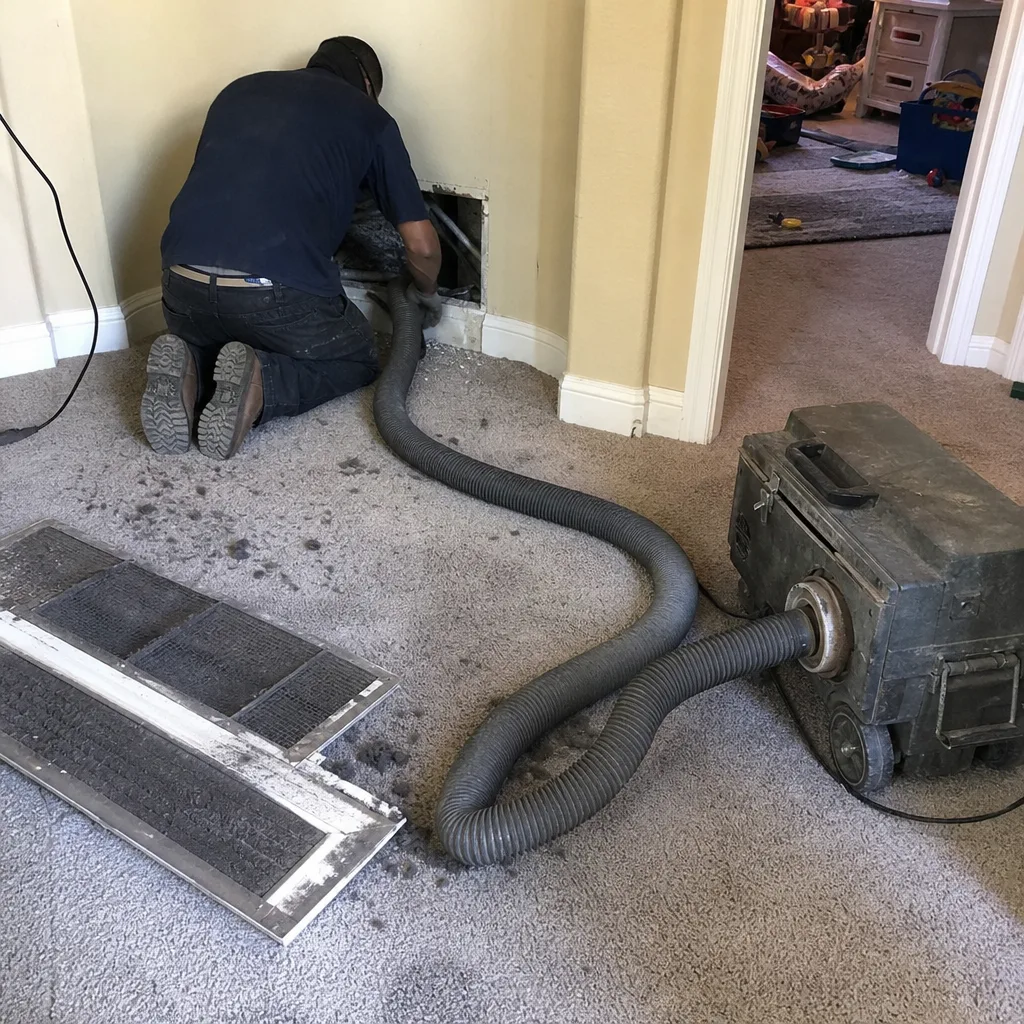 Before
 After
After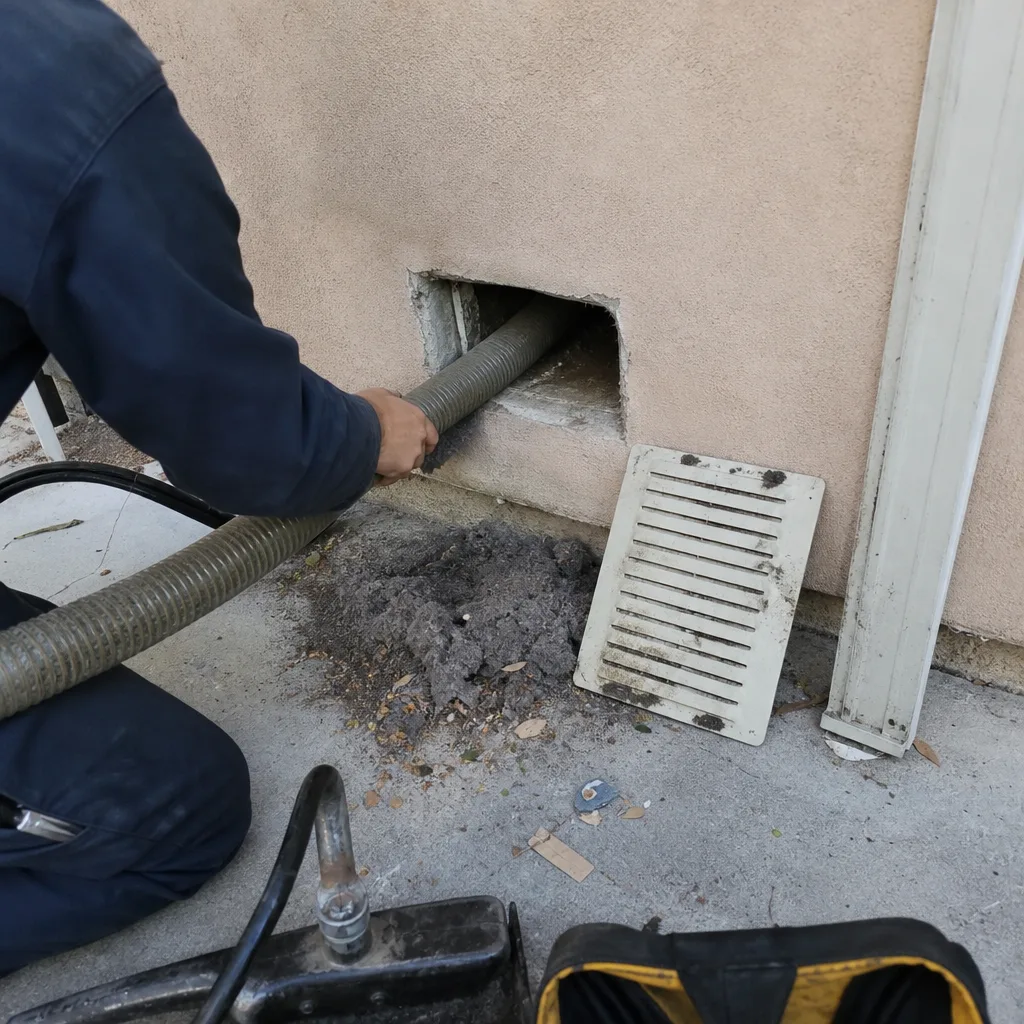 Before
 After
After